
Innisfail gets biggest project in State bikeway grants
Bicycle Queensland welcomes more than $15 million in Queensland Government funding for ten active transport projects across t...
Queensland’s e-mobility laws have changed significantly in 2026, with new rules covering e-bike power and speed, rider behaviour, age and licensing requirements, and stronger enforcement powers.
The latest changes take effect from 31 August 2026, introducing minimum age and driver licence requirements for people riding e-bikes and other e-mobility devices in public places.
There are exemptions for supervised young riders, people with eligible medical conditions or disabilities, and riding in designated recreational areas.
Here’s what you need to know.
To be legal to ride in public places in Queensland, an e-bike must:
Importantly, a high-powered e-bike cannot be made legal simply by electronically restricting or ‘locking’ its output or maximum assisted speed.
If the motor is more powerful than the permitted 250 watts of maximum continuous rated power, it is not a legal e-bike for use on Queensland roads or public paths – even if software has been used to restrict its performance.
The Queensland Government has introduced transitional arrangements for some e-bikes. In general, e-bikes used in public spaces will ultimately need to either meet EN 15194 or be verified as meeting the standard’s core safety requirements through the Queensland Government’s E-Bike Assurance Scheme.
Owners of eligible existing e-bikes will have until 28 February 2027 to have their bike verified and appropriately labelled.
The Assurance Scheme is being developed for e-bikes manufactured before 1 July 2026 that meet the core safety features of EN 15194 but were not certified to the standard. It will also provide a pathway for some non-standard or adaptive e-bikes and e-trikes used by people with a disability or medical condition.
High-powered or high-speed devices that exceed Queensland’s legal e-bike limits are not covered by this transition.
From 31 August 2026, the general rule is that you must be at least 16 years old and hold a valid driver licence to ride an e-bike or other e-mobility device on a road, road-related area or in a public place. The minimum licence is a Learner licence. A valid interstate or overseas driver licence can also satisfy the requirement.
However, there are some important exemptions.
Riders aged 12–15
Children aged 12 to 15 can ride an e-bike without a driver licence when supervised by a parent or caregiver. The supervising adult needs to remain close enough to easily observe and communicate with the young rider and provide immediate instructions.
Riders aged 16–17
Riders aged 16 or 17 can ride independently if they hold a valid driver licence – including a Learner licence. If they don’t have a licence, they can still ride when appropriately supervised by a parent or caregiver.
Children under 12
Children under 12 cannot ride an e-bike in ordinary public areas.
Different age and licensing rules can apply within designated recreational riding areas.
Yes.
From 31 August 2026, riders aged 16 and over must hold a valid driver licence to ride an e-bike in public, unless an exemption applies. This can be a Queensland Learner, Provisional or Open licence, or a valid equivalent interstate or overseas licence.
You do not need to register a legal e-bike.
Yes. The Queensland Government has introduced exemptions covering three main circumstances:
The exemptions apply to the age and driver licence requirements – they do not turn an otherwise illegal high-powered device into a legal e-bike.
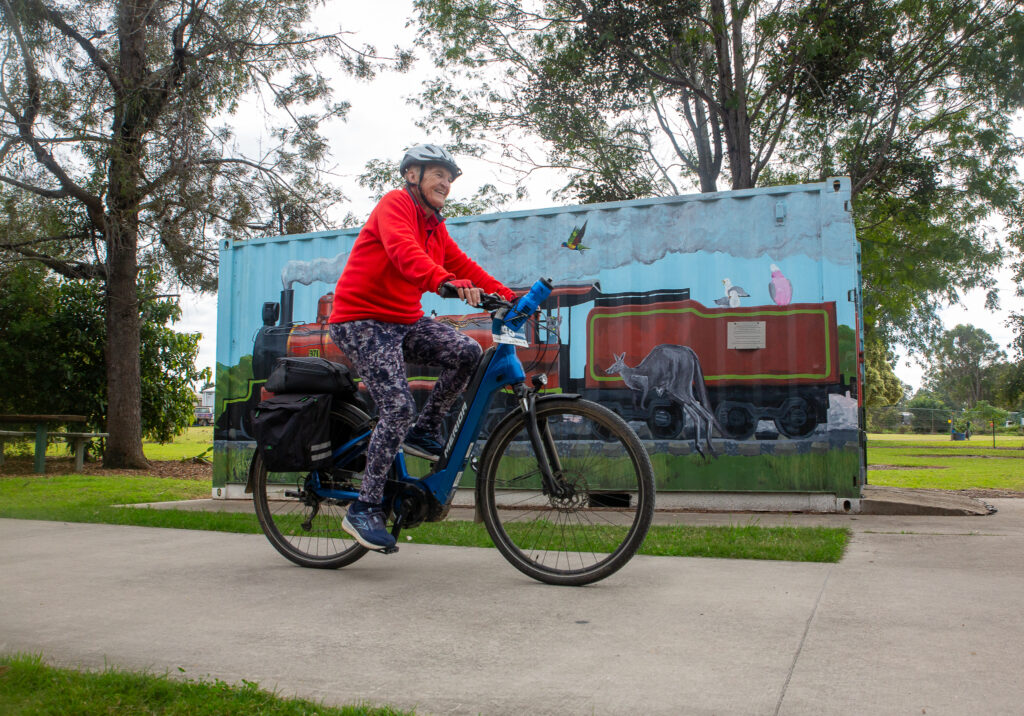
Age and driver licence exemptions do not apply on rail trails, mountain bike trails and private off-road cycling facilities. This means riders are able to use a legal e-bike on a marked mountain biek trail, or network, rail trail or private mountain bike park without meeting the normal age or driver licence requirements.

A medical or disability exemption is available for people aged 16 and over who cannot hold a driver licence because of a medical condition or disability but can safely operate an e-mobility device.
An eligible health practitioner can complete an E-Mobility Driver Licence Exemption form with the rider. The exemption can be issued for up to five years and can specify which type of e-mobility device the person can use. Conditions can also be applied where appropriate.
The rider keeps the completed exemption form and must be able to produce it when required, in either digital or hard copy format.A grace period applies until 30 November 2026 to give eligible riders time to obtain their exemption.
E-bike riders must obey the bicycle road rules as well as the specific rules applying to e-bikes.
On footpaths, the maximum speed for an e-bike is 12km/h.
On shared paths, riders must obey the signed speed limit and slow to a maximum of 12km/h when passing pedestrians. You may need to ride more slowly around children, dogs, people with limited mobility or in other busy areas.
The 25km/h figure associated with an e-bike is the speed at which motor assistance must cease. It is not a universal 25km/h speed limit for bicycles.
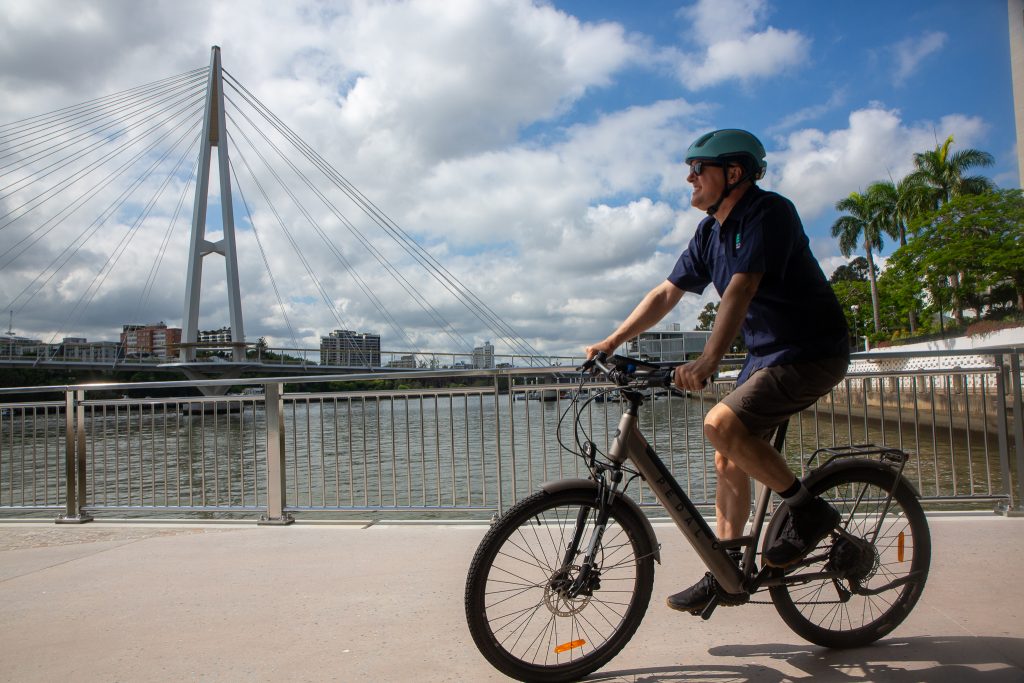
Different speed requirements apply depending on whether infrastructure is legally considered a footpath, shared path, bicycle path or another type of road-related area. It may not be straightforward to determine what exactly you are on. Riders should follow signage and ride to the conditions, particularly where pedestrians are present.
Bicycle Queensland continues to encourage government and councils to ensure cycling infrastructure is clearly designated and signed so riders can readily understand which rules apply.
Yes.
Queensland Police have stronger powers to deal with illegal e-mobility devices, including the power to seize, impound and potentially destroy prohibited devices. This includes high-powered devices that resemble e-bikes but do not meet Queensland’s legal e-bike requirements.
A device with a motor exceeding 250 watts maximum continuous rated power, or one that continues providing motor assistance above 25km/h, is not a legal e-bike for use on public roads and paths.
A high-powered device also does not become a legal e-bike simply because its power or speed has been restricted through software.
Yes.
Parents and guardians can face penalties for allowing children to use illegal e-mobility devices. From 31 August, age and licensing requirements also apply, although children aged 12–17 can ride under the supervision exemption. If you’re buying an e-bike for a young rider, make sure both the bike and the rider comply with the rules.
No.
From 1 July 2026, it is illegal for commercial or private sellers to sell an e-mobility device to anyone under 16. This includes e-bikes, e-scooters and other e-mobility devices.
A parent can purchase a legal e-bike that will be used by a child under the applicable supervision or recreational-area exemptions, but the e-mobility device cannot be sold directly to someone aged under 16.
Queensland’s drink-riding laws also apply to bicycles, e-bikes and personal mobility devices. Police have additional powers to conduct roadside alcohol testing of riders, with a 0.05 blood alcohol concentration limit applying.
For most people already riding a safe, legal e-bike from a recognised bicycle brand, the fundamental definition of an e-bike should look familiar: pedal assistance, a 250W maximum continuous rated motor output and assistance that cuts out at 25km/h.
The biggest changes for riders are the new age and driver licence requirements, the new 12km/h footpath and pedestrian-passing requirements. If you already own an older e-bike and are unsure whether it meets EN 15194, keep an eye on information about the Queensland Government’s E-Bike Assurance Scheme ahead of the 28 February 2027 deadline.
And if you’re buying a new e-bike, make sure it is clearly sold as compliant with EN 15194 and legal for use on Queensland roads and paths.
By becoming a member of Bicycle Queensland, you support BQ’s advocacy for bike riders in Queensland, and have insurance cover for bike riding – full details of membership inclusions can be read here.
Bicycle Queensland welcomes more than $15 million in Queensland Government funding for ten active transport projects across t...
Bicycle Queensland has welcomed new funding to improve the Kilkivan to Kingaroy Rail Trail and extend the Mary Valley Rail Tr...
There is some good news for Queensland e-bike riders following the introduction of new age and driver licence requirements on...
Far North Queensland’s next wave of trail development is gathering momentum, with construction underway on the next section...