
How to host your own Ride2Work Day
Ride2Work Day is one of Australia’s biggest celebrations of everyday bike riding. Whether you’re a Bicycle User Group, wo...
For Michelle Brady, riding her daughter to school was a simple, joyful part of family life. But over time, what had started as a healthy daily routine became increasingly stressful.
“My daughter went to Dutton Park Primary School originally and I have a son at Yeronga Primary School. When she started prep in 2016 we would ride up Fairfield Rd. She would be in the bike trailer and that was fine. But over the years ithe traffic became more and more congested and riding up that road felt reckless,” she said. “You had to ride up the footpath, which again has its challenges. Then you had to go up the side streets, which of course is much more time consuming up and down hills.”
As her son prepared to start school, Michelle began looking for a safer way for families to ride. That search led her to the concept of a bike bus, groups of students and parents riding together to school on a set route, with set stops, supported by adult leaders.
“With my son starting prep this year I really thought it would be great to get some bike buses set up to make, yeah, a safer way to ride,” she said.
Working with other parents, Michelle helped launch bike buses at three local schools in June 2025, including Yeronga State School, creating a visible and growing movement of families choosing active travel.
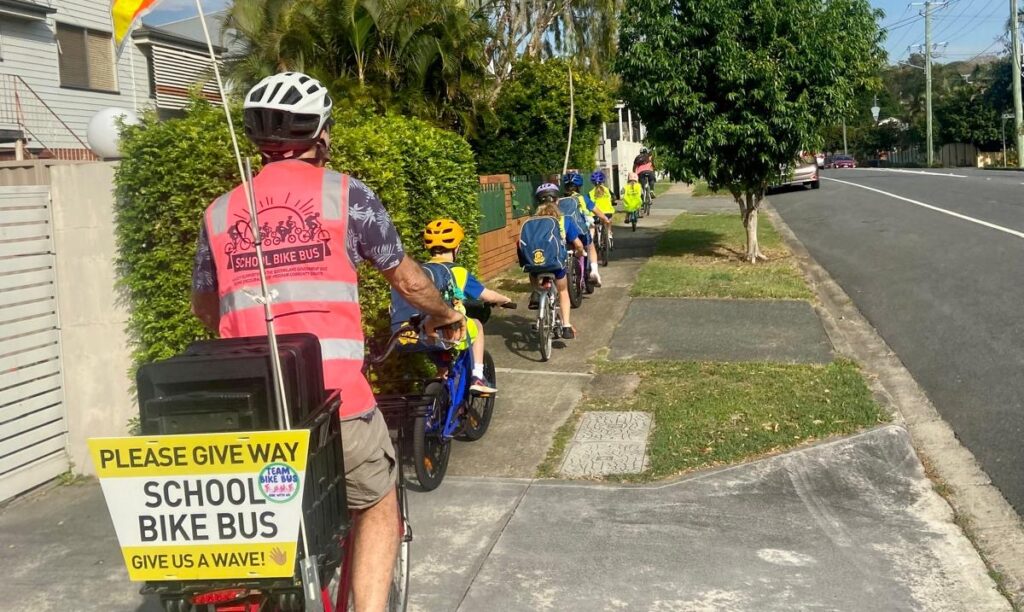
One of the biggest barriers to riding with children is safety – and another is hassle. For many parents, riding solo with kids in traffic feels daunting. Michelle believes the bike bus model lowers that barrier by creating a visible, predictable group.
“I also think that the more that you get people riding and riding in groups, the more it sort of highlights areas where infrastructure needs to be improved and has a collective conversation around it,” she said. “So I think there’s something great about people getting to ride once a week and they have that safety of doing it in a group. But there is also the collective that’s created that gets to have a conversation about what they want in terms of biking infrastructure.”
That collective presence has made riding to school more normalised and visible in the community, and will hopefully help create a local voice for change. While feedback has been sent to their local member around specific areas of concern for active transport users, there have been no outcomes or return correspondence as yet.
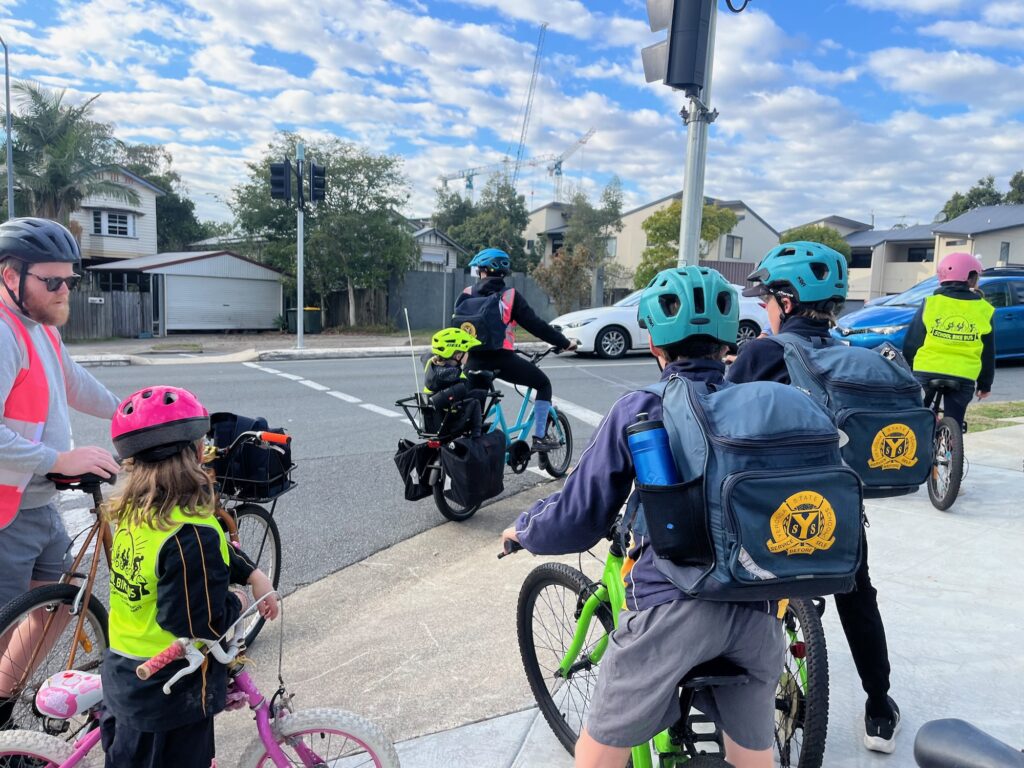
Running a bike bus involves practical coordination, particularly with school-day time pressures. Michelle says technology has been key to keeping families connected, with a WhatsApp chat group.
“We share location. So people then know exactly like, ‘oh, they’re running two minutes late, have we missed the bike bus or are they still coming,’ like they know exactly where we are,” she said. “People can also message and say ‘we’re running a minute late, we’re almost there, can you wait for us?’”
To keep the rides fun, organisers have leaned into atmosphere as well as logistics.
“We just bought these very cheap speakers that we put on bikes and we play music. That just is a lovely atmospheric piece and I think really, yeah, it just really adds to the atmosphere,” she said. We’re pretty keen to download the bike bus play list to see what makes the cut!
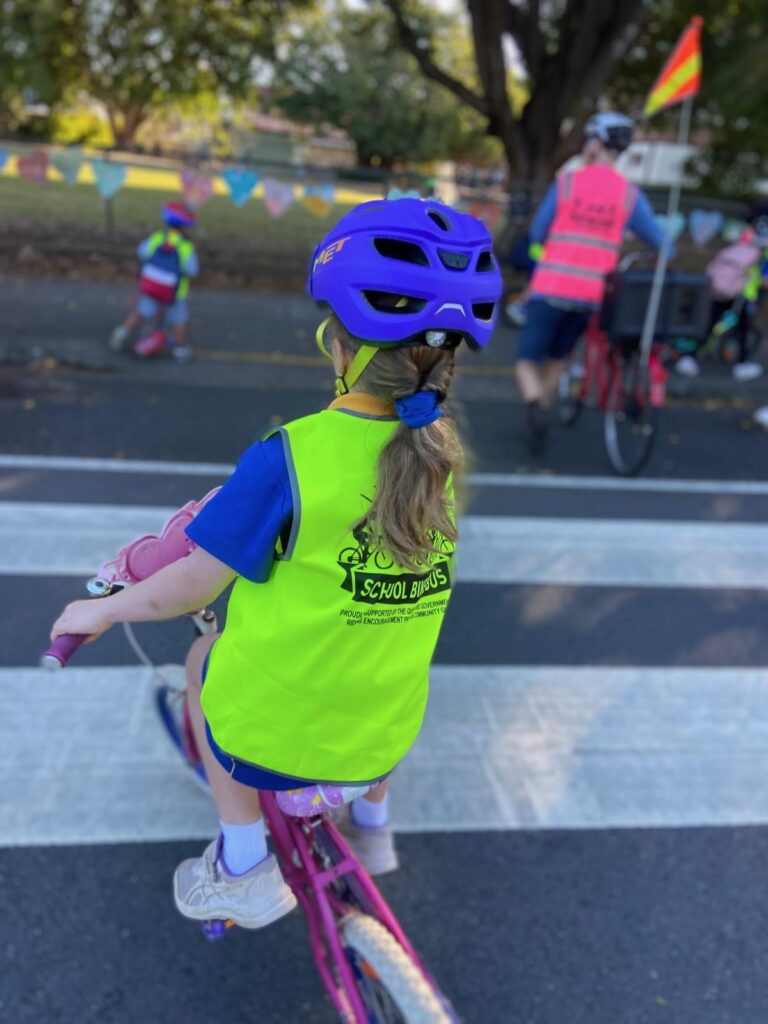
High-visibility vests help make the group noticeable and signal that the riders are part of an organised activity.
“It also gives people a sense that this is an organised thing, like this is a group. It’s not just something random that’s happening,” Michelle said.
With groups of children riding together, preparation is essential. Michelle says leaders carry basic equipment to ensure the ride can continue smoothly.
“We have first aid kits there and puncture repair kit, pump, just the basic things you need for a bike,” she said. “
Small incentives help keep children engaged and excited about riding.
“Snacks I think are really important, not necessarily too expensive and see if you can get a community group or similar to sponsor you,” she said.
The bike bus has also become a social focal point for families.
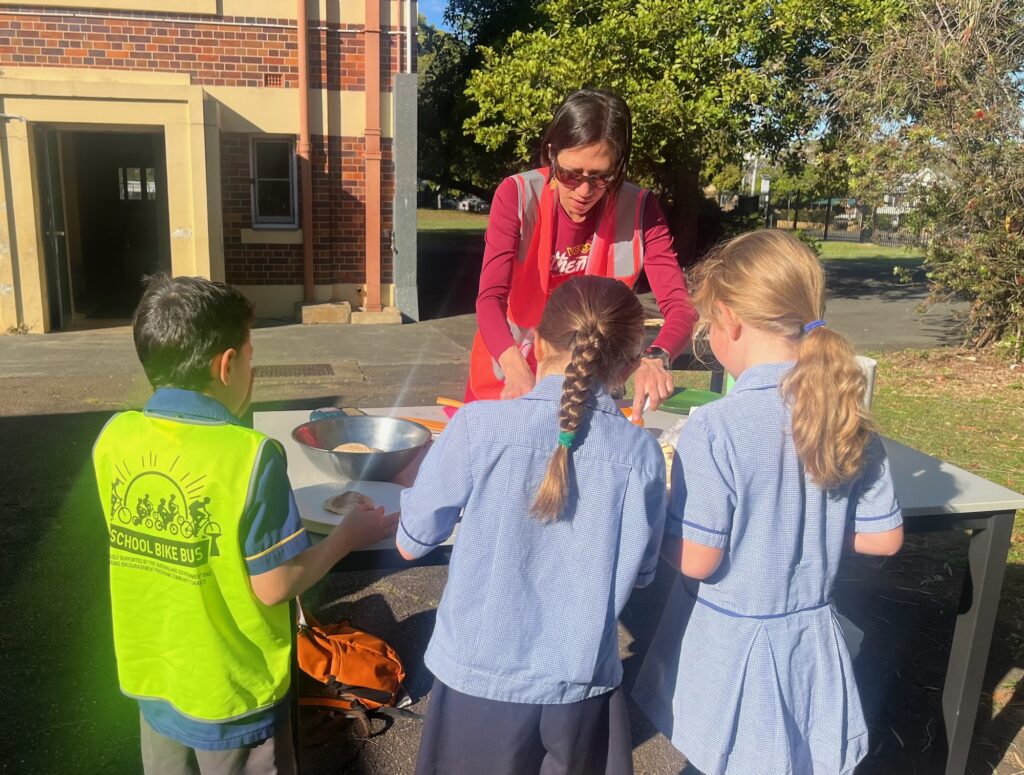
“The other thing we’ve done once a time is a BBQ or a picnic breakfast. And again, that goes down really well and we invited local members to that,” she said. “Again, that’s an opportunity for them to come and have that conversation about the demand.”
Practical tips from Yeronga Bike Bus organisers
Working with schools has been very positive according to Michelle, including for hosting some of their social functions like a pancake breakfast. But an unexpected outcome of the Yeronga bike bus has been exposing the limitations of existing school cycling facilities.
“The other really interesting thing is because everyone’s coming on the same day, it’s highlighted the lack of biking infrastructure at schools, so that’s pushed for requests for more bike racks,” Michelle said. “There’s room to have coordinated conversations… talk to the school about do they actually have good biking infrastructure? Because you would think they would have bike racks, but not necessarily that many of them.”
The presence of dozens of bikes arriving at once has made infrastructure needs impossible to ignore, prompting conversations with school leadership and broader advocacy for better facilities.
A bike bus isn’t just a safe way to chaperone kids to school by bike. A bike bus is about changing habits, building confidence, creating awareness and strengthening community connections among parents and children.
By riding together, families are discovering that cycling can be safe, social and practical while also creating a collective voice for safer streets and better facilities. The Yeronga bike bus is just one that we know of in Queensland, amongst others in on the north side and all the way up to the Atherton Tablelands. If you’re part of a bike bus in your community – get in touch!
Ride2Work Day is one of Australia’s biggest celebrations of everyday bike riding. Whether you’re a Bicycle User Group, wo...
Watt are you torquin\' about? E-bikes and the systems that offer pedal&nb...
For Ellen Beaumont, sport has never been something she dabbled in. It has shaped her identity, her routines, and the way she ...
By Mike Blewitt Ask most cyclists about wet weather gear and they’ll i...