
How to host your own Ride2Work Day
Ride2Work Day is one of Australia’s biggest celebrations of everyday bike riding. Whether you’re a Bicycle User Group, wo...
When Nicky and her young family packed up their lives in Canada and moved to Brisbane, they assumed they’d be buying a car soon after arrival. After all, Australia’s a big place, and they now had a toddler in tow.
But more than a year later, they’re still car-free – and loving it. They started their car-free life while living in Canada.
“It was really a matter of lifestyle shift and change,” Nicky says. “Our car died while we were living in Squamish, Canada — a small community north of Vancouver — and we realised we didn’t really want to own a car again. We decided to test it out for a few months and see how it went, and now, three or four years later, we’re still car-free.”
That experiment has turned into a lifestyle. And when the family relocated to Brisbane, they found it surprisingly easy to keep going without a car.
“We thought for sure we’d need one when we moved to Australia,” Nicky says. “We even looked at buying one when we first arrived. But we live close to the CBD, and public transport is basically on our doorstep. My husband commutes into the CBD on his electric scooter as it only takes him six minutes. Our little boy, Charlie, and I get around on buses and trains. It’s simple and stress-free.”
Going car-free didn’t happen overnight. Nicky admits that at first, the change felt like a big mental adjustment when they were in Canada.
“It definitely takes some reorienting,” she says. “Our brains are so hardwired to jump in the car for everything. You have to shift that thinking, to look at the options instead of the obstacles.”
In Canada, the family used a local rideshare app called Poparide for occasional trips to Vancouver and got creative about local errands. “We did a lot of grocery shopping by bike, and we walked whenever we could,” Nicky recalls. “Once you take the car off the table as an option, it’s amazing how quickly you find other ways.”
That mindset carried over to Brisbane and Nicky says it’s changed how they experience their city and their neighbourhood.
Nicky explained that the benefits have been huge: physically, mentally, and financially.
“Physical activity is probably the biggest one,” Nicky says. “It’s all incidental exercise – walking to the park, taking the bus, running errands. You’re not going to the gym or jumping on a treadmill, you’re just living your life.”
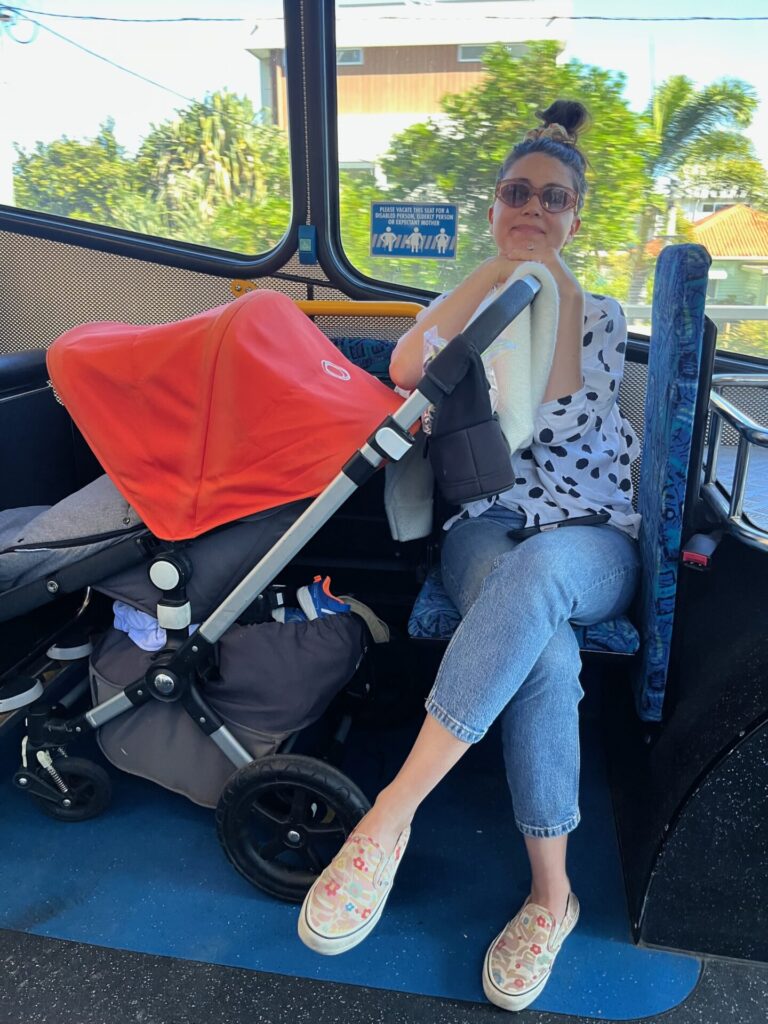
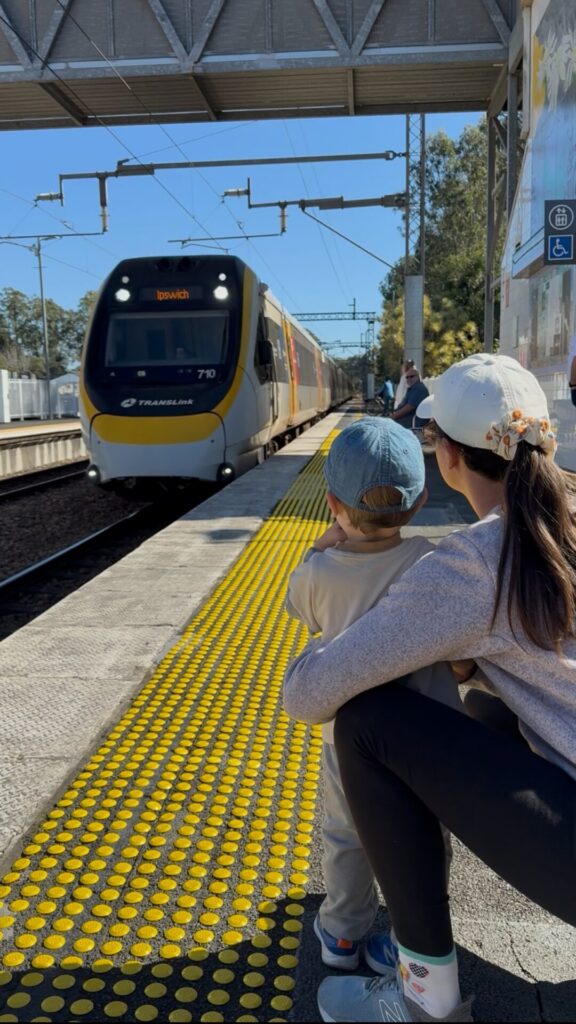
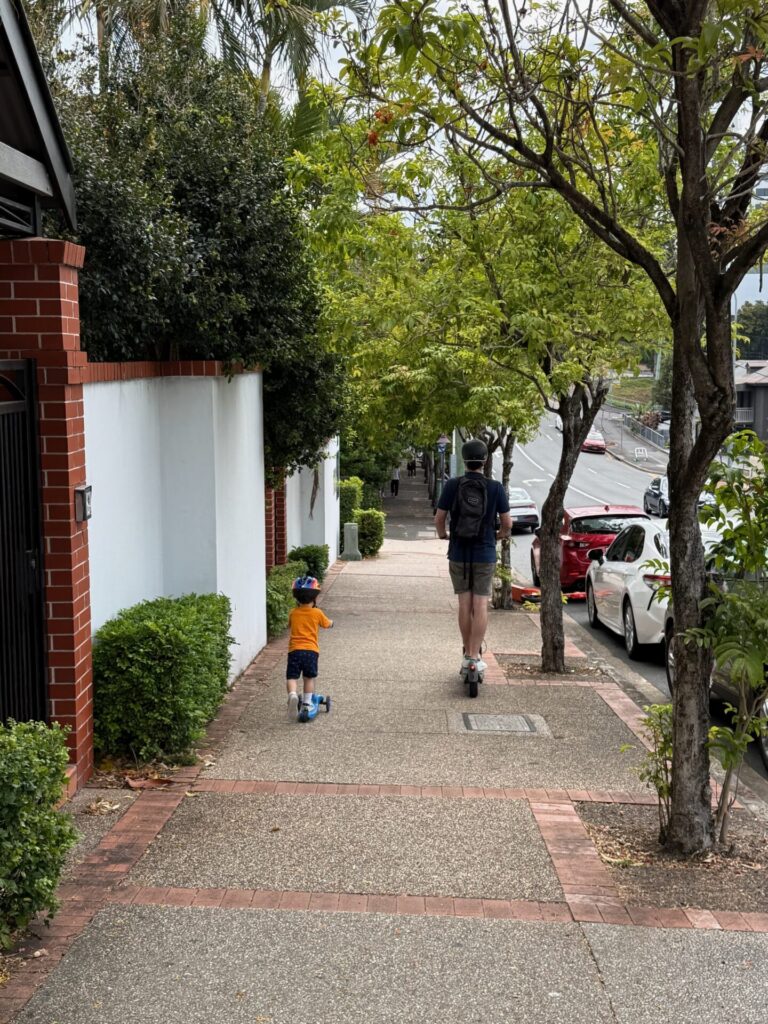
Their toddler Charlie is part of it all. “He’s 22 months now, and he’s on his little balance bike every day. We’ve signed him up for the Starlight Foundation’s Tour de Kids challenge. We pledged 30 kilometres in a month, and I quickly realised that’s not a challenge for us at all!” she laughs. “We easily cover that just walking and biking around every day.”
Beyond fitness, Nicky says the lifestyle has deepened her family’s connection to their surroundings.
“When you’re walking or on the bus, you really see your neighbourhood. The other day, Charlie was pointing out all the spring flowers. He’s noticing things, engaging with the world. We really feel the change of seasons because we’re out in them every day. It’s beautiful.”
And then there’s the financial benefit, which Nicky describes as “huge.”
“I looked at an RACQ report that estimated car ownership at around $1,200 a month for a small car. That’s everything, fuel, insurance, maintenance,” she says. “We spend less than $100 a month on public transport, thanks to Brisbane’s 50-cent fares. It’s a massive difference.”
She says that independence is another unexpected reward. “Even at not-quite-two, Charlie’s learning to stop at the lights, press the button to cross the street. It’s teaching him confidence and independence. It’s amazing to watch.”
That’s not to say it’s without its challenges. Nicky admits the Brisbane heat and hills can be a deterrent, especially living close to the CBD.
“I have a bike though I probably need to check if it’s in working order!” she laughs. “It’s just too hilly here for me to ride regularly, especially with Charlie on the back. I’m looking into a cargo e-bike, maybe through a subscription model, which would make it much more doable.”
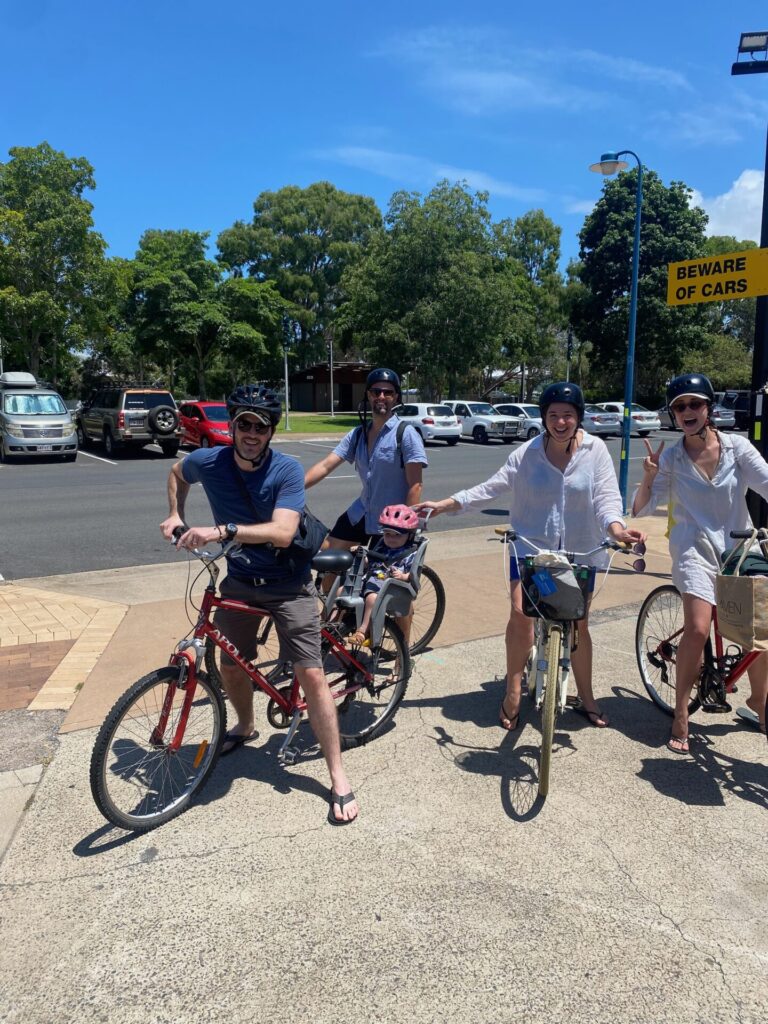
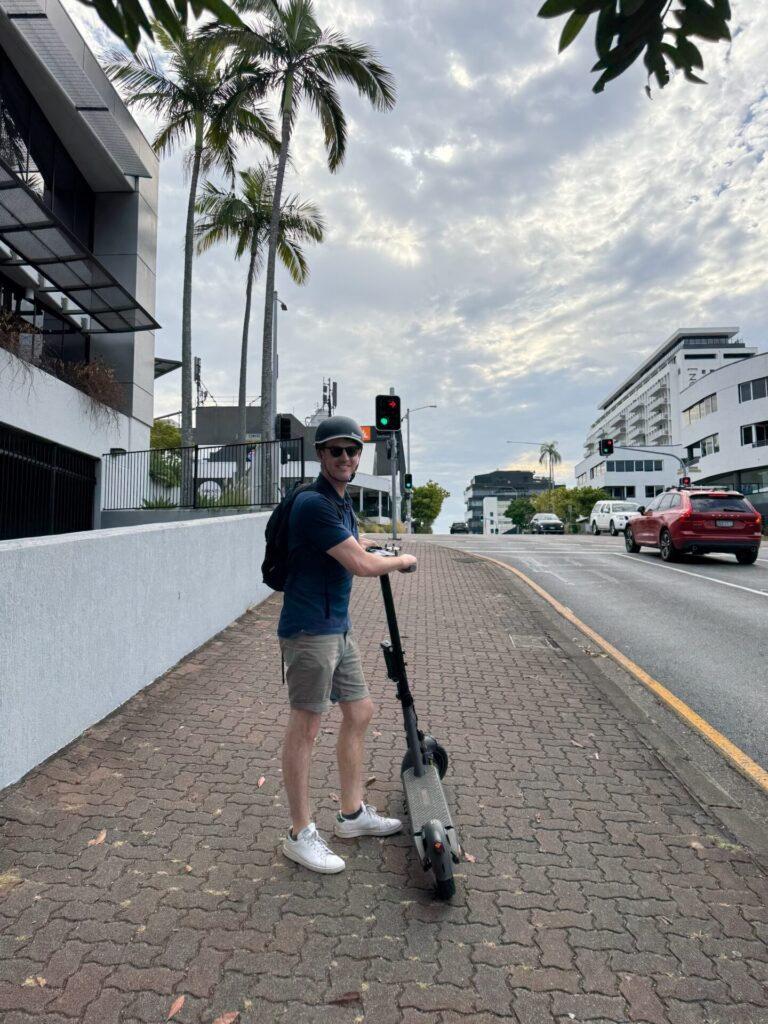
Her husband’s e-scooter has become the family’s secret weapon. “It’s so efficient,” she says. “He’s door-to-door in six minutes and you can’t beat that with a car in city traffic.”
If there’s one message Nicky wants to share, it’s that car-free living doesn’t have to be all-or-nothing.
“You definitely don’t have to go fully car-free to make a difference,” she says. “Start small. Think about one regular trip you do – maybe it’s to the gym, daycare, or the grocery store – and try doing that one without the car. Make it consistent for a month, and it becomes habit.”
For her, research and planning have been key. “Google Maps is my best friend. Check the bus times, figure out the walking distance, build in a little buffer. It’s really easy once you get used to it.”
And she insists that active transport in Brisbane can be fun, not a chore. “Take the ferry!” she says. “It might not be the most efficient way to get where you’re going, but you’re on a boat, it’s beautiful, and it’s only 50 cents. That’s what I love about being car-free. Once you’re comfortable using public or active transport, you can get creative with it and actually enjoy the journey.”
As for what organisations like Bicycle Queensland can do to help, Nicky believes it’s about visibility and normalising small steps.
“When people hear we’re car-free, their first reaction is, ‘Oh my god, I could never do that,’” she says. “But it doesn’t have to be hard. Advocacy that shows how achievable it is makes a difference, even if it’s just one car-free day a week. Once it becomes habit, it doesn’t feel like a sacrifice at all.”
For Nicky’s family, it’s not about giving something up but about gaining freedom. “We’re out in the world every day, we’re saving money, and we feel more connected to our community. I just love it.”
Ride2Work Day is one of Australia’s biggest celebrations of everyday bike riding. Whether you’re a Bicycle User Group, wo...
Watt are you torquin\' about? E-bikes and the systems that offer pedal&nb...
For Ellen Beaumont, sport has never been something she dabbled in. It has shaped her identity, her routines, and the way she ...
By Mike Blewitt Ask most cyclists about wet weather gear and they’ll i...