8 week beginner training plan for B2GC

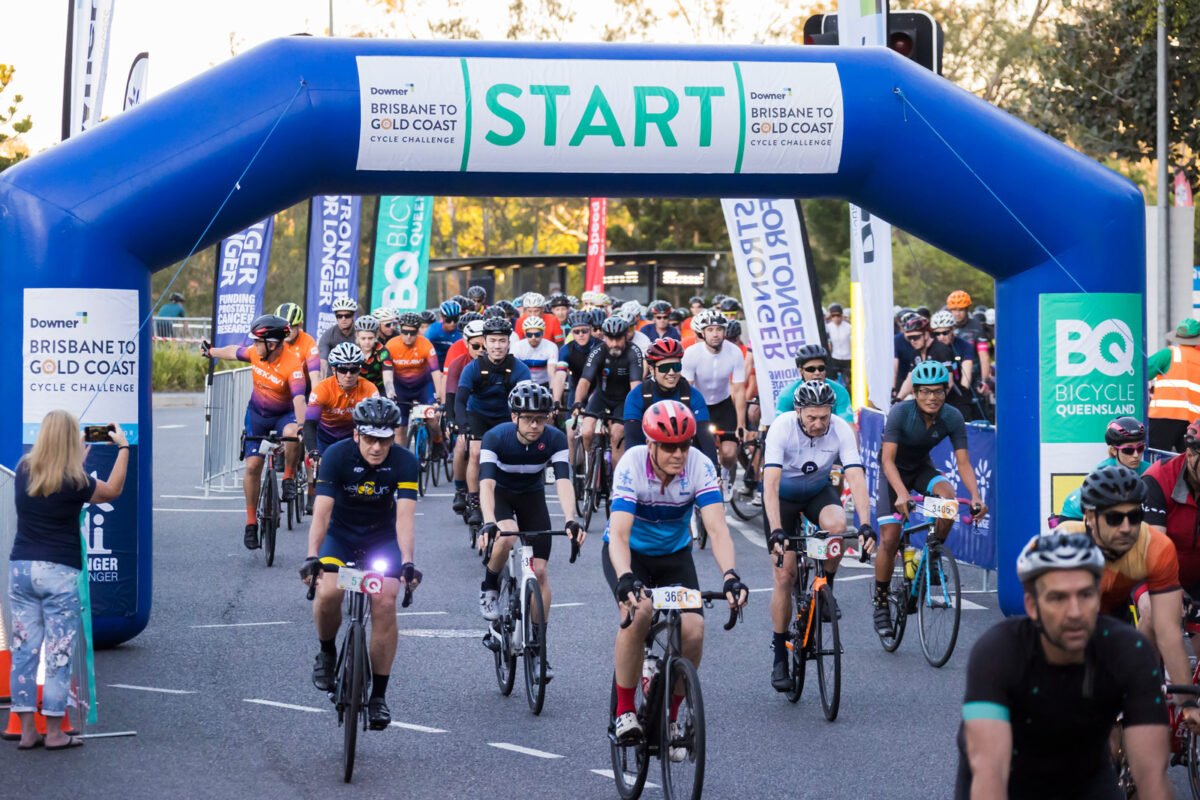
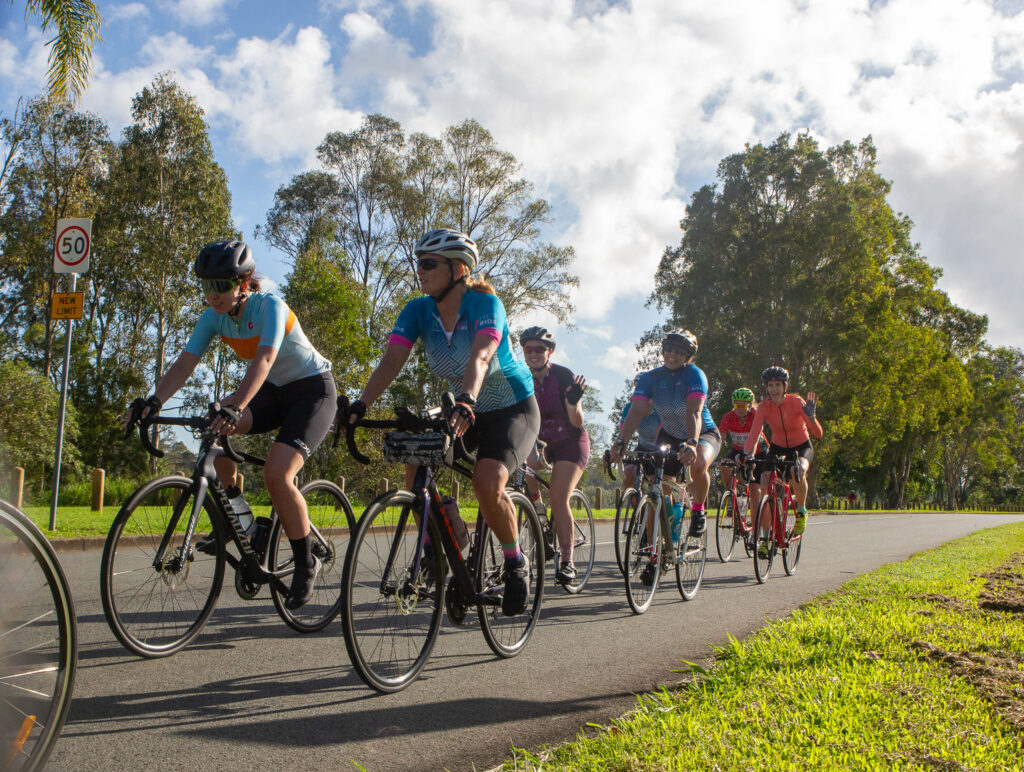
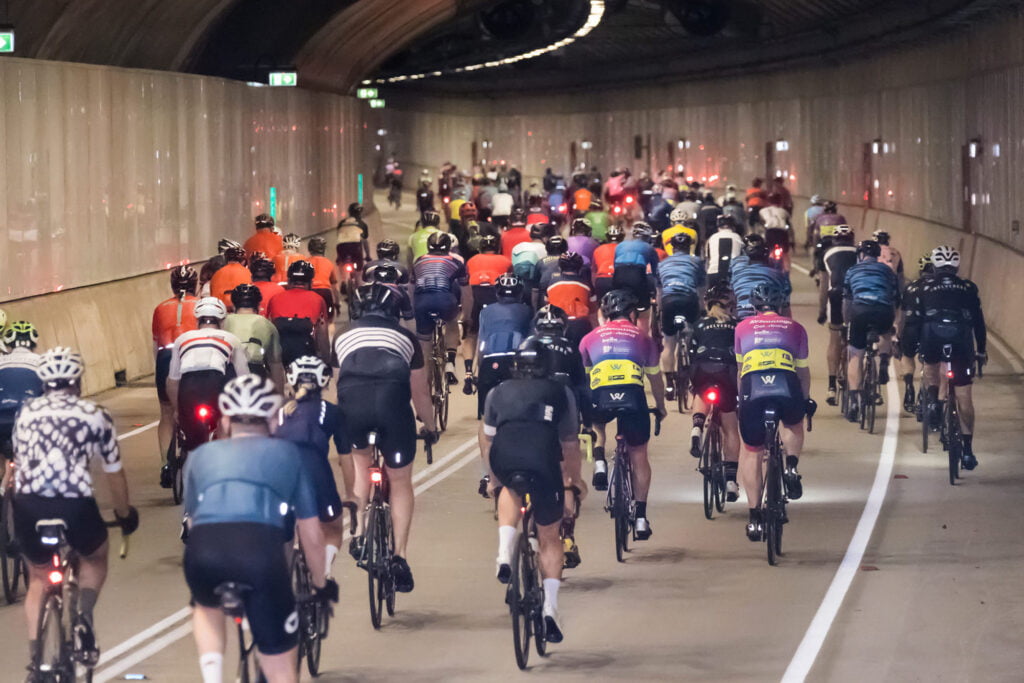
In 2025 Mater’s Brisbane to Gold Coast Cycle for Cancer takes place on Sunday 12 October. The 100km charity ride travels from South Bank to South Port, and over 5000 riders will take part in the challenge, raising vital funds for cancer research and cancer treatment. Entries are open now – if you’re a Bicycle Queensland member check your email, we sent a code for a 50% saving on full price!

You do need public liability insurance for B2GC – if you sign up to Bicycle Queensland before the event, we can email you the discount code so you save on the B2GC entry – email membership@bq.org.au

If you’re wanting to sign up but aren’t sure about riding 100km, we have put together a basic 8-week training plan you can follow that will help build your endurance and comfort on the bike. This should help you gradually increase the amount you are riding, while adding in some stretching and group rides, so you can get used to what the ride will be like on October 12. We hope to see you at the finish!

BQ Member Profile: Imogen Smith

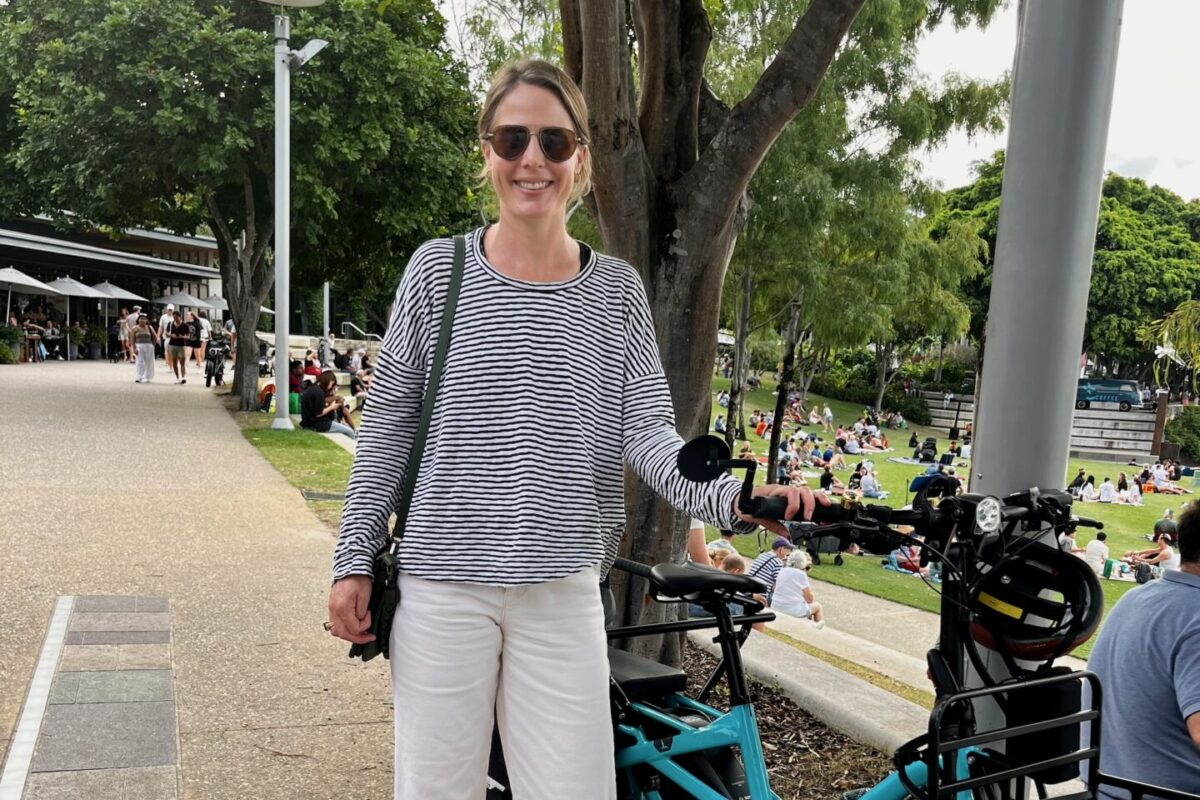
Imogen Smith has been part of the cycling scene for more than 25 years, with a long history of racing bikes across a variety of disciplines. Based west of Brisbane, Imogen joined Bicycle Queensland in October last year ahead of riding the Brisbane to Gold Coast.

‘I’ve known about BQ for years,’ she says. ‘I’ve always seen them out there at events and doing the advocacy work – but I’d never actually been a member. Signing up ahead of the B2GC as a Household of two membership with my partner just made sense, especially with the insurance included.’

While Imogen may not be chasing podiums as much these days, bikes still play a big part in her life. Whether it’s rolling out from home for a long solo gravel ride, bikepacking the Mawson Trail in South Australia, or exploring the forest trails in the D’Aguilar Ranges west of the city, she’s still clocking plenty of hours in the saddle.

‘I’m riding a little less competitively now, which has actually opened up more of Queensland for me to explore. I’ve been loving some of the quieter routes and less pressure to “train” all the time.’

With that shift in mindset has come a new appreciation for the benefits of being a Bicycle Queensland member – especially when it comes to peace of mind.

‘It was the insurance that made me join, to be honest. I’ve had an AusCycling licence, or Cycling Australia or MTBA licence when racing, but that’s not a membership I need anymore. However, I’ve seen friends have accidents or close calls, and it really made me think. Knowing I’m covered if something happens gives me the confidence to ride more. So the insurance that comes with BQ membership is really valuable to me.’

Since becoming a member, Imogen has also taken a deeper interest in the work BQ does behind the scenes. From connecting cycling communities across the state to having a voice in national discussions about bike safety, she’s realised there’s a lot more going on than most riders might notice.

‘Once I joined and started getting the newsletters and seeing what BQ’s working on – especially around infrastructure and safety – it really hit home how important that advocacy work is,’ she says. ‘It’s not just about insurance. It’s about safer roads and better access for everyone on bikes – on road and off.’

And while advocacy and insurance were front of mind when she joined, there’s another benefit that’s caught her by surprise.

‘I didn’t expect to get so much value from the discounts!’ she laughs. ‘I’ve already saved over $300 on gear I was going to buy anyway – from sun sleeves to nutrition to a new pair of Bont shoes. That was a real bonus.’

For Imogen, being part of BQ now feels like a natural extension of her riding life – one that brings reassurance, community, and new discoveries.

‘I wish I’d joined sooner, honestly. There’s a lot more to it than I realised – and I think any rider, no matter how experienced, can get something valuable from being part of it.’

BQ Meets: PieProof Helmets

If you ride through spring in Australia, you know the sound: the sudden, sharp clack of talons on helmet plastic, the furious flapping of wings, and the unmistakable screech of a territorial magpie. For many cyclists, it’s a rite of passage. For Leo Boesten, it became a call to action.

Leo, the founder and designer behind PieProof Helmets, had what you might call a very bad magpie season while breaking out of Post-COVID Melbourne in 2022 for a rail trail ride.

Leo experienced a relentless barrage from airborne aggressors. “It was just abominable,” he recalls. “I was just pounded.” True to form, Leo found a way to inject some humour into the experience. “I kept score like an Aussie Rules match. Points were near misses, goals were hits. I logged it all on Strava.” (Final score over 3 days; Magpies 78-213-681 : Leo 0-0-0  

“I ended up with a bloodied ear and a bleeding head,” he says. “I had a look around to see if there was some sort of helmet or solution… but there wasn’t anything out there.”

This was a tipping point for Leo.

“I thought, there’s got to be a better way,” Leo says. With experience in product development and a growing itch to create something meaningful, he started toying with an idea: a cycling helmet designed specifically to reduce or even eliminate the chances of magpie-related injury.

From talon trauma to tangible tech

The design process for the PieProof helmet wasn’t about reinventing the wheel, but about evolving what already works. “Most helmets are built for crash protection, which is essential,” Leo explains. “But they don’t do anything about aerial attacks from behind or above. That’s where magpies hit.”
The result? A unique helmet designed with magpie behaviour in mind. PieProof helmets feature a series of features to disrupt a magpie strike. The design of the rear vents stops beaks and claws from entering, and all vents have a strong mesh covering – which is throughout the whole shell. There are removable covers for the ears and a visor (coupled with glasses) for added eye protection. There is also a small rechargeable red LED light in the helmet, and a really adjustable retention system and straps. With three sizes available, it’s easy to get the perfect fit. A helmet isn’t very safe if it doesn’t stay put.
The whole design is discreet but functional—and unlike the cable ties, streamers and googly eyes often used as improvised and rudimentary magpie-defence helmets, PieProof helmets actually look good. But that didn’t happen overnight.

As the concept solidified, Leo partnered with experienced industrial designers and consulted with cyclists who had their own swoop horror stories. He worked with safety consultants to ensure that the added magpie defence features didn’t compromise the helmet’s crash protection or comfort.

While the first prototype that came from the factory just didn’t meet the criteria, once Leo sent them a series of videos showing how aggressively magpies swoop, the designers understood the brief completely, and the second iteration is essentially what you can now buy.

Real-world results

Since launching PieProof, Leo’s received a wave of gratitude from riders across Australia—particularly those who ride in known magpie zones, some now even look forward to an attack! We reviewed a PieProof Helmet last spring – with great results!

While the helmet doesn’t guarantee immunity, the results speak for themselves. Riders report  less anxiety on known magpie routes, and greater confidence heading into spring.

“People have messaged to say, ‘I went through my usual route and didn’t feel the need to fight off the bird,’ or ‘The bird tried to scare me off, but just gave up after a while because I was able to ignore it.” Leo shares. “That’s the goal: reduce the damage, reduce the risk, stay calm and focus on the road or path rather than trying to fight off the bird and possibly crash.”

“It’s not magic,” Leo says. “But it’s purpose-built for a uniquely Australian problem. That’s what sets it apart.”

Beyond the beak

Here at Bicycle Queensland, we reviewed the helmet in the spring of 2024. And while the added safety features around protection from magpie strikes are great inclusions, the PieProof helmet is a fantastic helmet in its own right. Given the design means your chance of injury from a magpie is just about nil, the added safety of not being distracted or crashing while fending off a magpie is something that cannot be underestimated.

With the helmet now in full production, Leo’s focus is shifting to awareness and distribution. PieProof has partnered with Bicycle Queensland as a BQ Alliance partner, making the helmet more accessible to members and supporting education about riding safely during magpie season. PieProof helmets are available in three sizes, in either black or white, at a variety of bike shops around Australia. Of course, they are stocked more where magpies are more active!

For now, he’s proud of what PieProof has achieved. From bleeding ears to a helmet brand, it’s been a wild ride—one that proves the best ideas often come from the most frustrating problems.

“It started because I just wanted to ride without getting my head opened up,” Leo laughs. “Turns out, a lot of people wanted the same thing.”

PieProof helmets cost $109.95, and are available in select Queensland bike shops including EPIC Cycles, Pedal Inn Bicycle Garage, GVRT Cycles, Border Bikes or online: pieproof.com.au

BQ Meets: Pedal Inn Bicycle Garage

In the heart of Brisbane’s bayside, Pedal Inn Bicycle Garage is more than just a shop – it’s also a gravel rider’s dream basecamp, a bikepacker’s planning station, and a warm, unpretentious hub for anyone chasing adventure on two wheels – for kids young and old. Founded in 2019 by Nick and Michelle Sando, the store grew from a shared frustration: a lack of bike shops that truly understood everyday cyclists and those chasing off-the-beaten-track experiences.

“We were sitting around a fire one night, pondering our future,” Michelle says. “Nick wasn’t happy in his job and missed being on the tools. A friend planted the idea of opening a bike shop. We both love riding, it just made sense.” That night, the idea for Pedal Inn Bicycle Garage was born, a dream to create something different — approachable, expert-led, and community-focused.

When the shop opened, their goal was simple: offer honest servicing and advice to fill a clear gap in the local area. But it didn’t stay small for long. Demand surged during the pandemic, with customers craving reliable repairs, hard-to-find components, and real advice. Michelle soon left her job to work in the business full-time – and she’s never looked back.

“It’s fun and it’s rewarding,” she says. “We talk bikes all day and help people discover adventure – what’s not to love?”

That sense of discovery is central to what makes Pedal Inn unique. While they serve a broad mix of cyclists, they’ve become a magnet for riders looking to escape; explore long routes, and build bikes as unique as their ambitions – and personalities.

“Off-road is where we really shine,” says Nick. “We live and breathe it. Our own bikes are constantly evolving, and we test everything. We know what works because we ride it ourselves.”

Their experience spans multi-day off-grid bikepacking adventures, credit-card touring, mixed terrain epics and backyard overnighters. It’s no surprise riders travel from the Sunshine Coast, Gold Coast, and beyond to get advice – and gear – they can’t find elsewhere.

“People come in with questions like, ‘Can I use this bike for an overnighter?’ or ‘How do I carry gear on a carbon frame?’ and we can talk through all of it — racks vs bags, tyre clearance, gearing, all the fiddly bits that make or break a trip,” says Michelle. “That’s where we really help.”

They also help customers build from the frame up — an increasingly popular option for people wanting a truly personal setup. This has covered bikes for urban adventures, dream builds for mountain bikers, and of course bespoke builds for off-road adevntures.

“We often end up solving problems that aren’t addressed in stock builds,” says Nick. “Someone might want wide tyres, flared bars, and a dynamo hub — but also be under a certain budget. We make it work.” These types of bikes are not found in stock builds, but Pedal Inn are frequently working with riders to create what they want and need.

Pedal Inn doesn’t just stock popular brands, they curate gear with intention, favouring products that perform when the bitumen runs out. Whether it’s a custom steel tourer, a lightweight gravel race bike, or a hybrid build that can handle school drop-off and dirt trails, they approach each customer with deep listening and tailored guidance.

“We’ve built bikes for local Rail Trails, Hunt 1000, Tour Aotearoa and even European winery tours” Nick adds. “You don’t have to be an ultra-endurance rider either — we love helping people get started with just one bag and a sense of curiosity.”

Through their online store, they’ve become a go-to for hard-to-find parts like alternative handlebars, clever mounting solutions, and gear that thrives in dusty, bumpy conditions. It’s all backed by first-hand experience — something that sets them apart in an industry increasingly driven by algorithms and warehouse logistics.

“We’re not just selling a bike or a bag — we’re selling confidence,” Michelle says. “People know they can ask us anything, from tyre pressures to where to camp.”

Pedal Inn’s alignment with Bicycle Queensland’s mission made becoming a BQ Link retail member an easy decision.

“Bicycle Queensland’s advocacy work supports what we care about — safer infrastructure for riding, better access for all kinds of riding, not just commuting,” Michelle says. “Gravel and bikepacking are growing fast, and we need to protect and support the places people want to ride.”

As a BQ Link partner, they enjoy extra exposure and community connection, but the real value comes from shared purpose.

“We want more people on bikes — not just for sport, but for life,” Nick says. “If we can help someone plan their first overnighter or fall in love with dirt roads, that’s a win. And being part of BQ means we’re part of something bigger.”

Six years on, Pedal Inn continues to grow — not by chasing trends, but by doubling down on what they do best: helping people discover the joy of riding, one custom build or trailhead conversation at a time.

BQ Member Profile: Matt Nauthe

Matt Nauthe is a bike rider based in Brisbane, who joined Bicycle Queensland quite recently in 2024 – but riding bikes is not something new to him.

‘I started riding because I needed a mode of transport. I grew up in the Blue Mountains in New South Wales. So using a bike gave me freedom to get around when I was about 12. It let me get out into the bush to ride with friends – and riding progressed from there.’

Matt ended up spending time riding and racing as well, from cross-country through to downhill, while also spending some time working in the bike industry. Now, bikes are a means for transport and enjoyment – plus some adventures as well.

Matt riding out of Jimna via Conondale National Park

‘Bikes have come and gone a bit over the years for me. I guess adventure is the biggest thing for me. I’ve done quite a bit of cycle touring, and that has taken me all around Tasmania.’

‘Living near Brisbane, I do try to get out for a range of multi-day trips, there is so much great terrain to ride that is close by.’

Matt has also hopped across the ditch to New Zealand plenty of times, from riding trips in Central Otago, through to riding the Tour Aotearoa and next up – the Sound to Sound bikepacking route, which runs 1500km from Queen Charlotte Sound to Milford Sound.

‘I joined Bicycle Queensland primarily for the insurance that is included with membership. A friend of mine had a bad accident on his bike on the way to work, and I saw all of the expenses that incurred. It made me stop and think, and I realised that insurance via the BQ membership just made sense. It gives me a bit of reassurance that I’m covered.’

Given he rides a lot to and from his work near Brisbane City, Matt is also very much aware of the importance of the advocacy work that BQ does to promote safer riding and better riding infrastructure.

‘I went to one of the BQ meetings last year. It is a good chance to hear other members talk about cycling infrastructure in their areas. It opened up my eyes to what can be done better. I have always just commuted on whatever route was available, but seeing how much better infrastructure can be has made me more aware of the opportunity for improvement, which will help get more people riding.’

Matt told us that he believes a lot of progress can be made by having similar quality infrastructure in more areas, with a connected network.

‘Riding in some parts of Brisbane is pretty dicey. There are so many opportunities to make riding safer for every day bike riders. I’m more open to taking a few more risks to get around by bike. But other people I know have been put off from riding because the risk is too high. So it’s always great to see the advocacy initiatives from BQ around creating better networks for bike riding.’

As we finish up talking to Matt, we asked what he thought anyone thinking about BQ membership should consider, based on his experiences so far.

‘The big thing for me is the insurance, but I found attending any BQ public meetings was also a great way to see there are other people like me who want the same change. I’d also encourage people to check out the BQ website, with incredible resources including places to ride all over Queensland.’

Head to our Membership page to find out more about becoming a BQ Member.

How to get into bikepacking

It has been said that the best gravel bike is whatever bike you own now. And in the same vein, the best way to start bikepacking is to use what you have already and plan a trip that suits. Afterall, what’s better than spending a day riding your bike? Spending two or more days riding your bike! While riders have been bike touring for decades, bikepacking has become a popular way to explore a little further off the beaten track, using luggage that can be fitted to almost any bike, meaning just about any route could be a bikepacking adventure.

Queensland has some incredible opportunities for bikepacking, especially with dry and mild winters and shoulder seasons. Queensland’s numerous rail trails are ready-to-go adventures in themselves, however they can also be the launching point for further adventure. Through some route planning, you can use rail trails to link to old stock routes, forest roads and back roads to make some incredible routes through the state.

Heading off on a multi-day ride might seem a bit daunting – so we’ve got a basic guide to help you get started.

Sometimes the best part is the not riding part, taking in the scenery.
Start small, ride local

We’d suggest not overthinking it early on. You can tackle a well-known route, even something you have ridden before, but break it up with an overnight stay. And remember, that doesn’t necessarily need to be camping. Bikepacking isn’t so prescriptive that you need to be totally self-sufficient. You can book a room in a pub, a hotel or a cabin in a caravan park if that suits your ride.

The point remains though, your first overnight trip should be a route that isn’t over reaching for you as a bike rider. Even if you think you can ride 70km in a day, consider that you will be carrying at least some equipment for an overnight stay. So maybe 55km is a safer bet? You can always push the distances out if you feel the need to on later trips. Your first ride should allow you to have the time to fine tune your luggage, what you need to carry (and what you don’t!) without any undue time pressures.

If you’re in south east Queensland, a trip along the Brisbane Valley Rail Trail might be the ideal place to start, given it is so well marked, has numerous places to fill up with water and has accommodation options at several towns. Just remember to book!

The ideal bikepacking bike

If your bike is off-road capable, such as a mountain bike, cyclocross bike or gravel bike – then you’re probably ready to go, depending on the route you want to tackle. Remembering that a bikepacking trip does not need to match the adventures you might see on social media – a bikepacking trip needs to match your sense of adventure, and what you have access to.

A dual-suspension mountain bike might not be required – but if that’s what you have it is perfect!

Most bikepacking trips will involve more hours on the bike than you may otherwise do – so comfort counts. Having a saddle, grips and bike fit that all suits you is ideal. If you have been riding for some time you will have this all figured out. Just remember that a multi-day bikepacking trip is unlikely to be the best time to try a new saddle, new bike shorts or new bike fit!

There is often a lot of discussion around whether a mountain bike or gravel bike is the best fit for bikepacking. The answer is all down to the terrain you will cover, and the luggage you will carry. Many riders find that a hardtail mountain bike can carry more, and have the riding position and gearing to suit longer, hillier routes, especially with camping gear.

Gravel bikes may be a better choice for extended rail trail adventures with accommodation – where you can travel faster with higher gears, and carry less thanks the accommodation services along the way.

Regardless of your bike choice, pay attention to gear options. Having access to lower gears will often be a leading decision maker, unless you will only tackle routes on rail trails. Tyres and wheels are another major consideration, as they will determine comfort, grip and reliability. Seek advice from your local bike shop, remembering that a more remote trip will likely have different needs to one on a frequently travelled rail trail!

Pack the gear you need – and pack it properly

The Ground Effect Cycle Clothing staff are all very keen bike riders, especially when it comes to getting out, and staying out, with bikepacking trips. They have a wide variety of resources on their website.

‘The desire to travel light, fast and far – with minimal exposure to wear ’n’ tear – has seen the rapid development of nifty bags and pockets that attach to your bike. They have quickly become the preferred choice for many on multi-day mountain bike trips…’

This is where bikepacking differs to bike touring. Touring will involve panniers, and more traditional marked routes in the countryside. Bikepacking will often spend a lot more time off-road – so taking only what you need and packing it so it stays out of harms way becomes essential.

DCIM\100GOPRO\G0170912.JPG

Bikepacking luggage aims to move any equipment off your body and onto your bike, with key locations being a bar roll, plus frame bags and huge saddle bags. There are also some nifty racks that do suit full-suspension bikes. The luggage you use is very much dependant on the bike you have – with the options for fork bags, toptube bags and custom made pieces for all the little areas on different frame designs.

Bikepacking mountain bike routes are the true speciality of the Ground Effect staff. This is when weight, pack size and reliability come to the fore.

‘For multi-day mountain biking and off-road touring the knack is to travel light, but safe,’ they note on their website. ‘On technical singletrack in particular excess weight becomes quite a handicap – requiring both increased skills and effort. So pack smart.

  • Lightweight bike-specific rainwear goes without saying. 
  • The ‘killer app’ is a modern, lightweight, low volume down sleeping bag. The Sea to Summit Traveller has 200gm fill. An adequate rather than cosy pit for the night but weighs just 400gm in total and occupies a paltry 1.5 litres in your bag.
  • A lightweight down or primaloft jacket comforts you around the hut or campsite, and extends your lightweight sleeping bag if the nocturnal temperature sinks a bit low.’

Here at Bicycle Queensland, our local bikepacking trips won’t go to the same places the Ground Effect staff get to, who can call Old Ghost Road and the Heaphy Track local trails. So we have a few other suggestions of must-have items:

  • First Aid kit including compression bandage
  • Water purification tablets
  • 1 spare tube for each wheel (minimum)
  • Proper bike pump, plus patch kit, multitool, chain links and tyre levers
  • Ideally, long sleeve coverage and SPF50 suncream

Your particular route will have equipment specific requirements based on distance, terrain and the season you travel. Plan ahead so you’re equipped.

Finding a route

Andrew Demack is not just Bicycle Queensland’s Director of Advocacy, but he is a life-long cyclist who believes that life is better on two wheels.

‘What I really enjoy is the mental freedom you get when you’ve decided to say this day, and maybe the next four days I’m just gonna ride my bike.’

This, at the heart of it, is the escapism and freedom that bike riding and bikepacking offers, And Demack finds that he’s got a virtual escape as well – planning a multi-day bikepacking trip.

‘I’ve got about 10 different tours planned that I haven’t done yet that I really like the look of but I just haven’t got around to doing them yet.’

For those who want to get out and see some new places, Demack believes we’ve got better tools at hand now than ever before, thanks to online route planning.

‘You can plan a ride anywhere in the world, look at the Strava heat map and see who’s riding around there. You can have a look at Komoot or Ride With GPS and see what other routes exist in that area. There are so many resources, and I think that encourages me to go somewhere new as well. From, time to time I’ll convince myself it’s research for Bicycle Queensland!’

In terms of breaking down any barriers to planning multi-day routes, Demack is adamant that the growth of rail trails around Australia is playing a big role, getting more people on bikes, off-road, and into the great outdoors. All without needing to master a map and a compass, or even the vagaries of downloading a .gpx file. Still, there’s an element of adventure in making it all click.

‘We’ve got a perfect four or five day ride from Kilkivan back to Ipswich that lots and lots of people have done now. One of the barriers to doing it without a vehicle is working out how you get from Gympie to Kilkivan, there isn’t an easy way to do that other than the school bus, so you have to go on a school day for the school bus. Then you can ride on the two rail trails and the link trail in between. This is a tour that is achievable  by almost anybody. You don’t need to be any sort of athlete to be able to ride your bike for 60-70kms a day across four or five days. But it’s an interesting and fun tour, and a way to see some pretty rugged areas in south east Queensland.’

Here at BQ we have added some longer routes to our Where to Ride page, including some routes ideal for bikepacking.

‘I think that what rail trails are great for is giving people that first go at something and then saying, “oh, I saw a trail going off into the bush near Yarraman. I wonder where that goes?” Maybe next time those riders will explore away from the rail trail. ‘I’m hopeful that we will have even more rail trails across the state over the next 10 years or so, with a network that provides these opportunities for local people all across the state to be able to have an adventure and see what’s possible for them.’

BQ Meets: Bike Fit Studio

In a custom fit-out studio in Brisbane’s West End, riders of all types are finding their sweet spot – on the saddle. This is Bike Fit Studio, and for founder Nick Formosa, the mission is clear: help people ride in comfort, avoid injury, and make cycling an enduring part of their lives.

Nick’s journey into professional bike fitting started decades before the technology caught up.

“I started working in bike shops in the mid-’80s as a kid – sweeping floors and washing windows,” he says. “Back then, we did basic static fitting in the shop, and I was always intrigued by it. I wanted to get my own fit right, and I liked helping others do the same.”

Fast forward to 2008. After years of coaching and referring people elsewhere for fits, Nick recognised a gap in the Queensland market. “There wasn’t too many people in Queensland actually doing this professionally,” he recalls. “I was sending people away all the time, and there was clearly a need.”

That need wasn’t what he initially expected. “It started out as more of a performance need, to be honest,” Nick says. “But over time I realised the market was predominantly recreational road—people who just wanted to be comfortable on their bike.”

The evolution of the everyday cyclist

The demographic walking through Bike Fit Studio’s door has shifted significantly over time. In the early 1990s, Nick says, most of the cyclists he knew were from the racing or triathlon scenes. Recreational riding simply wasn’t as widespread. With the growth of rides like the MS QLD Brissie to the Bay, the B2GC and of course fondo events around the country.

“Now it’s massive,” he says. “It’s the biggest part of the market.”

He recalls a recent day where three clients came in – an ENT surgeon, a property developer, and a lawyer. “They were all riding for the same reason: a bit of mental health support, stress relief, and physical activity away from their day-to-day lives.”

This rise in recreational riding means more people are discovering that discomfort on the bike isn’t something they have to just put up with. While some still arrive sheepishly, unsure if they’re in the right place, Nick says that mindset is shifting.

“I used to get that question a lot—‘Am I in the right place?’—but not so much anymore. People are starting to understand that a bike fit isn’t just for racers.”

What to expect from a bike fit

A professional bike fit might not be the first thing riders think of when they experience discomfort, but Nick believes it should be.

“You know, some people come in and say they’ve spent the last six months seeing a physiotherapist or doctor because their knee’s been bothering them,” he says. “Then a medical practitioner might refer them to us, and sometimes we pick up things that are actually contributing to the issue—whether it’s saddle position, handlebar reach and height, or cleat position.”

The most common complaints? “Saddle discomfort, neck discomfort, and upper back discomfort,” Nick says without hesitation. “Knees now and then, but mostly it’s the upper body and saddle issues.”

Many of these can stem from poor fit or incorrect bike sizing, but often it’s a combination of both. And while some riders come in without a particular complaint, they often leave with a clearer sense of what a good position feels like.

“A bike fit is essentially about understanding what your body can cope with and making decisions around the position to support that,” Nick explains. “We look at the three contact points—the saddle, the feet, the hands—and how pressure is distributed across those.”

The process is very in-depth. It starts with a range of visual assessments around a rider’s mobility, or any anatomical issues like minor leg discrepencies. Nick uses the Retul fit system, which uses the motion detecting camera and a bunch of smart tech including a tool that looks like Dr Who’s screwdriver to map out your current fit and assess how you fit when pedalling on the bike, including under load. It looks like a mix of art and science – but specific tools and new technology really help to quantify things.

This feeds a lot of data into the system for Nick to analyse. While we see figures on a table, Nick sees signs of incorrect crank length, a stem that may be too long, a saddle that is too high or maybe a case that knee stability has been neglected. This is when the work starts. For a new buyer, Nick can analyse sizing and geometry to get frame size and even the bike choice right. For those with a bike already – the changes begin, as required.

The evolution of a bike fit

A bike fit isn’t a one-and-done process. Nick’s team takes the time to understand how much a rider is using their bike, what their goals are, and how those goals might evolve. For someone riding once a week, the fit prioritises comfort above all. For riders logging four or five sessions weekly, there’s more room to incorporate performance elements.

“Fit definitely evolves over time,” Nick says. “Say someone comes in riding once a week, and then their kids get older, they find more time, they start doing three or four rides a week… suddenly they’re more capable, and their position can shift with them.”

Changes in body composition also play a role. “If someone loses 10 or 15 kilos, their mobility and position on the bike will change. We usually recommend a review fit in cases like that.”

Time-trial and triathlon bikes, in particular, require ongoing tweaks. “Triathletes are always evolving—starting on road bikes, then moving to a time trial bike, and eventually upgrading again,” he says with a laugh. “Some of them are our best customers. They’re always chasing small gains.”

The price of pain-free riding

With a standard road or mountain bike fit starting at around $400, Nick acknowledges it’s an investment—but one that’s minor compared to a new bike or recurring physio appointments.

“We hear it all the time: people spend thousands on a bike, but they’re in pain after 20 minutes,” he says. “For a lot of people, a fit can mean the difference between riding more or letting the bike collect dust.”

Post-fit, riders are encouraged to give their bodies time to adjust. “Typically within two weeks, you should have a good indication of how the changes are working,” Nick says. “We send a follow-up form after five or six rides to see how they’re going.”

That process is key, because riding style, frequency, and goals all shape the ideal fit.

“We’re not trying to make everyone look like a pro. Most of us aren’t racing in the Tour de France,” Nick says. “It’s about finding the right position for where someone is now—and maybe where they want to go.”

The Bike Fit Studio philosophy is simple: comfort leads to consistency, and consistency leads to better outcomes—whether that’s performance, fitness, or just peace of mind.

“If you’re not comfortable at least 85% of the time you’re riding, then you should probably come in,” Nick advises. “Because the goal isn’t just to ride. It’s to enjoy it.”

Visit the Bike Fit Studio website.

What Bicycle Queensland Learned at the 2025 Queensland MTB Forum 

When Bicycle Queensland’s CEO Alton Twine and Director of Advocacy, Andrew Demack, travelled to Cairns for the 2025 Queensland Mountain Bike Forum, it wasn’t just another stop on the advocacy circuit, it was a powerful reminder of how much mountain biking can shape the future of cycling in Queensland. 

The forum was held between the 2025 UCI Masters World MTB Championships and Crankworx Cairns, two international events that called the Smithfield trail network home in May 2025. Cairns is a spiritual home of Australian mountain biking, with iconic trail features like the Alien Tree, Jacobs Ladder, The Croc Slide and Ronnings Ramp all in the forested hills of the mountain bike park. If you look closely, you’ll even find the Bowl of Death! A dirt bowl that featured in culture creating films like Mud Cows, and even made the 90’s show Pepsi Max Extremists. 

The Queensland Mountain Bike Forum exists to help this growth, bringing together land managers, local government, trail builders, clubs, tourism leaders, and advocacy groups to share what’s working, what needs work, and where the opportunities lie. It was a melting pot of ideas and inspiration — and Bicycle Queensland was there to listen, learn, and connect. 

Source: Tropical North Queensland

Where does mountain biking fit for Bicycle Queensland? 

“Bicycle Queensland attends mountain bike forums and talks to councils and state government about mountain biking,” Andrew explained. “because Bicycle Queensland members are mountain bikers.” 

As a broad church of cycling advocacy, Bicycle Queensland has long championed rail trails, urban infrastructure, commuting routes and safety. Mountain biking has always fit within that but never truly been in the spotlight. However, with more members riding singletrack and more regional communities seeing mountain biking as a path to economic and social growth, it’s clear this part of the cycling world deserves deeper focus from Bicycle Queensland. 

Read Bicycle Queensland’s position on mountain biking in National Parks

“We cover all sorts of cycling and all sorts of cycling people who ride bikes,” said Andrew. “It’s really important that we include mountain biking in our regular advocacy activities simply because that’s one of the things our members do — they ride their mountain bikes… to work, on rail trails, and on purpose-built singletrack across all of Queensland.” 

Learning from leaders, listening to locals 

The forum showcased some of the best minds in the business — including legendary trail builder Glen Jacobs, whose work with World Trail started in Cairns and now spans the globe. World Trail’s evolution is closely matched to that of mountain biking, with a shift from building World Cup tracks to building the mountain bike trail networks that form the foundations of mountain bike destinations, including Blue Derby in Tasmania and Atherton in Far North Queensland. His presentation reinforced how trail networks, when built with vision and purpose, can turn regions into international destinations. And Queensland has quite a number of networks being reimagined or expanded. 

“There’s a real network of networks being developed across Central, North and Far North Queensland,” Andrew noted. “It is pretty exciting to see.” 

But this growing network isn’t just about attracting tourists. It’s about connecting communities, offering youth engagement, and creating healthier regional towns. 

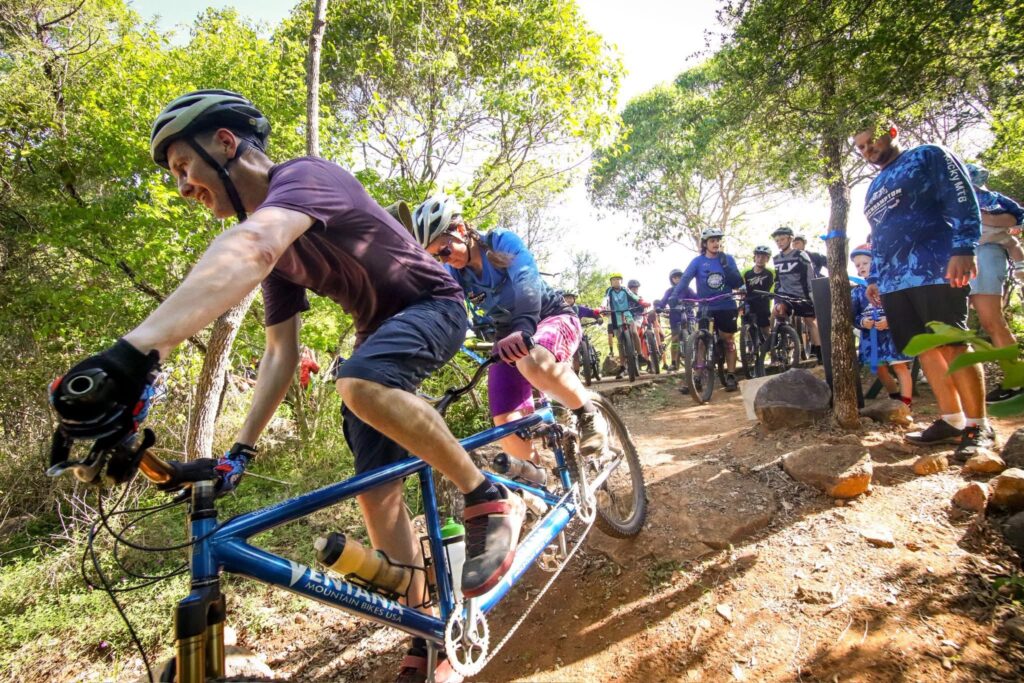
“Mountain biking is actually great for all ages,” Andrew said. “It’s one of those things you can do as you get older that is still really good for you and builds different cycling muscles.” 

He added that mountain biking also helps make more confident, capable riders. 

“Mountain bikers are generally better riders because they’re more aware of their surroundings and what’s going on in front of them on the trail. So if you want to become a better bike rider, get on a mountain bike.” 

Risk, reality and responsibility 

One key discussion point at the forum was the perception of risk. While many councils and land managers are cautious about investing in mountain biking due to assumed danger, the data often tells a different story. 

“Mountain bike risk is often lower than anticipated,” Andrew explained after the forum. There had been some excellent insights from Glen Jacobs on this, given World Trail build trails to reduce forced risk, with how they design trail features. 

“The real challenge is helping stakeholders understand that with good design, education and maintenance, mountain biking can be a safe, sustainable and low-impact recreational option — and one that delivers significant community benefits.” 

Andrew was particularly inspired by stories from communities where trails have become platforms for youth development — with kids not just riding trails, but helping build and maintain them. 

“Young people are engaging with sport, community and responsibility through these trails,” he said. “And in some places, older teens are taking part in supervised trainee programs — working on trail crews three days a week, learning hands-on skills and being part of something bigger.” 

The Mackay opportunity — connecting trail and town 

Among the many points discussed at the forum, Andrew was impressed with how a rail trail project in Tumbarumba in southern NSW ended up driving a project for a mountain bike park – given the increase in tourism and demand. Andrew can see a clear opportunity to use infrastructure to connect to other infrastructure in northern Queensland – using the Pioneer Valley region west of Mackay. 

“There’s huge potential in Mackay,” Andrew said. “The Finch Hatton trails are already gaining attention, and the idea of connecting them to Mackay via the Pioneer Valley Rail Trail is really compelling.” 

Such a link would create not just a destination, but a journey — one that blends singletrack with rail trail, adventure with accessibility. It’s the kind of project that aligns with Bicycle Queensland’s broader vision for integrated active transport and tourism networks. Over $2 billion is spent in Australia on riding tourism activities, but barely 10% of that is spent in Queensland. Such projects would help shift that and move the tourism impact to Queensland’s regions. 

Andrew also noted that these kinds of multi-modal links could encourage new ways of thinking about travel — including combining rail, road trips, and trail riding. 

“Maybe the road trip up the coast is the way to go,” he mused. “There are so many developing networks between Rockhampton and Port Douglas that are all worth a visit — but aren’t destinations in themselves.  

E-bikes, maintenance, and managing growth 

 The growth of mountain bike destinations isn’t without challenges, and e-mountain bikes also had their moment at the forum — both as a growing part of the scene and as a challenge to manage. 

“With an ageing cohort of bike riders, lots of people have taken e-bikes as part of their mountain bike experience and absolutely love it,” Andrew said. “But we were hearing from folks at Finch Hatton that e-bikes can ride up hills in ways that cause trail damage — so that’s an awareness and education piece we need to get right.” 

Andrew was also candid about one of the major takeaways: trail building is only half the job. Maintenance is critical. 

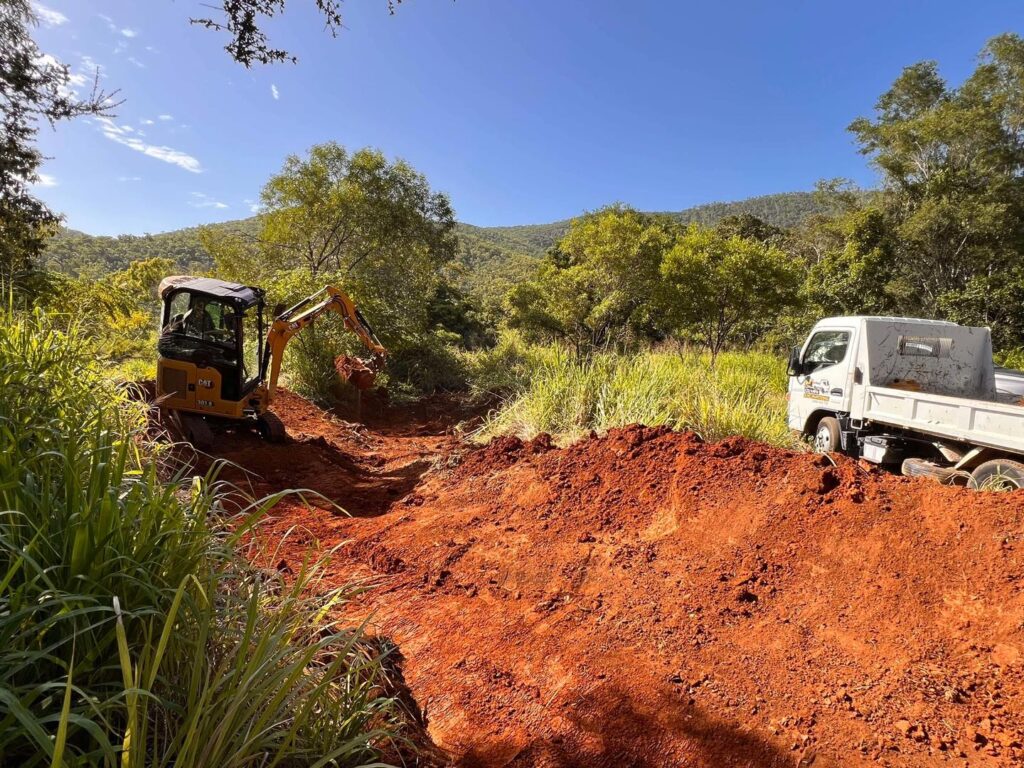
“One of the big learnings of the last couple of years is about maintenance — and making sure when councils step into a project, it’s a whole-of-life project,” he said. “If the project is designed so we just build a set of trails, we’re going to have a big problem — because actually, we’re building and managing a set of trails.” 

He praised some of the newer models being trialed, where local governments and communities partner to train and support ongoing trail crews. 

“There are some good examples coming forward of how it can work — where the local owners put the time and effort into managing the trails. Where that doesn’t happen in Queensland, the trails degrade pretty quickly. We’ve seen examples of that around Southeast Queensland and elsewhere.” 

Finch Hatton trails – photo by Flow MTB

Bicycle Queensland’s role: advocate, ally, amplify 

 For Bicycle Queensland, attending the MTB Forum wasn’t just about gathering insights — it was a statement of intent. Mountain biking is continuing to grow and evolve, and BQ intends to be part of its growth. 

“We were there to learn and to listen,” Andrew said. “And to find out more about the current state of play for mountain biking in Queensland.” 

“Part of what Bicycle Queensland needs to be doing going forth is advocating for mountain biking as an activity — as part of the cycling world,” Andrew said. “It’s such a great cycling activity. A good forum like this gets a lot of smart people and passionate people in the room, and as you leave, you’re thinking, ‘Where can I ride my mountain bike tomorrow?’ and ‘What can BQ do to help the growth of mountain biking?’” 

One of the strongest takeaways from the Queensland Mountain Bike Forum was the vital role local councils play in the early stages of trail development. “Getting the local council to have the vision to be part of the development of a trail network is a key step,” said Andrew. 

“What Bicycle Queensland can do is be in the middle of those conversations — there with the local community, supporting their efforts in advocating with council for developing trail networks that are accessible to all people and link to the local communities.” By helping local groups articulate their vision and navigate the planning and funding processes, BQ can play a crucial role in turning great ideas into rideable realities. 

This support is especially important in ensuring that trails deliver long-term social value.  

“Mountain biking brings other aspects to the mix that are super helpful,” Demack added.  

“One of the aspects is getting kids on bikes, and mountain biking is brilliant for that.” Trails close to home give kids and teenagers an active way to engage with sport, community, and personal responsibility — all while having fun. As Andrew often says, it’s all about local trails for local kids. That’s why mountain biking advocacy is a growing and essential focus for Bicycle Queensland, not just in expanding the sport, but in growing cycling culture as a whole. 

As Queensland’s mountain biking culture matures — and as local governments increasingly look to trails as a way to deliver social, health, and economic benefits — BQ’s role as a connector and catalyst will only grow. 

Thank you to Outdoors QLD, FNQROC and Blue Sky Trails for facilitating this forum.