BQ Link: Meet Corry Cycles

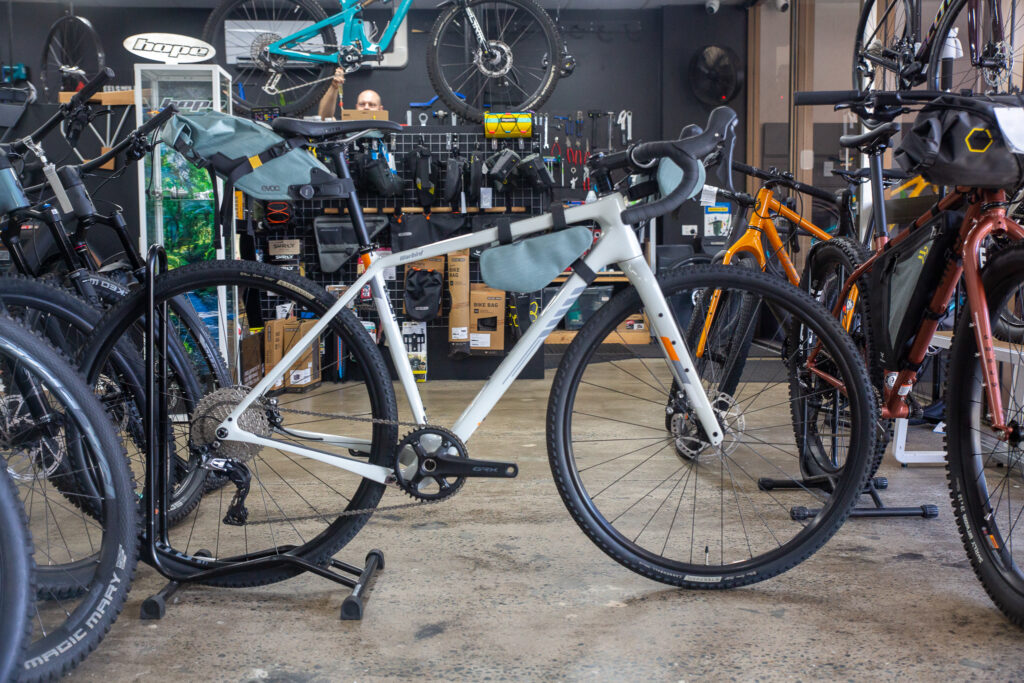
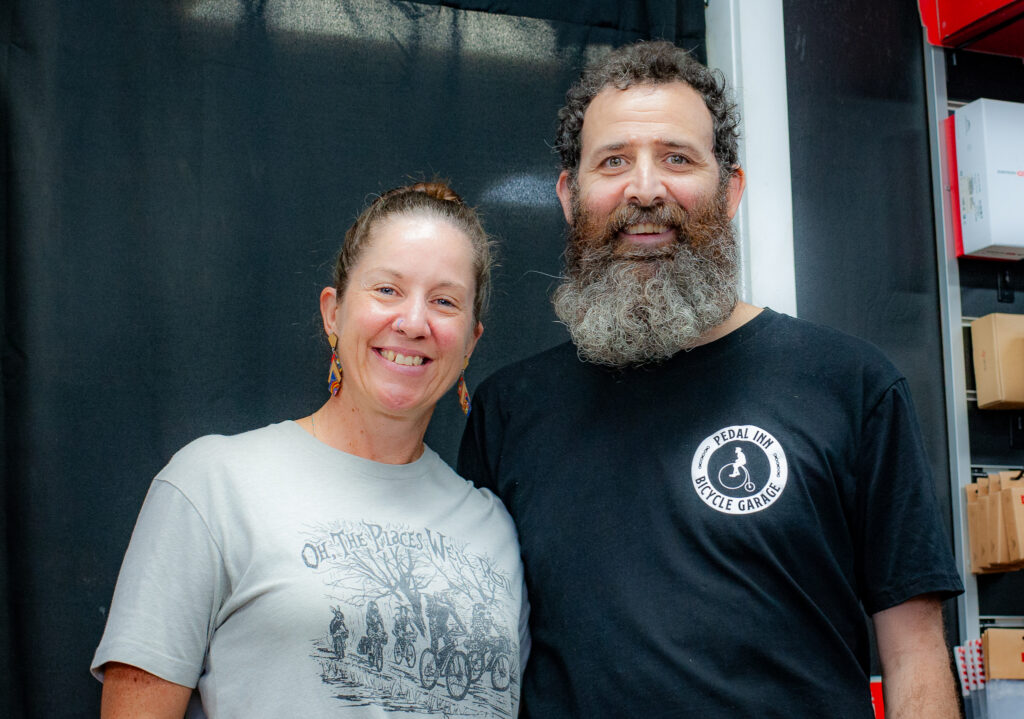
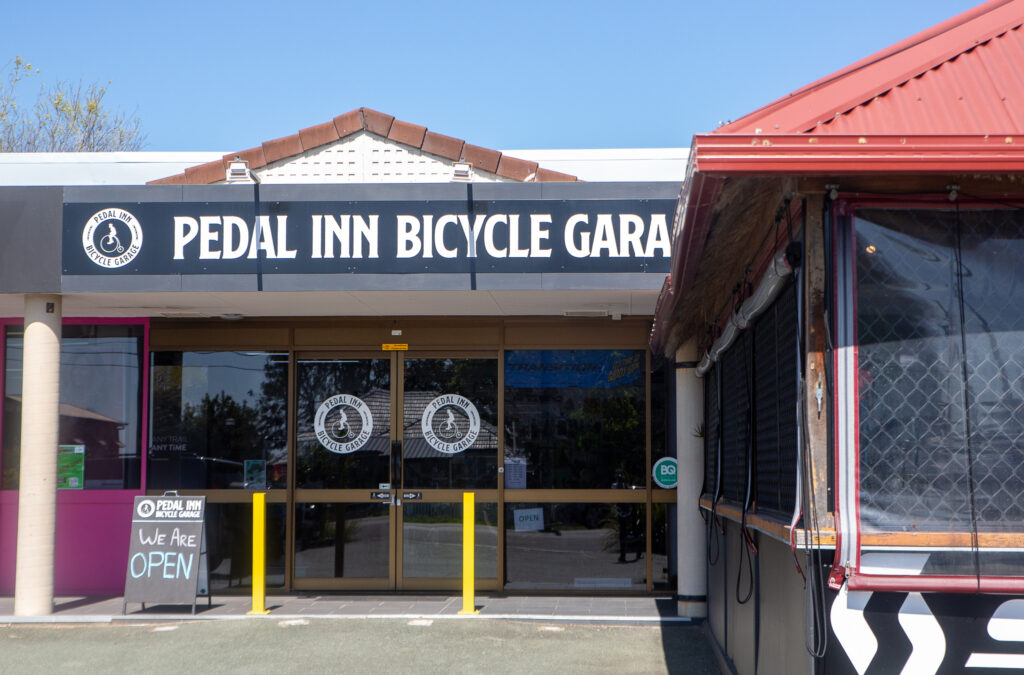
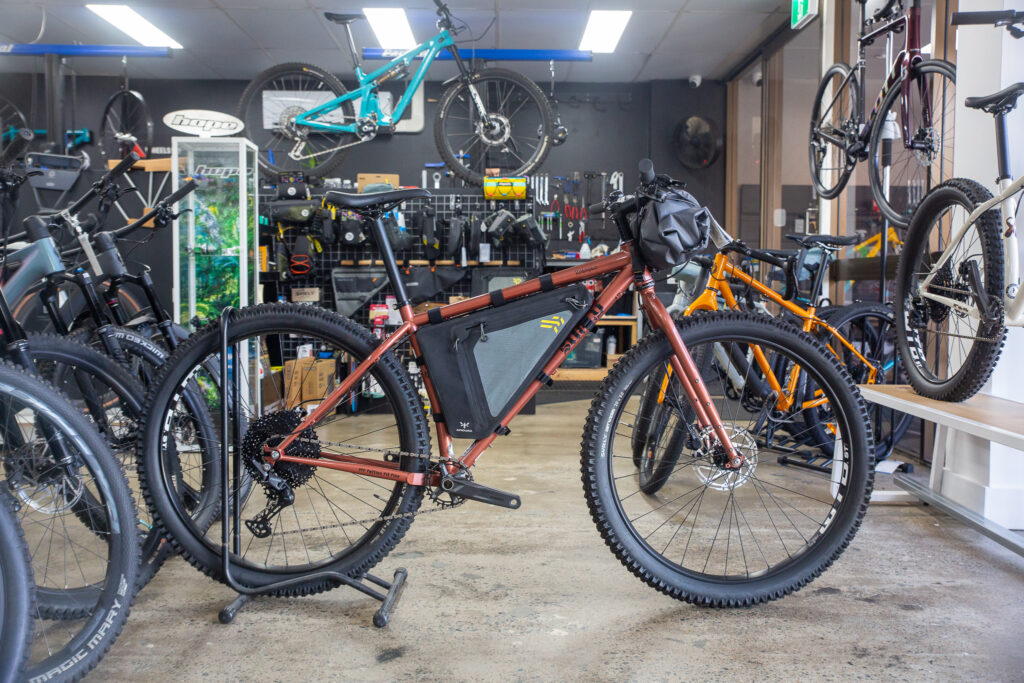
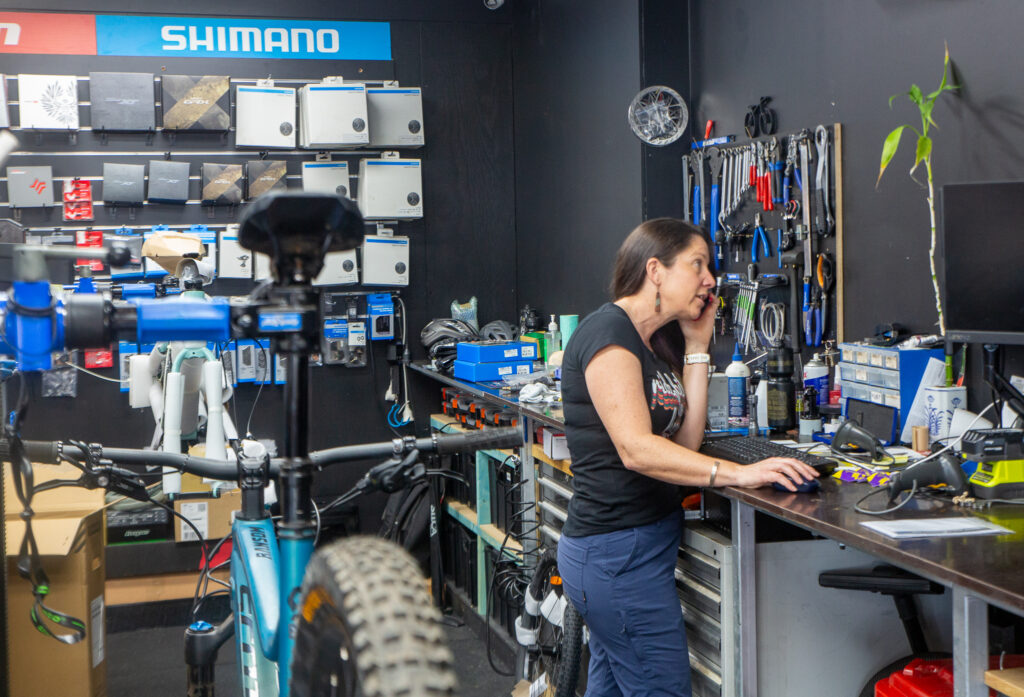
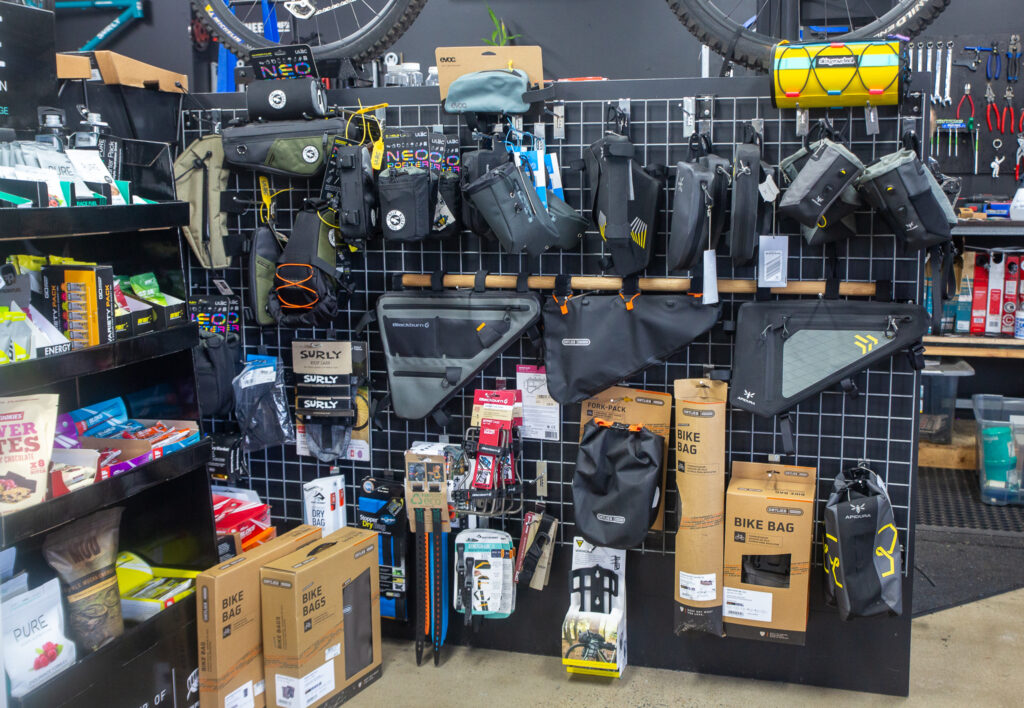
Corry Cycles are a prominent bike shop in Mackay, who have recently set up a second store at Finch Hatton, right at the new Finch Hatton mountain bike park. Both stores are BQ Link retail partners, offering 10% off for Bicycle Queensland members.

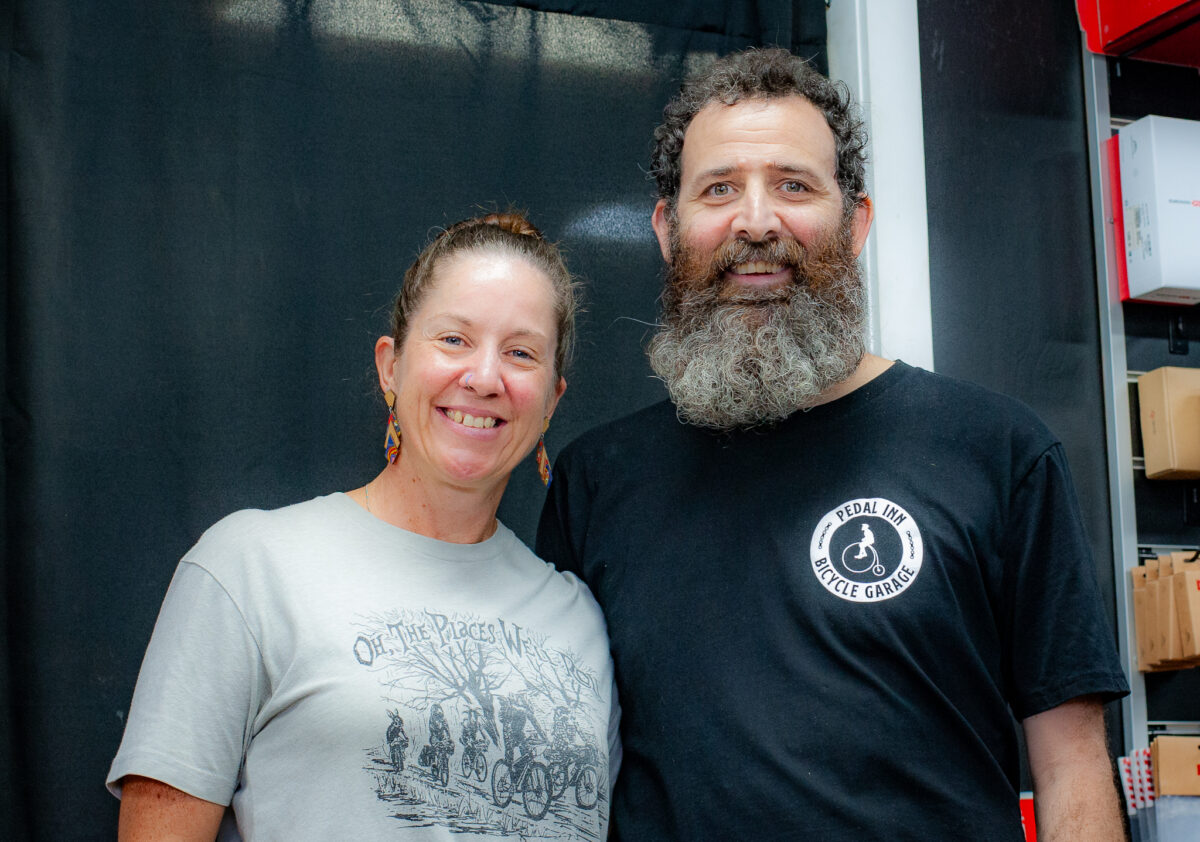
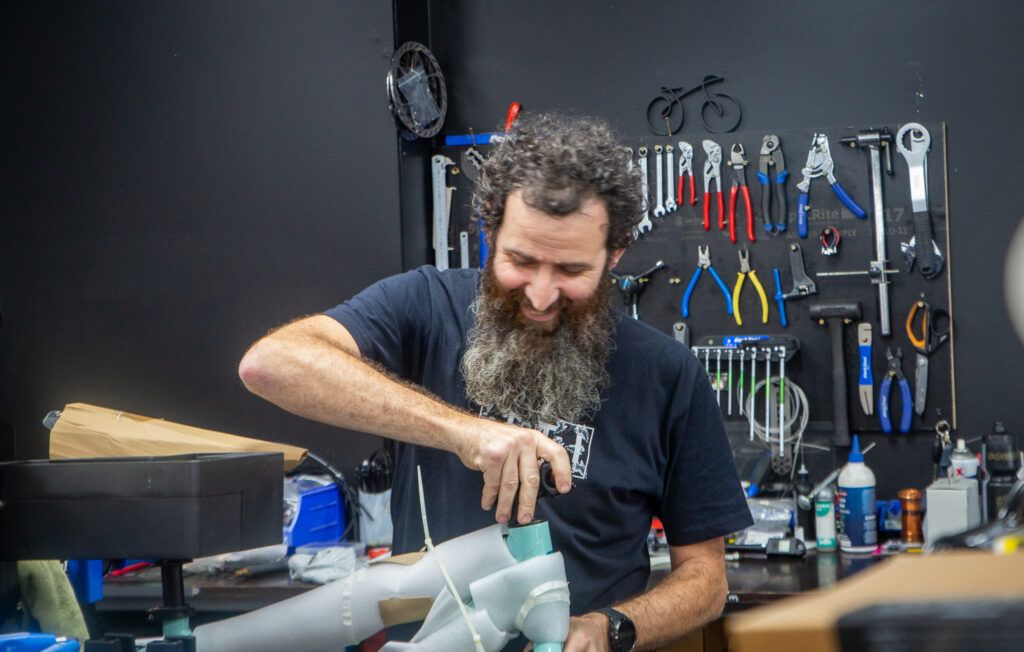
We caught up with the owner of the stores Evan Corry, who set up the main shop in 2007. Evan had been studying in Bendigo, Victoria, and racing extensively at the same time. This took him to Belgium for a season as well.

‘But I realised it was easier to sell bikes than to race them. I came back to Mackay and realised there was a massive gap in the local cycling culture. We did have some bike shops around but there were no bunch rides – no cycling community.’

While Evan was a school teacher at the time, he decided it was the time to jump in and open a bike shop. And it was good timing. There was a mining boom, and while the local Holden dealer was Australia’s leading dealer of HSVs, Evan wasn’t far behind as one of Australia’s leading Giant TCR road bike dealers around the same time – or at least that’s what he told us.

‘It was good timing in retrospect. We were really busy with the mining boom – but reality struck with the collapse in 2012. We had to weather the storm’

And weather they did. From small groups who were training for the National Road Series, Mackay developed more of a riding culture over time.

‘In Mackay there’s now about 7 or 8 different bunch rides who all end up at a coffee shop afterwards,  and the range of riders has totally changed.’

Corry Cycles have also backed a number of events in the region over the years including a number of charity rides, which Evan says helped the community see bikes as something for recreation – and not just for sport.

‘We have tried to be involved in the community, at schools and with charity events. So while riding in Mackay did start with a foundation of elite racing it has grown from there.’

One of Evan’s friends introduced mountain biking to the school he worked at, which resulted in an in-depth mountain bike program, and even a pump track built on the school grounds.

With the trail network at Finch Hatton opening about 12 months ago, with two more stages of development in the pipeline for a connected trail network from atop the range at Eungalla and into the valley – there is huge growth for mountain biking in the region. And of course there is scope for a 50km rail trail. Which seems like a lot for a regional town. We had to ask – what makes Mackay so special?

‘Well, you can’t beat our winters!’ laughed Evan.

With the options to head up the range, out to the reef, or enjoy warm sun and cool nights along with typically stable and dry weather, there is a lot to like about winter in northern Queensland.

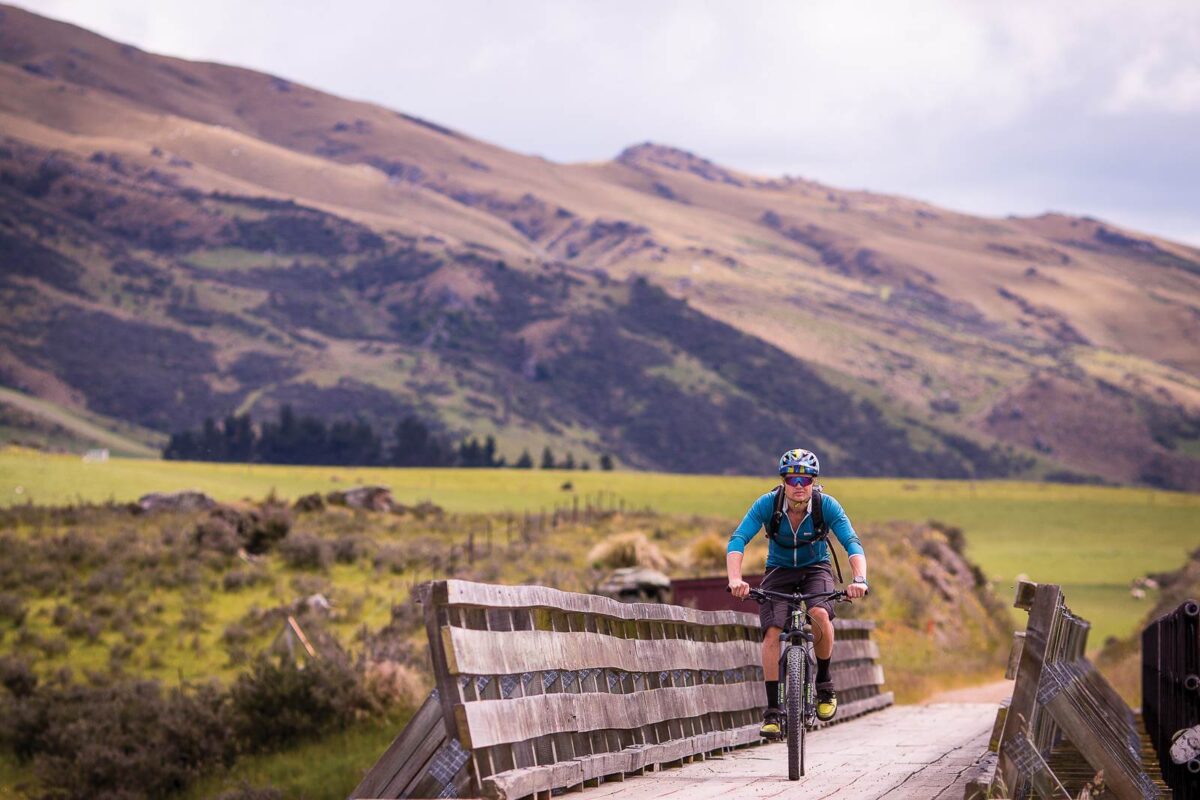
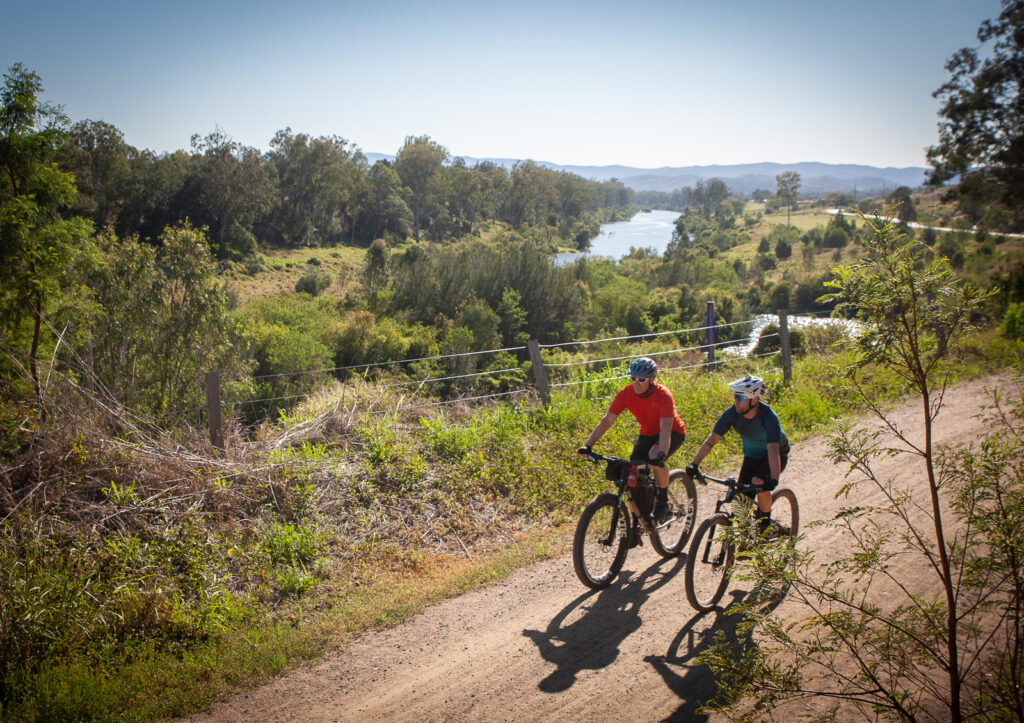
Finch Hatton trails – photo by Flow MTB

‘Whether you’re a roadie or a mountain biker we have everything on offer, we have every kind of terrain from the hills to the flat, along with the Blue Water Trail for tourists and families.’

When BQ was in Mackay in August, it is clear the region is still growing, with more residential developments being built – which need connections for active transport options.

‘Looking back, we  have seen Mackay come ahead in leaps and bounds. From having nearly zero cycling infrastructure, we now have massive infrastructure developments. The mountain bike club has their own spot at Rowallan Park, there’s Finch Hatton as well and the Blue Water Trail… but we really need to see all that come together.’

‘There are a lot of standalone projects and Mackay really misses the integration opportunities with its cycling infrastructure.’

And that is where Evan hopes Bicycle Queensland can help.

‘Bicycle Queensland have their fingers in just about every pie, so you’re the perfect people to help, with contacts at local and state government. Mackay needs that experience of seeing what works in other areas to give advice around how we maximise any investment and projects here. Maybe we can spend less money and get more, if there is a master plan we can work to that is developed via taking lessons from other places.’


Corry Cycles have two stores, with the store in Finch Hatton specialising in mountain bike hire for the trails at Finch Hatton. If you’re a Bicycle Queensland member, you’ll receive 10% off at Corry Cycles stores, including bike hire.

Photo by Flow MTB

How to build a rail trail

The charm of a rail trail is hard to ignore – gentle gradients that cut a line through the landscape, making hills flater and valleys less deep. They pass through towns with pleasing frequency and often take you through picturesque countryside. And of course – they’re free from motorised traffic. Rail trails can vary around Queensland, changing from sealed pathways that connect schools and suburbs through to rough and ready adventure trails in Queensland’s rural heartland.

But with so many disused rail corridors making a spider web across the state of Queensland – how exactly do you turn a line on a map into a white hot line on a Strava heat map?

In 2024, Bicycle Queensland partnered with Somerset Regional Council for the Rail Trails and Tourism Conference. Hosted at the Somerset Civic Centre in Esk, the two-day conference heard from experts in tourism, marketing, advocacy and economics about the impact that a successful rail trail can have for a region. And then we worked on developing some basic guidelines around what is required to get a rail trail beyond just a good idea, and into a functioning piece of riding infrastructure.

DOWNLOAD: Rail Trail Toolkit Quickstart Guide
DOWNLOAD: Complete Rail Trail Toolkit

Develop a vision for your rail trail

This is an essential step. You need to know what the rail trail is going to do. Will it serve as a useful transport link between communities? Is it a tourism initiative to attract day trip visitors from a 2 hour radius? Is it a multi-day experience to draw visitation from around the state or the country? An idea needs to move to a feasability study and then a master plan – while also assessing any project funding that may be available.

Secure access to a rail corridor

A rail line that is no longer in use is not necessarily a rail trail in the making. The line needs to be decommissioned by Queensland Rail, along with having infrstructure removed. There is extensive stakeholder engagement required at this stage, including determining a suitable model for managing a rail trail, and understanding what the risk looks like, and the potential reward.

All about feasability studies for a rail trail

A feasibility study can determine whether a rail trail project is viable by assessing scope, costs, and potential staging for construction. It provides evidence to support grant applications and ensures informed decision-making. If there’s strong community support for the rail trail, and conversations with landowners and government are underway, a feasibility study might be a useful next step – but can be expensive.

Rail trail planning, design and construction

There is a lot to consider here. What are the biosecurity factors? Hreitage or cultural concerns? What about hazards with existing infrastructure? And how do you plan to maintain what gets built – and what level of surface treatment will suit your budget?

Understanding political engagement and staged construction

Rail trail projects require strong political engagement and a phased approach to development to overcome challenges and secure sustained funding. While their benefits to tourism, recreation, and local economies are well-documented, their success often depends on effective advocacy, securing government support, and maintaining momentum through incremental progress.

Rail trail models of operation

Selecting the optimal model of operation for a rail trail is a complex decision that must balance sustainability, financial viability, community engagement, and quality of experience. Publicly managed trails ensure accountability, while private or hybrid models can introduce efficiency and innovation.

Marketing and events for rail trails

Marketing and events play a crucial role in the success of a rail trail, shaping its identity, attracting users, and fostering community engagement. A well-designed marketing strategy ensures that the trail is positioned effectively to reach key target audiences, while events serve as a means of generating interest, encouraging participation, and providing economic benefits to surrounding communities.

Photo from the 2024 BVRT Festival held by the BVRTUA. Photo by Element Photo and Video Productions.

Bringing a rail trail to life

When planned and implemented effectively, rail trails become far more than just recreational pathways. They serve as economic drivers, attracting tourism and supporting local businesses, while also fostering social connection and healthier, more active lifestyles. They provide safe and accessible spaces for walking, running, bike riding, horse riding, and community events, helping to build a culture of outdoor activity. Their environmental benefits are equally significant, repurposing disused rail corridors into green transport corridors that promote sustainable travel and habitat conservation.

For communities and organisations looking to develop a rail trail, the next steps will depend on where you are in the process. Some groups may be at the early stages, building advocacy and community support, while others may be working through feasibility studies or securing access to a corridor. Others still may be focused on activating an existing trail through events and tourism initiatives. Wherever you are in this journey, Bicycle Queensland is here to support you.

Here at BQ, our team has extensive experience in rail trail advocacy, funding applications, operational planning, and event activation. We can provide guidance on overcoming challenges, building political and community support, and ensuring that your rail trail reaches its full potential. Whether you need strategic advice, practical resources, or connections with industry experts, we are ready to help.

Download our complete Rail Trail Toolkit

Illustrations & Design by indidust.com

All about the Rail Trail Refuge – Linville

Anyone who has travelled by bike, or with their bike, knows that finding accommodation that is not just welcoming of bike riders, but also suitable, can be challenging. Some regions and indeed some countries are more up to speed with what travelling bike riders may need; secure bike storage, a laundry service or washing machine, maybe some bike tools – and exceptional coffee!

Chevonne Arrowsmith, the owner of the Rail Trail Refuge at Linville, had ridden and travelled extensively while racing bikes and bikepacking, and was convinced that making accommodation suited to bike riders would work.

‘On bikepacking rides I found there isn’t much suitable accommodation. Motels don’t usually like bikes being brought into the room, and self-contained cabins don’t have much room for bikes either. And of course old country pubs can be hard work getting bikes up old staircases!’

Based on these experiences Chevonne felt there was a need for accommodation that worked for bike riders. A stay in New Zealand at a property designed for bike riders and hikers showed what was needed.

‘You could have a comfy bed, breakfast, a kitchen and bike storage. Everything was there. I like packing light and travelling fast, so the Rail Trail Refuge allows people to do that – we have bedding, linen, a kitchen, breakfast provided and a washing machine.’

With 161km of Brisbane Valley Rail Trail to cover – Chevonne narrowed her location down to Linville.

‘I really like Linville as a place to stop on multi-day rides or when doing the Brisbane Valley Rail Trail. I’d often stay at the pub but it can book out pretty quickly as it is popular. So I realised there was a need for some more accommodation in Linville.’

The Rail Trail Refuge was built from the ground up for bike riders. While Chevonne wasn’t sure if they would be able to find land or an existing premises, she worked with an architect on a few concepts, based on what she had sketched out. After securing land around late 2020, they found a local builder, with much of the framing all done onsite given the difficulties getting building supplies at the time. With three rooms, a communal kitchen, chill out area, bike wash and plunge pool… the Rail Trail Refuge was born!

From databases to hosting

With a background in database management, Chevonne started working at Epic Cycles in Paddington when she knew the Rail Trail Refuge was going to proceed.

‘I wanted to get more hands on experience in the bike touring space, which wasn’t really my world at the time. Epic’s customers were a great fit so I got to learn a lot more about touring cyclists.’

‘Our first guests at the Rail Trail Refuge were friends of friends – they had a good stay but I got so much feedback from the first visitors!’

Since then, the Rail Trail Refuge has continued to attract more bike riders, and others keen on active pursuits in the area.

‘About 70% of our guests are staying for one night, usually riding the BVRT from the Yarraman end. I also get a lot of repeat guests, doing sections of the trail or loops from Linville, staying overnight. But I also get bushwalkers, trail runners and bird watchers who stay.’

‘There is a lot to do from Linville for multi-day riding though. Some people ride from Wulkuraka, then do Yarraman return the next day, then ride back to Wulkuraka on the third day, doing an end to end to end with accommodation in the one spot.’

One of the most exciting groups of guests was a group of New Zealanders, who came to stay for about 5 days and wanted some riding suggestions – but not on the rail trail, as they were riding that with friends the following week.

‘I had five different routes in mind and accompanied them. They really enjoyed the variety of landscapes around.’ Chevonne has a wide range of rides listed on the Refuge website – if you’re looking for inspiration, you have to take a look!

The Refuge has been really well received by everyone who stays and Chevonne believes there is scope for more accommodation like it in Linville, or elsewhere on the rail trail, as the area grows in popularity for bike riding.

‘I’d like to see Linville becoming a little biking hot spot. It is already happening a little bit, all along the rail trail. Encouraging people to arrive here by bike does little to interrupt the fabric of a town, but they need to eat and drink. I think it is great for the towns.’


The Rail Trail Refuge, Linville, is a bespoke cycling accommodation provider on the northern end of the Brisbane Valley Rail Trail. Offering accommodation for solo riders or small groups, the Rail Trail Refuge is ideally located on the Rail Trail at Linville, with a kitchen, bike tools, bike washing, laundry, plunge pool, chill out area and much more. The Rail Trail Refuge is the perfect base for a few days exploring this stunning part of Queensland by bike. Bicycle Queensland members can stay three consecutive nights for the price of two between Sunday and Thursday – book directly to secure this saving.

Email: hello@railtrailrefuge.com.au

Ride the Brisbane to Gold Coast Cycle for Cancer

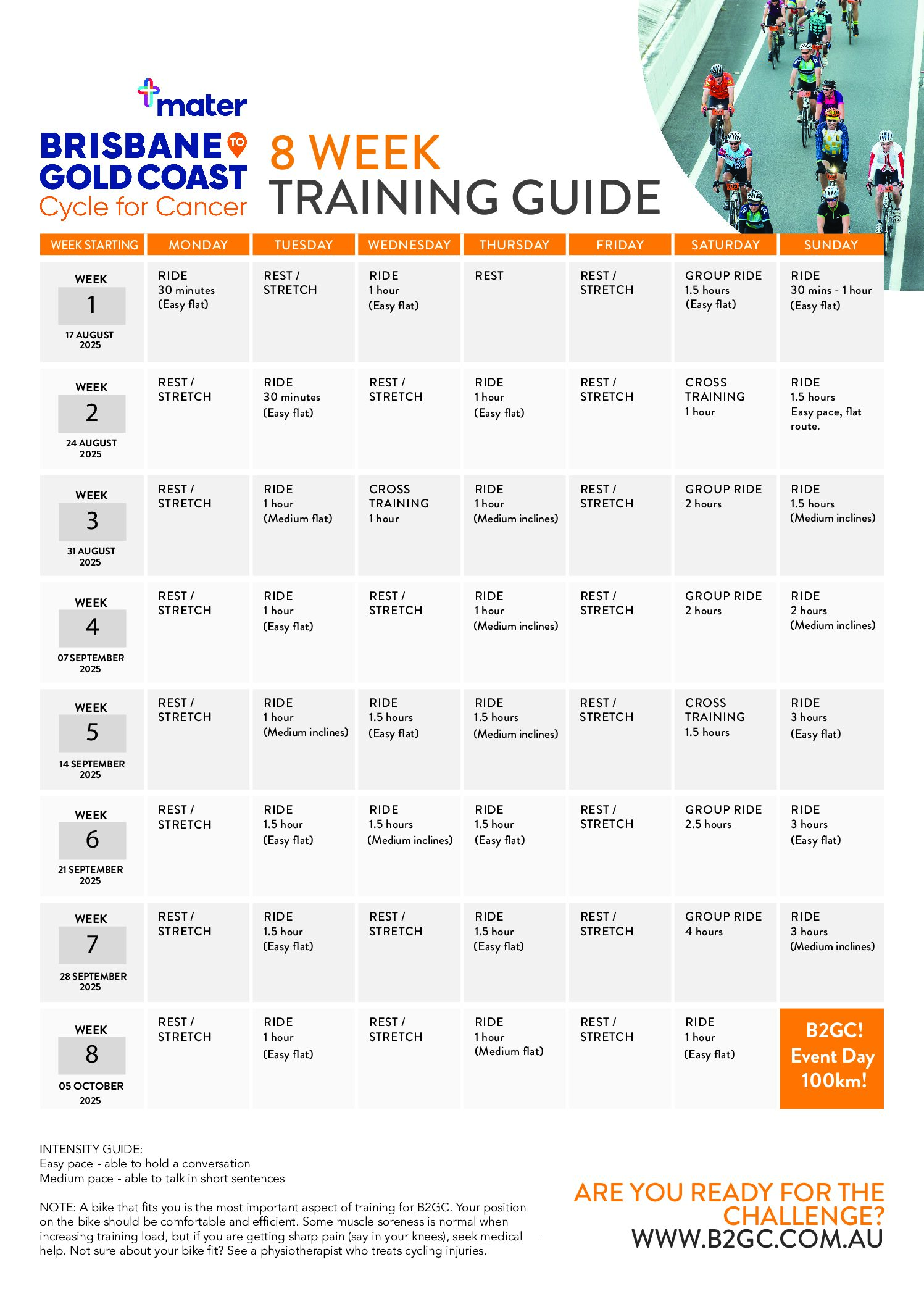
Last year the Mater’s Brisbane to Gold Coast Cycle for Cancer attracted over 5000 riders, taking on a variety of cycling challenges and raising awareness of the essential work that the event supports. Rowan Foster from The Mater had been on course much of the day, and Bicycle Queensland caught up with Rowan soon after midday last year at Southport, when the majority of riders had made it to the finish.

‘The Mater is really delighted with the event this year. With over 5000 riders we raised more than $550 000 to support cancer research. While it started as a wet day the spirits were high amongst the riders, with many smiles and the appreciation of taking on a good challenge by tackling 100km. Of course, it was great to see some blue skies at the finish here in Southport.’

The Brisbane to Gold Coast has had a long history, and now under the direction of The Mater, the event’s legacy is not lost on Rowan – for both the community impact and driving awareness and support of cancer research.

‘This event has really established itself thanks to a long history and the stewardship from Bicycle Queensland. The Mater is really proud to take on the challenge of continuing that success. With over 5000 riders, this event is one of the most popular events in all of Queensland from a mass participation point of view. We’ll continue to provide that opportunity for those who want to take on the cycling challenge but who also want to have a positive community impact as well.’

Those who were part of the ride, or who donated to the fund-raising effort may be asking – just what sort of difference does half a million dollars make for either cancer research or treatment support?


‘The Mater has a really interesting place around this, not only with world-leading cancer research, but also how that transfer works from the bench side to the bedside with our clinical elements in a hospital setting,’ Rowan confirmed. ‘The impact from the fund-raising is really around providing improved treatments for those facing a cancer diagnosis. Chemotherapy can be really brutal and the outcomes can fail. We aim to provide greater hope and the best chance of long term remission for those fighting cancer.’

Here at Bicycle Queensland, the Brisbane to Gold Coast event always offered a way to encourage more people to get out on a bike, to challenge themselves and share that experience with friends. Over the years the impact that made is truly incredible. And the new life with The Mater as the event became the Cycle for Cancer means the impact is even wider.

‘We want to honour the history of the event that Bicycle Queensland have stewarded for so long,’ said Rowan. ‘We’re keen to continue our collaboration with Bicycle Queensland and its members and the wider cycling community to go from strength-to-strength with this event.’

‘The Brisbane to Gold Coast has become a must-do ride for so many people in Queensland,’ stated Bicycle Queensland’s CEO Alton Twine. ‘The popularity of the event is evident right here, as we are surrounded by thousands of people who have taken up the challenge today.’

‘The Brisbane to Gold Coast Cycle for Cancer has really expanded the appeal of the event, as not only do keen bike riders take part, but those who have family and friends impacted by cancer. I am certain that not just the popularity, but the effectiveness of the event as a change for good will grow under The Mater.’

Get your diary out and and lock in October 12 for the 2025 Brisbane to Gold Coast Cycle for Cancer – don’t miss it!

Volunteering with Bicycle Queensland

Just like any not for profit organisation, Bicycle Queensland gets a lot of support from our volunteers. Some volunteers have been able to assist year in, year out, helping BIcycle Queensland deliver events or programs around the state. Some volunteers are able to help for a specific event or role in their region or area of interest. Every single one is valuable to our organisation, as we strive to make Queensland a safer and more connected place to ride.

Hans Willemsin lives in Brisbane and has volunteered with Bicycle Queensland in a number of roles, and recently helped out at our Orientation Day stalls that we held at a few universities this year.

  • Why did you sign up to volunteer with BQ? 
    Hans: Volunteering is a chance to contribute to our community. For BQ, I am rather passionate about cycling (even though I know I should do more).
  • What events have you volunteered at – what was it like on the day? 
    Hans: I have volunteered at a couple of uni O-week events. Previously I have helped run e-bike awareness sessions and have helped at a BQ stand next to City Hall for Bike Week.
  • Do you volunteer anywhere else? If so – where abouts and why? 
    Hans: I volunteer for Red Cross, Australian Conservation Foundation and with a local revegetation group. Once again to help our community (Red Cross) and another passion, this time for our environment.
  • Would you encourage other people to volunteer with BQ, and if so, why is that? 
    Hans: Yes, it is a worthwhile activity.

If you would like to volunteer with Bicycle Queensland, head to our Volunteers page to sign up.

All about MS Queensland’s Brissie to the Bay

Multiple sclerosis (MS) is a chronic autoimmune disease that affects the central nervous system, specifically the brain and spinal cord. It occurs when the immune system mistakenly attacks the protective myelin sheath around nerve fibres, causing inflammation and scarring (sclerosis). This disrupts nerve signals, leading to a wide range of symptoms that vary in severity, including fatigue, muscle weakness, vision problems, numbness, coordination difficulties, and cognitive impairment. MS is unpredictable, with symptoms fluctuating over time and potentially leading to disability. While there is no cure, treatments can help manage symptoms and slow disease progression, improving the quality of life for those affected.

MS Queensland have operated for over 65 years, and exists to connect Queenslanders living with neurological conditions to new possibilities and better lives through community, services, support, events, research and neuro wellness initiatives. We recently caught up with Courtney Allen from MS Queensland, to find out more about the charity, their fundraising and of course MS Brissie to the Bay, which celebrates 35 years on Sunday 15 June.

‘The heart of what we do at MS Queensland is providing support and services for people living with MS. We also provide support and services for people with other neurological conditions, including epilepsy, Parkinson’s, dementia and more.’

‘We work with the community to provide a range of services, including the Neuro Assist help line that people can call at any stage of their journey; from when they are first diagnosed or if they are going through a new phase of their diagnosis. This is a help line that their friends, family or carers can use for information or referrals.’

MS Queensland also provides an MS Nurse Advisory service whichprovides one-on-one advice, referrals and information to help with diagnosis, treatment options and concerns.  They even provide individualised housing options and daily living supports for safety, peace of mind and independence.

Like Bicycle Queensland, MS Queensland are involved in advocacy work as well, to spread awareness and understanding of neurological conditions, leading to improvements on how they are diagnosed, treated and supported.

‘We know now that 1 in 4 Queenslanders are living with a neurological condition that causes disconnection from their families and communities, so it is a pretty widespread area of interest – a lot of people are impacted by it. However many services provided by MS Queensland are only possible because of fundraising events like the MS Brissie to the Bay.

The MS Brissie to the Bay is a very popular charity ride, with around 6000 riders taking part each year across the different event distances. Like most charity events, it is not a race and is designed to be suited to a wide variety of riders. Whether that is people wanting to support MS Queensland, or those riding in support of friends or families with neuro conditions.

 ‘It is our flagship event and our largest event that runs in Queensland. Last year we raised almost $1million which was absolutely incredible. It is a great event to be part of.’

MS Queensland have a wide range of other fundraising events, like the MS Moonlight Walk held at Roma St Parklands in October, and of course the MS Readathon, which countless people across the whole of Australia would have taken part in.

So, what does fundraising from the MS Brissie to the Bay support?

‘The fundraising specifically funds the support for people living with MS and neuro conditions that isn’t available by other means. We do have some great services that are thankfully funded by other areas, but some crucial services aren’t. This includes helping people to navigate systems that are confusing to use and helping people with neurological conditions apply for access to the NDIS. The Neuro Assist helpline is also fully funded by the crucial fundraising from the event.’

Besides taking part and fundraising in the MS Brissie to the Bay, there are other ways you can help MS Queensland, as Courtney told us.

‘For anyone wanting to help, sharing awareness and information around the MS Brissie to the Bay ride makes a big difference and highlights the need around why we host this event. For those who can’t ride, they can also come along to the event as part of our Cheer Club. We have a beautiful group of supporters at the end of the ride to cheer all the riders who come across the finish line after completing some epic challenges.

Of course, the other great option is to donate your time as a volunteer. Like any not for profit or charity group, MS Queensland relies on the generous donations of time from volunteers.

‘We have volunteering options from March right through until June, where people can help us in the lead up to the event getting things ready – or they can join us on event day as well, both at the Event Village or out on the course as a marshal.’

‘It is really rewarding being at the finish line at Musgrave Park and seeing so many incredible people there for one goal, to support people living neuro conditions . It is a really special day to be a part of, and there is a lot that you can help with as a volunteer.’


Do you want to volunteer?
Click here.

BQ Member Profile: Chris and Cheryl

Bicycle Queensland members Chris and Cheryl have seen the world by bike. From long tours on their bikes or even on a folding tandem. Living in Innisfail, the two Queenslanders don’t neglect adventures right in their backyard either. During Bicycle Queensland’s 2024 Regional Tour, we caught up with them in Innisfail and even got out early for a ride – on some bikes that Chris graciously lent us.

Our ride took us through the back roads of Innisfail, through cane fields and across cane train tracks, as a mix of other riders joined us either on the ride, or for coffee and breakfast afterwards. 

‘For me, bikes are about coffee, cake, a bit of exercise and fun,’ Cheryl told us as we waited for our coffees post-ride, ‘Nothing too dramatic.’ Her partner Chris has a slightly different stance around bikes however. 

‘It’s about getting out, getting outside and seeing the country at your own pace, and just exploring. That’s why I prefer fat tyres. So I’ll get out and explore dirt roads, tracks and forestry roads. If there is a road that I can ride on I’ll see how far I can get and then turn around and come back. Having that freedom to get out and explore is important.’ 

You only need to look at the bike Chris is riding to see that he doesn’t just talk the talk, he walks the walk. Or rides the bike? His custom Titanium frame uses a belt drive and a Rohloff hub gear, two systems known for their ultra-long service life and reliability. The handlebars are adorned with accessories, serving a mix of safety, convenience, and the ability to get out – and stay out.

Riding with BQ Members is always a great part of regional visits.

‘When mountain bikes got invented I thought “this is it, this is really cool”. So in 1988 we both got mountain bikes and we rode anywhere we could get on a push bike around Rockhampton.’ 

If you haven’t been to Rockhampton, you may not appreciate how rugged the surrounding countryside is. Ruggedly beautiful, but not short of hills and valleys – with countless backroads and trails to explore from farming and timber getters. However both Chris and Cheryl explore far and wide – well beyond their own expansive backyard in Far North Queensland.

‘We’ve ridden in a fair few countries now which is a lot of fun,’ added Cheryl. ‘We normally take our own bikes which can be a bit of a challenge. It is great to have that freedom to go where you want, when you want.’  This includes pedalling a tandem half way up the Rheine, and down the Danube to Vienna. Hearing about their tandem, with a suitcase that becomes a trailer,

‘We have also taken our mountain bikes to the UK, and ridden around the bottom end of Devon and Somerset, along with taking the tandem to New Zealand’ Chris explains. ‘It is a great way to see the world, and slightly cheaper while doing it at your own pace as well.’ 

‘I’ve been a member for years, my BQ membership number was one hundred and twenty something. I joined when I was a young man and I have been riding bikes since then.’ 

‘Seeing Bicycle Queensland do this outreach to regional Queensland means a lot to me as a member. It’s all fine getting the emails, but it makes a difference when you see people visiting – the outreach is important’ Cheryl told us. ‘We are heartened after discussing opportunities for improved cycling conditions in Far North Queensland with BQ, having advocacy from an organisation like BQ boosts our local efforts and having that support is very positive.’ 

‘As Bicycle Queensland builds, that builds a greater impetus for the government to listen to a big group of people, which helps the smaller places to get more momentum to get more people riding.’ 

Bicycle Queensland membership supports our advocacy work to make Queensland a safer, more connected place to ride. It also provides peace of mind via insurance, and allows access to discounted events and services.

Get more details on BQ Membership

Getting to know Ground Effect

In 2024, Ground Effect Cycling Clothing celebrated their 30th anniversary. That’s 30 years of making quality bike clothing and equipment in New Zealand, and 30 years of enabling adventures by bike. In the current world of online retail, Ground Effect have a longer history than most. Many of you will remember receiving the mail order catalogue in their letterbox, spruiking gear built for riding, made right in New Zealand.

We recently spoke to Guy Wynn-Williams, one of the founders of Ground Effect, about where the company started and where it is now.

‘We started in 1994 and as the French say, the more that changes, the more they stay the same. We always sold direct, and that’s not because we had any aversion to the retail industry. Back then we all liked when we could talk as close to the source as possible. So instead of getting filtered information, we’d get direct feedback from our customers. And that’s still the case now. They can talk to an office where the designer is right there, and the people who are responsible for choosing and sourcing the materials.’

If you try to think of brands where you can get on the phone or email them and speak to the very people who design and refine the products we buy – we’d imagine there aren’t a huge amount of brands that come to mind, beyond boutique frame builders and bikepacking luggage manufacturers. And remember that Ground Effect make their clothing and equipment in New Zealand. We know of a couple of brands who make select clothing items in Australia – but never a complete range. This is a commitment Ground Effect have stuck to, for a number of reasons.

‘It still works for us as we do small runs. When we started it really was the best option for us as we would never have had the volume to go off shore. But now, to start making products in New Zealand you’d likely need a bit of momentum behind you.’

Of course, the internet in 1994 wasn’t like it is now, and Ground Effect didn’t even have a website until 1997.

‘We sold via a catalogue,’ says Guy. ‘We worked out how to avoid the need for envelopes, we were young and idealistic! We printed those until 2015, and I think we printed about 80 different catalogues.’

‘We started selling to Australia early on. And putting trans-Tasman rivalry aside, I feel like Australians adopted us as surrogate locals. We often hear from riders that buying something locally made in Australia is hard, but made in New Zealand is just as good.’

The internet is a competitive market place, but Ground Effect are still a very unique company – if you’ve owned any of their products, you’ll know they really work. Experienced design is a key driver for Ground Effect.

‘We don’t manufacture in a cheap labour environment so you have to get the design right. This potentially creates a simpler garment that is often better because you only add what you need, with less weight and less bulk. Due to needing to be frugal, you often end up with a better solution.’

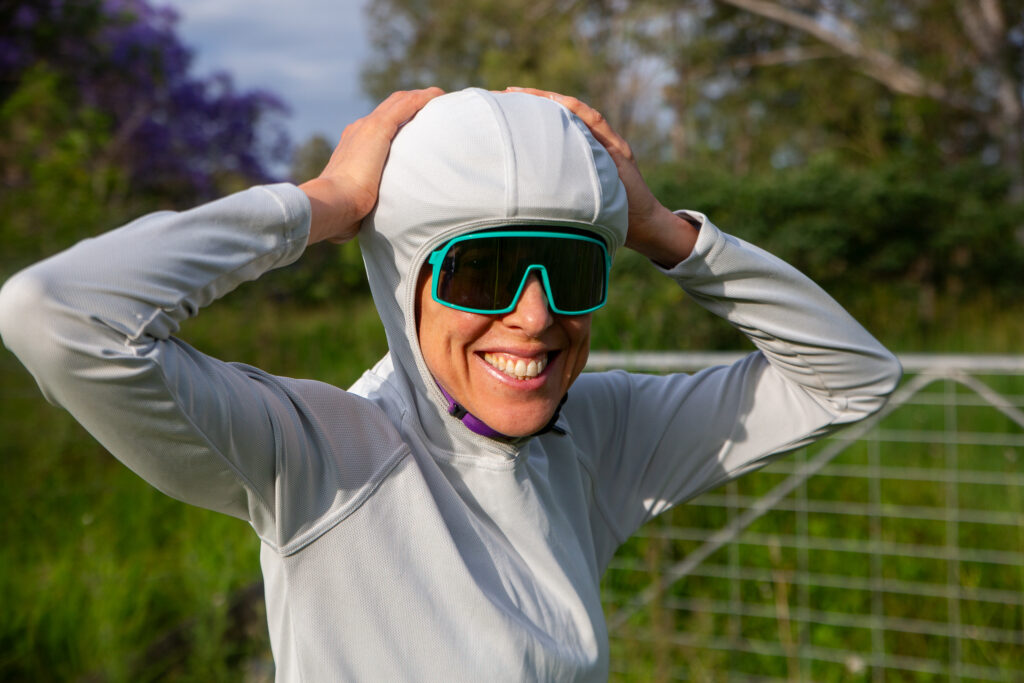
The Ground Effect Flare and Solaris offer UPF50 protection. We have been impressed with their fit and comfort.

Items that last longer and do more come to a core part of Ground Effect – being sustainable. They use minimal packaging, their staff all ride to work, and they expect the kit to last forever – they even have solar panels covering the roof of their factory.

New Zealand is a stunning place to ride, but interestingly Guy says they look towards Australia in terms of growth in urban cycling.

‘Australia has always been ahead of New Zealand in urban cycling, for both advocacy and infrastructure as well. And more people are riding because of that. Here in New Zealand we’ve seen the increase in the National Cycle Trail network has created a dramatic increase in riders – including Australians visiting.’

The 23 Great Rides have probably tempted a lot of us to New Zealand – or perhaps the long distance mountain bike routes as well, which Ground Effect have played a role in.

‘We were part of a 15 year lobbying battle to get the Heaphy Track open – it’s a great multi-day mountain bike ride. And now we have the Old Ghost Road too, which is fantastic.’

Ground Effect are involved with a lot of grass roots advocacy via their slush fund. Guy explains that they could get people to a trail build day, but they could also donate money for some materials, like a couple of grand for a bridge to be built, or to buy some tools.

‘We’ve donated over 300 grand, at one or two grand a time, and that’s a lot of projects.’ Despite the boom in riding and investment in major off road projects, the call for Ground Effect’s input hasn’t diminished. ‘We’re still donating similar sums now to 15-20 years ago.’

Ground Effect have previously supported Bicycle Queensland’s major events – and Guy and his colleagues often attended to ride, as much as sell their gear. Even though that did include forgetting that it’s not always hot in Australia, and it does still rain! We have recently been testing the Ground Effect Solaris and Flare sun shirts, although sun safety isn’t new for Ground Effect.

‘The Solaris and Flare have been very popular. We all make our own choices but in our view – long sleeves make a lot of sense, and having a collar to protect your neck. It just makes sense to us. The Rock Lobster is our best-selling top, and that’s what we’d see the most on previous BQ rides.’

We hope to see Guy or some of the Ground Effect team at one of our events in 2025. If you’re a Bicycle Queensland member, you’ll receive a free pair of their Foot Soldier socks with any order – just follow the directions in your BQ Portal.