Categories
Events

BQ’s Party in Pomona

Bicycle Queensland’s first major gravel and adventure weekend of 2026 proved that riders are hungry for challenging routes, good company and a relaxed event format that puts the riding experience first.

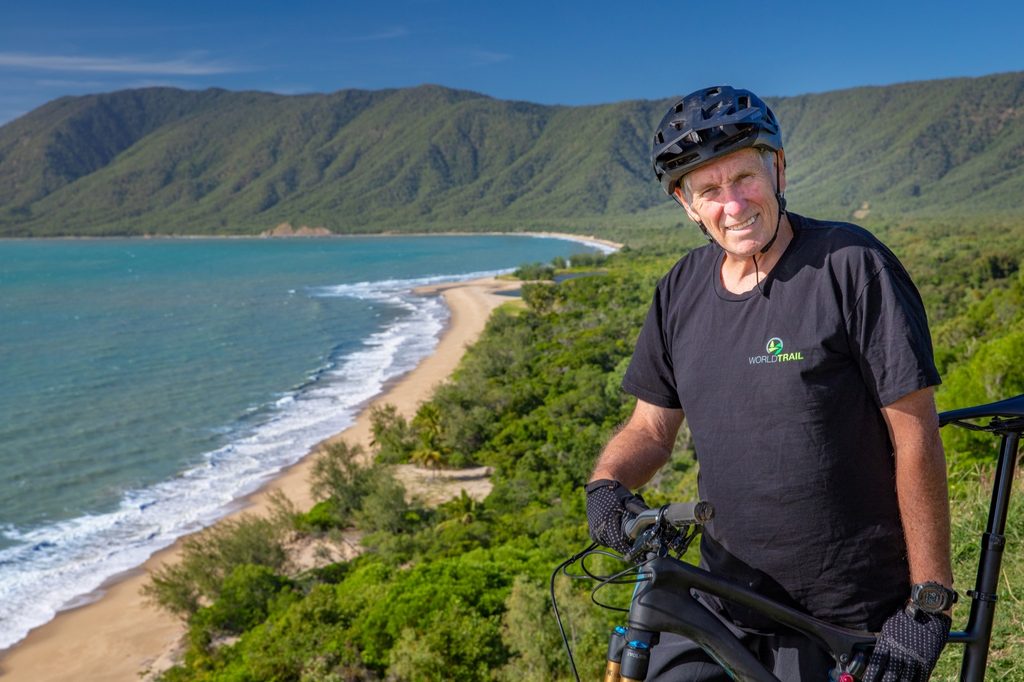
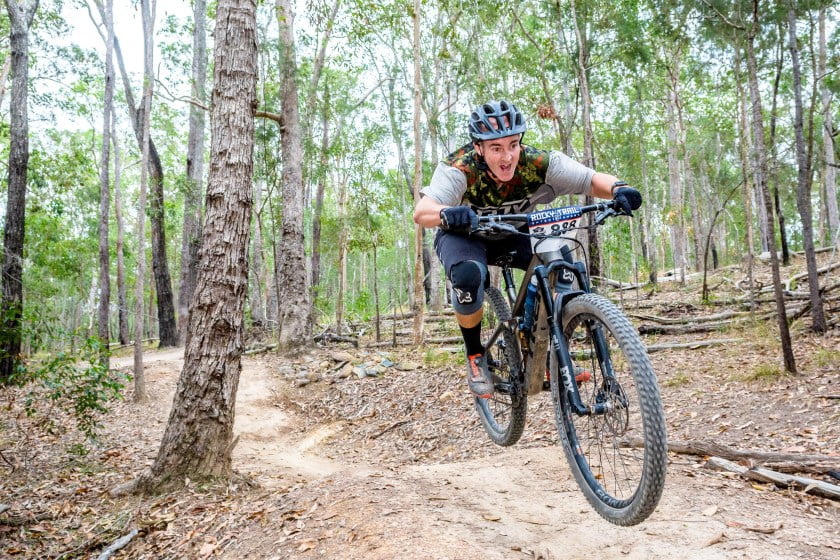
Held across May 16–17 in the Noosa Hinterland, BQ’s Weekend at Pomona brought around 150 riders together for two days of off-road adventure riding through some of South East Queensland’s most scenic backroads, forest trails and hinterland climbs. Based out of the Pomona Showgrounds, the event adopted the same “base camp” style that proved popular at Weekend at Wondai in April 2025, where riders could settle into one location and choose from a range of supported ride options across the weekend.

The format was designed to make the event more accessible and affordable while still delivering a premium riding experience. Riders had the flexibility to camp at the showgrounds, bring a caravan, or organise their own accommodation nearby, while meals were left up to individuals and local businesses. Instead of structured dinners and bundled accommodation packages, BQ focused on what mattered most: the riding itself.

Each of the four planned routes delivered a distinctly hinterland flavour, combining gravel roads, dirt trails, quiet sealed roads and plenty of climbing. Ride leaders guided groups across all four courses, with support crews positioned throughout the routes providing water, snacks, mechanical assistance and medical support where needed.

While rain showers in the lead-up had many riders nervously watching forecasts, the weather ultimately delivered near-perfect riding conditions. Damp trails and lingering puddles added a layer of adventure without dampening spirits, and many riders embraced the occasional mud pit as part of the experience.

For first-time participants, the supported nature of the weekend proved to be one of the event’s biggest drawcards.

“The confidence of having ride support made it a very exciting adventure as first timers, with plenty of laughs and beautiful landscapes,” one rider said after the weekend.

Another participant praised both the atmosphere and the organisation behind the event.

“We absolutely loved it, one of the most exciting things we have ever done and we have travelled a lot, just really well done event & we can tell that the BQ leadership and team worked well together to make it a success,” another said.

The relaxed base-camp model also encouraged a more social atmosphere away from the bike. Riders returned to Pomona throughout the afternoon to swap stories, clean their bikes and compare route highlights from the day’s adventures. Unlike point-to-point events that often see riders disperse immediately after finishing, the showgrounds became a communal hub for the weekend – as did the town’s cafes, pub and distillery.

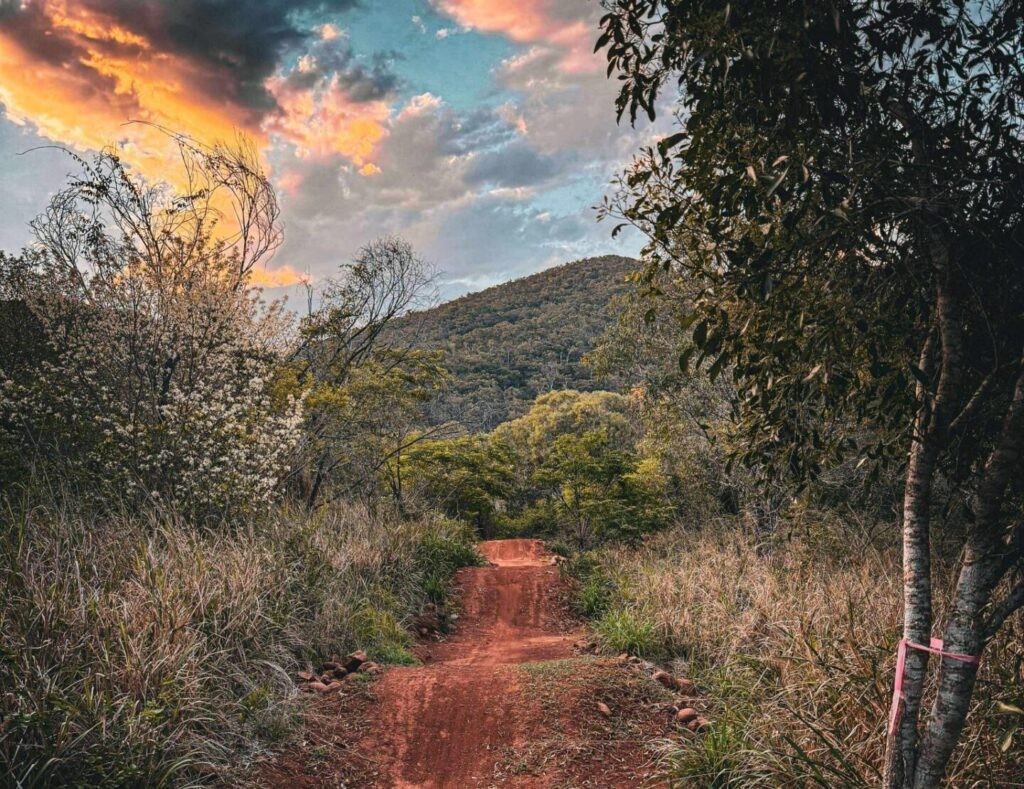
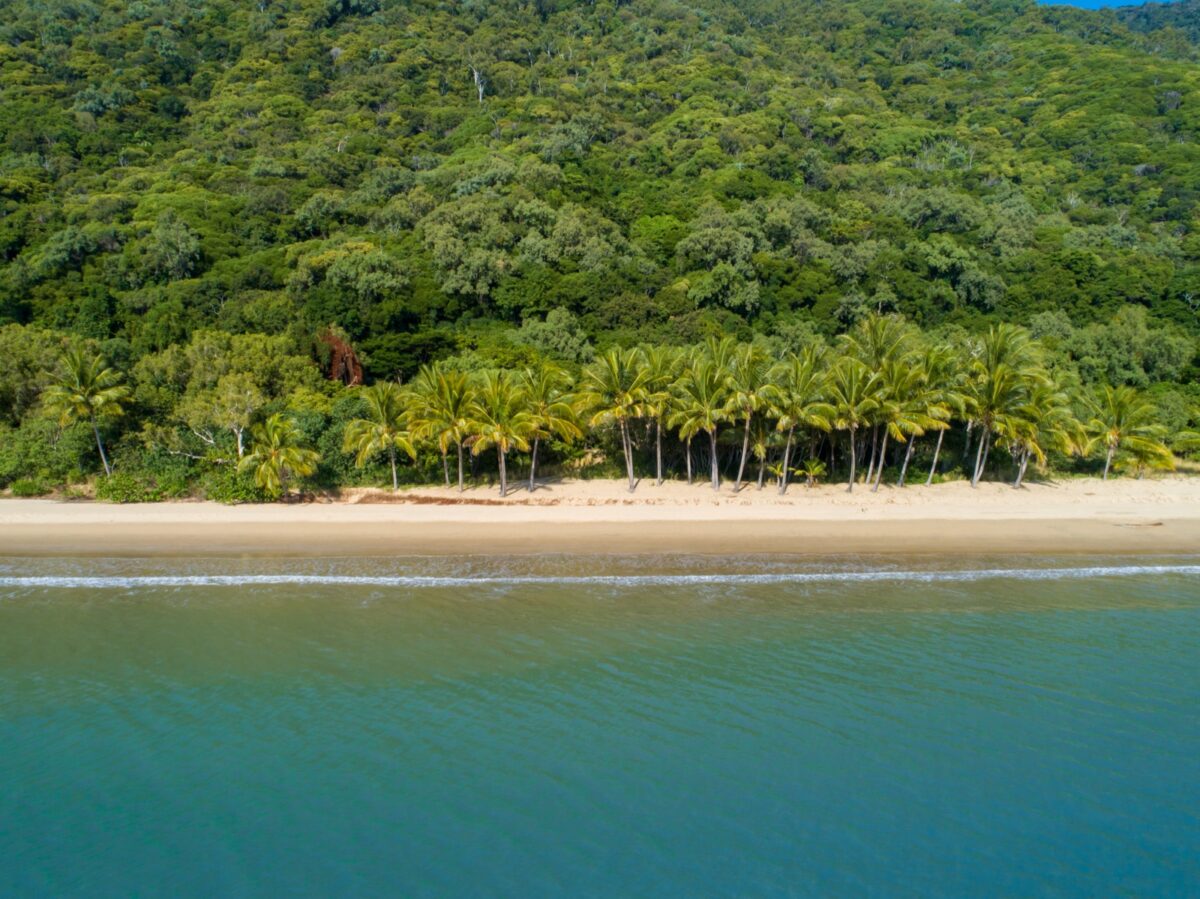
Pomona itself proved an ideal host town. Nestled in the heart of the Noosa Hinterland, the township offered riders easy access to cafes, bakeries and accommodation options while serving as a gateway to the extensive network of gravel roads and forest routes surrounding the region. The nearby Noosa Trail Network and hinterland climbs showcased a different side of the Sunshine Coast area, one far removed from the busy beachfronts more commonly associated with the region.

The success of Weekend at Pomona also reflects the growing popularity of gravel and adventure riding in Queensland. Riders are increasingly seeking out events that prioritise exploration, scenery and camaraderie over racing and competition. By combining challenging riding with a low-cost, flexible structure, we think we have found a format that appeals to both experienced gravel riders wanting to find new places to ride and those looking to try supported off-road riding for the first time.

Importantly, the event maintained a strong safety and support presence throughout the weekend despite its more relaxed structure. Ride leaders, course support, water points, mechanics and medics were all positioned to ensure riders could tackle the challenging routes with confidence.

Following the success of both Weekend at Wondai and Weekend at Pomona, the base-camp adventure format appears likely to become an important part of BQ’s future event calendar. The combination of affordable participation, regional tourism opportunities and supported adventure riding has clearly resonated with members and riders alike.

For many participants, the appeal went beyond simply completing the routes. The weekend offered a chance to experience Queensland’s regional landscapes at a slower pace, challenge themselves on unfamiliar terrain and connect with a broader community of riders.

And while many bikes and riders returned home carrying a healthy coating of hinterland loam, the overwhelming feeling at the end of the weekend was simple: riders were already asking when the next one would be.

Categories
Events

BQ Bike Park: Ride to the Gabba 

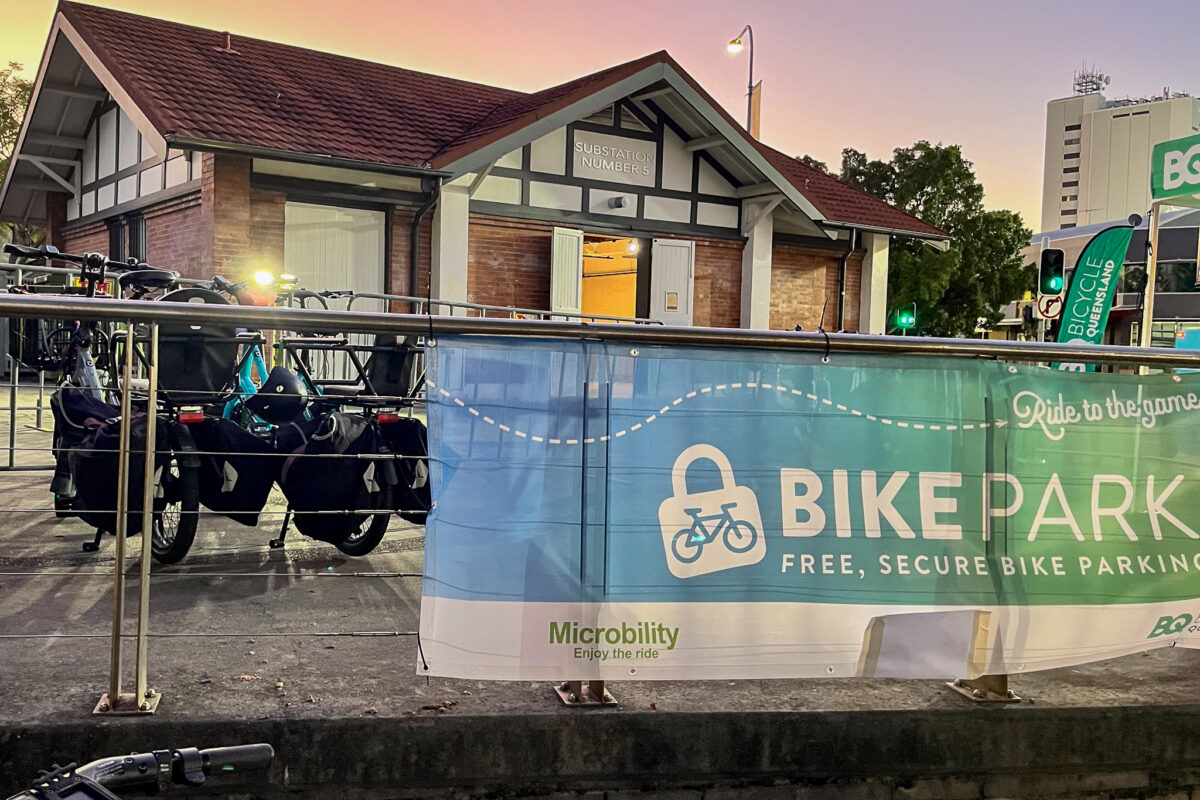
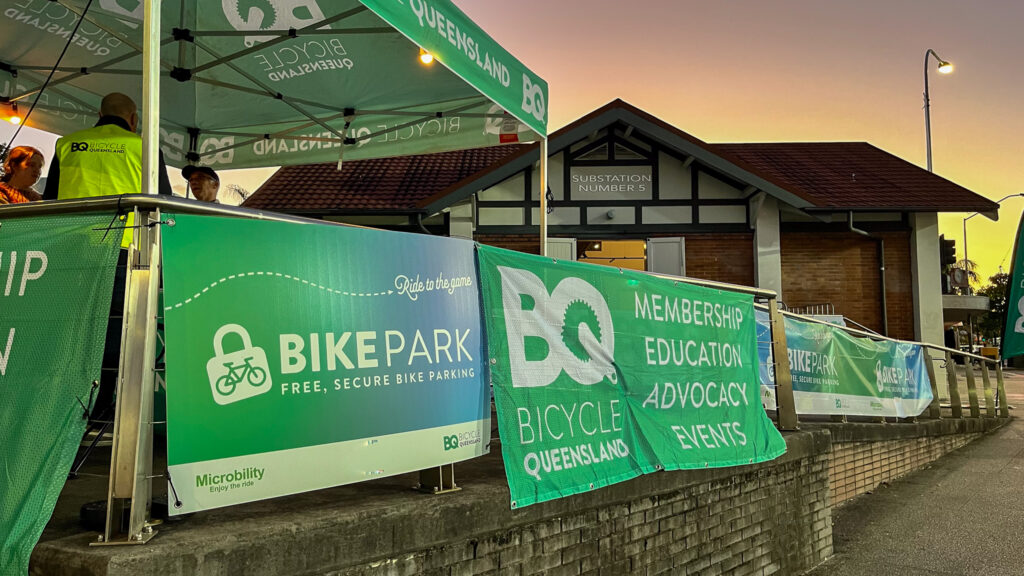
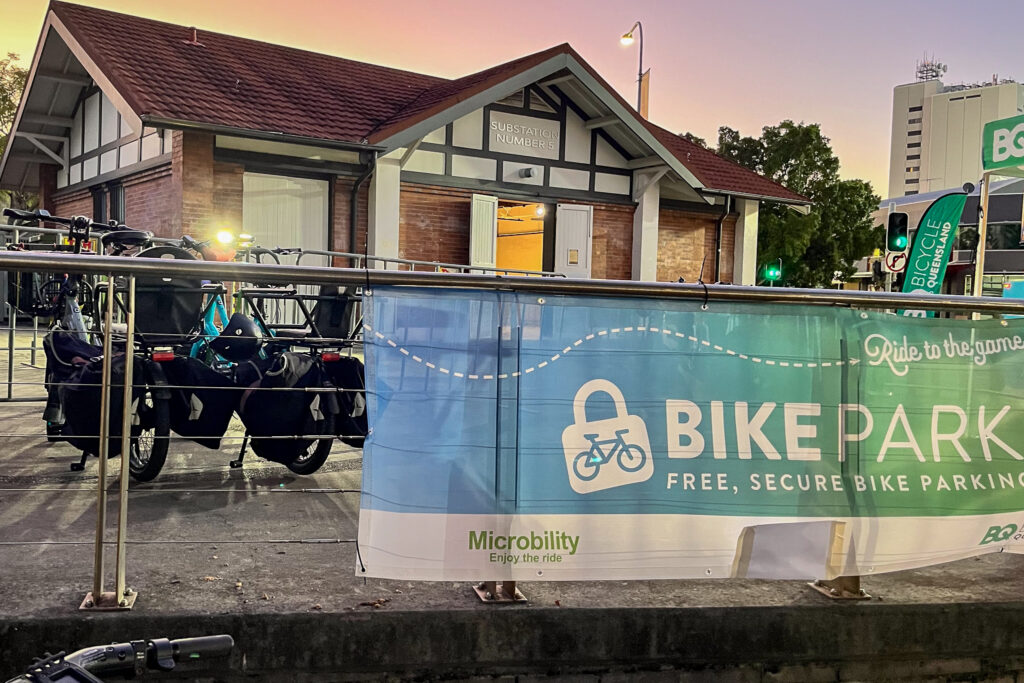
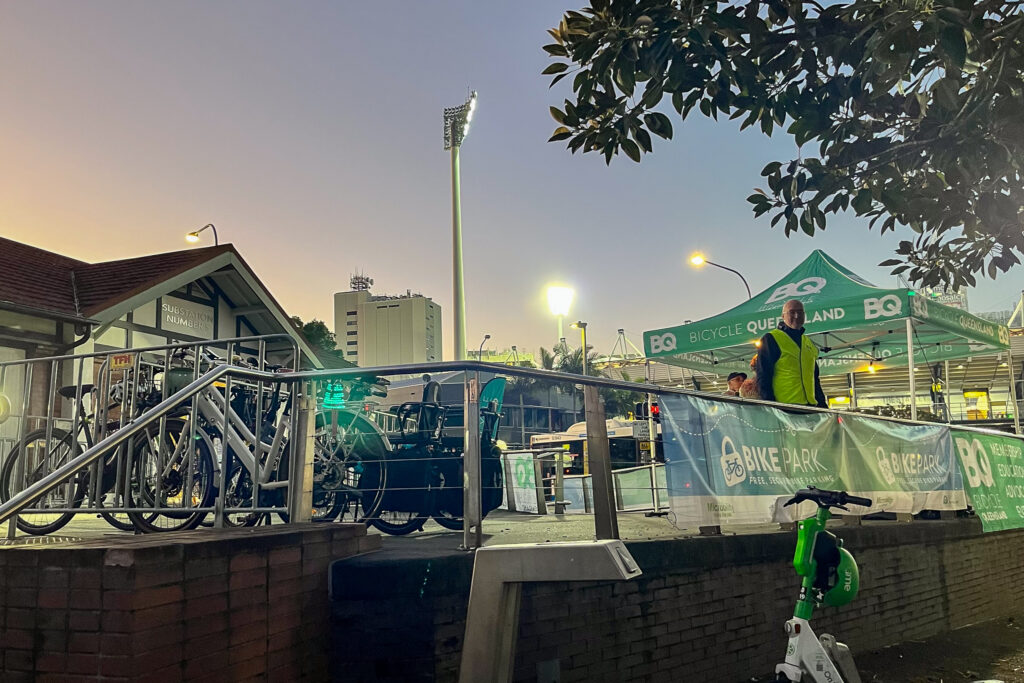
Bicycle Queensland have partnered with Microbility to deliver a new free, secure bike parking service at three remaining Brisbane Lions home games this home-and-away season. This is the first time valet-style bike parking will be offered to Lions fans. The trial service will showcase how free bike and scooter parking can work at Queensland stadiums in the lead up to the 2032 Brisbane Olympic and Paralympic Games. 

The professionally-managed, fully-supervised Bike Park service is free to use. It will give AFL fans a safe and convenient place close to the stadium to leave their bike or scooter, and know it will be there when they return. Fans can use a simple booking and check-in process, drop their bike with staff, and have it returned after the game. 

The Bike Park model is used around the world. At the Paris 2024 Olympic and Paralympic Games, bike valet services operated across 75 locations in 17 cities, guarding more than 90,000 bikes and scooters and recording zero theft or damage incidents. The current World Cup has similar services running in Canadian and US cities, including a large facility in Seattle.  

Where is it? 

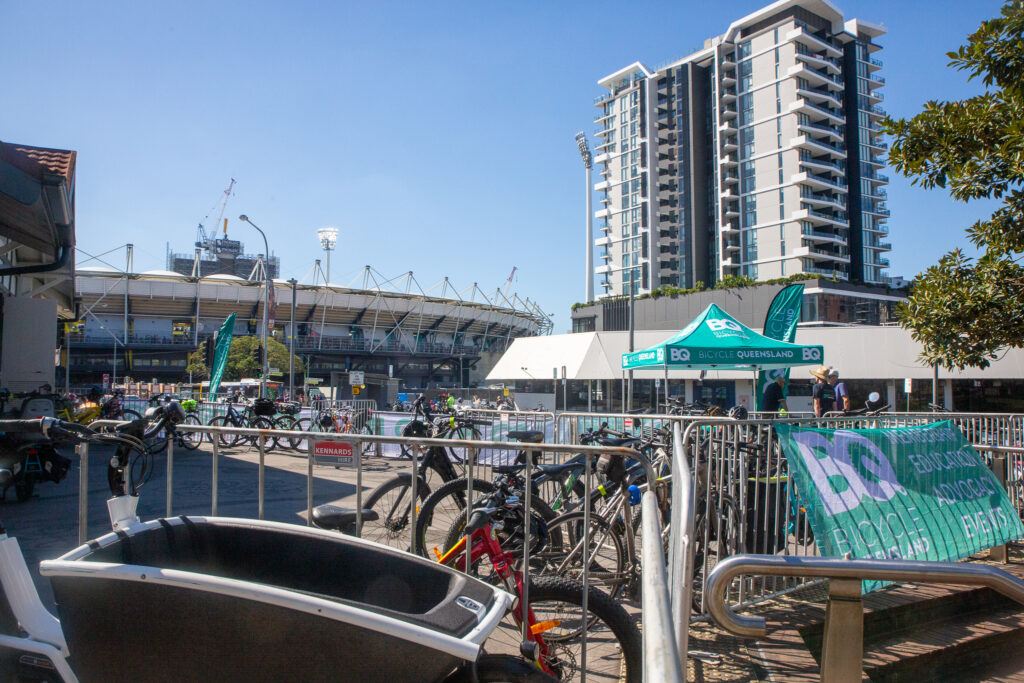
The Bike Park team will be set up next to the Woolloongabba Substation, 45 Logan Road, Woolloongabba, only one hundred metres from the stadium itself. That’s the corner of Jurgen St and Logan Road. Please follow the signs and walk your bike up the ramp on the Logan Road side of the facility.

The Bike Park opens one-hour before the game starts and will be available for the following AFL games:

  • Round 18, Lions vs. Essendon, Sunday 12th July 2026, open from 3.30pm
  • Round 20, Lions vs. Port Adelaide, Sunday 26th July 2026, open from midday
  • Round 22, Lions vs. Hawthorn, Friday 7th August 2026, open from 6.40pm   
  • Round 23, Lions vs. The Suns, (date to be finalised) Saturday 15th August 2026, open from midday

Check out the specifics on the BQ Event Calendar.

“Griffith University research found only three privately-owned bikes parked round the Gabba at a sold-out AFL game in 2024, despite there being over 30,000 fans in attendance,” Bicycle Queensland CEO Matt Burke said. “Yet many of Brisbane’s best bikeways flow nearby. People don’t ride because there is nowhere safe to park and they are afraid their bike will get nicked. Our partnership with Microbility fixes that. It’s exactly the kind of practical initiative that will get more people onto bikes and reduce the State Government’s costs in providing special event buses.” 

Building Toward Brisbane 2032 

The Brisbane 2032 Olympic and Paralympic Games have set ambitious targets for sustainable travel – with active and public transport expected to carry the majority of spectator journeys. Early transport modelling suggested the Brisbane Games will only work if lots more people walk and cycle to the key venues. The Bike Park trial is all about changing the culture in how people get to a game, in advance of 2032. If it proves popular, the case will be made for commercial operators to continue to provide such services in future, including well beyond the Olympics. 

Bicycle Queensland is looking to expand to other Queensland stadiums next year, including for NRL fans and at major concerts. The long-term goal is that similar bike parking services are embedded as a standard requirement of major event traffic management plans in Queensland, just like they are in much of Asia, Europe and North America.  

Categories
Advice Advocacy

Queensland’s New E-Mobility Laws Explained 

Queensland’s e-mobility laws have changed significantly in 2026, with new rules covering e-bike power and speed, rider behaviour, age and licensing requirements, and stronger enforcement powers. 

The latest changes take effect from 31 August 2026, introducing minimum age and driver licence requirements for people riding e-bikes and other e-mobility devices in public places. 


There are exemptions for supervised young riders, people with eligible medical conditions or disabilities, and riding in designated recreational areas. 

Here’s what you need to know. 

What is a legal e-bike in Queensland? 

To be legal to ride in public places in Queensland, an e-bike must: 

  • Have pedals as its primary source of power 
  • Have a motor with a maximum continuous rated power output of 250 watts 
  • Provide motor assistance only up to 25km/h 
  • Stop providing motor assistance once the bike reaches 25km/h 
  • If fitted with throttle control, provide throttle-only assistance only up to 6km/h to help the rider start moving. 
  • Meet the EN 15194 European Standard for electrically power-assisted cycles, subject to transitional arrangements for some existing e-bikes. 

Importantly, a high-powered e-bike cannot be made legal simply by electronically restricting or ‘locking’ its output or maximum assisted speed. 

If the motor is more powerful than the permitted 250 watts of maximum continuous rated power, it is not a legal e-bike for use on Queensland roads or public paths – even if software has been used to restrict its performance. 

What about existing e-bikes? 

The Queensland Government has introduced transitional arrangements for some e-bikes. In general, e-bikes used in public spaces will ultimately need to either meet EN 15194 or be verified as meeting the standard’s core safety requirements through the Queensland Government’s E-Bike Assurance Scheme. 

Owners of eligible existing e-bikes will have until 28 February 2027 to have their bike verified and appropriately labelled. 

The Assurance Scheme is being developed for e-bikes manufactured before 1 July 2026 that meet the core safety features of EN 15194 but were not certified to the standard. It will also provide a pathway for some non-standard or adaptive e-bikes and e-trikes used by people with a disability or medical condition. 

High-powered or high-speed devices that exceed Queensland’s legal e-bike limits are not covered by this transition. 

How old do you need to be to ride an e-bike? 

From 31 August 2026, the general rule is that you must be at least 16 years old and hold a valid driver licence to ride an e-bike or other e-mobility device on a road, road-related area or in a public place. The minimum licence is a Learner licence, and a valid interstate or overseas driver licence can also satisfy the requirement. 

However, there are some important exemptions. 

Riders aged 12–15 

Children aged 12 to 15 can ride an e-bike without a driver licence when supervised by a parent or caregiver. The supervising adult needs to remain close enough to easily observe and communicate with the young rider and provide immediate instructions. 

Riders aged 16–17 

Riders aged 16 or 17 can ride independently if they hold a valid driver licence – including a Learner licence. If they don’t have a licence, they can still ride when appropriately supervised by a parent or caregiver. 

Children under 12 

Children under 12 cannot ride an e-bike in ordinary public areas. 

Different age and licensing rules can apply within designated recreational riding areas. 

Do adults need a driver licence to ride an e-bike? 

Yes. 

From 31 August 2026, riders aged 16 and over must hold a valid driver licence to ride an e-bike in public, unless an exemption applies. This can be a Queensland Learner, Provisional or Open licence, or a valid equivalent interstate or overseas licence. 

You do not need to register a legal e-bike. 

Are there exemptions from the age and licence rules? 

Yes. The Queensland Government has introduced exemptions covering three main circumstances: 

  • Supervised riders aged 12–17 
  • People with eligible medical conditions or disabilities 
  • Riding in designated recreational areas, such as certain rail trails, mountain bike trails and private off-road cycling facilities (we will link to this list when it is made available by the Queensland Government) 

The exemptions apply to the age and driver licence requirements – they do not turn an otherwise illegal high-powered device into a legal e-bike. 

What about rail trails and mountain bike parks? 

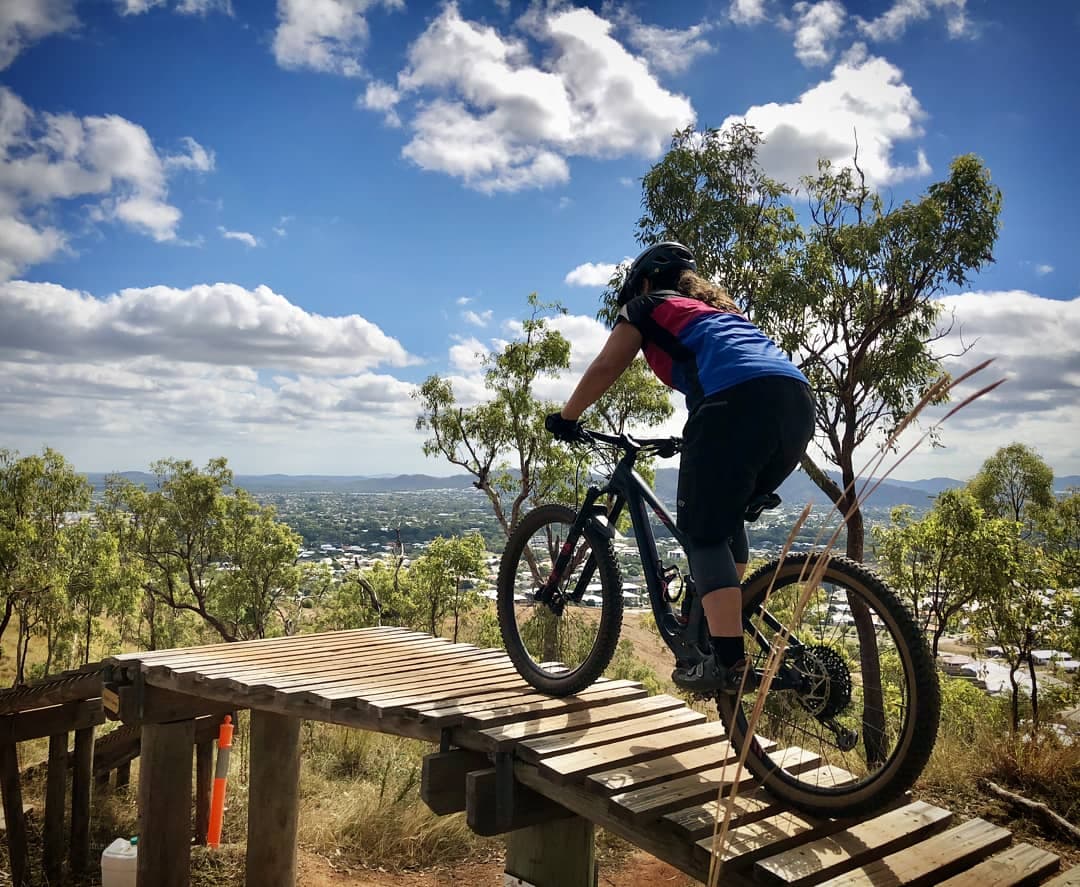
Age and driver licence exemptions apply in designated recreational areas. These can include certain rail trails, mountain bike trails and private off-road cycling facilities. This means riders may be able to use a legal e-bike in a designated recreational area without meeting the normal age or driver licence requirements. 

However, riders should check whether the particular facility or location they intend to ride has been designated for the exemption rather than assuming every rail trail, mountain bike park or recreational facility is covered. 

What if I can’t hold a driver licence for medical reasons? 

A medical or disability exemption is available for people aged 16 and over who cannot hold a driver licence because of a medical condition or disability but can safely operate an e-mobility device. 

An eligible health practitioner can complete an E-Mobility Driver Licence Exemption form with the rider. The exemption can be issued for up to five years and can specify which type of e-mobility device the person can use. Conditions can also be applied where appropriate. 

The rider keeps the completed exemption form and must be able to produce it when required. A grace period applies until 30 November 2026 to give eligible riders time to obtain their exemption. 

What are the speed limits? 

E-bike riders must obey the bicycle road rules as well as the specific rules applying to e-bikes. 

On footpaths, the maximum speed for an e-bike is 12km/h. 

On shared paths, riders must obey the signed speed limit and slow to a maximum of 12km/h when passing pedestrians. You may need to ride more slowly around children, dogs, people with limited mobility or in other busy areas. 

The 25km/h figure associated with an e-bike is the speed at which motor assistance must cease. It is not a universal 25km/h speed limit for bicycles. 

What counts as a footpath or shared path? 

Different speed requirements apply depending on whether infrastructure is legally considered a footpath, shared path, bicycle path or another type of road-related area. It may not be straightforward to determine what exactly you are on. Riders should follow signage and ride to the conditions, particularly where pedestrians are present. 

Bicycle Queensland continues to encourage government and councils to ensure cycling infrastructure is clearly designated and signed so riders can readily understand which rules apply. 

Can police seize an illegal e-bike? 

Yes. 

Queensland Police have stronger powers to deal with illegal e-mobility devices, including the power to seize, impound and potentially destroy prohibited devices. This includes high-powered devices that resemble e-bikes but do not meet Queensland’s legal e-bike requirements. 

A device with a motor exceeding 250 watts maximum continuous rated power, or one that continues providing motor assistance above 25km/h, is not a legal e-bike for use on public roads and paths. 

A high-powered device also does not become a legal e-bike simply because its power or speed has been restricted through software. 

Can parents be fined? 

Yes. 

Parents and guardians can face penalties for allowing children to use illegal e-mobility devices. From 31 August, age and licensing requirements also apply, although children aged 12–17 can ride under the supervision exemption. If you’re buying an e-bike for a young rider, make sure both the bike and the rider comply with the rules. 

Can you buy an e-bike if you’re under 16? 

No. 

From 1 July 2026, it is illegal for commercial or private sellers to sell an e-mobility device to anyone under 16. This includes e-bikes, e-scooters and other e-mobility devices. 

A parent can purchase a legal e-bike that will be used by a child under the applicable supervision or recreational-area exemptions, but the e-mobility device cannot be sold directly to someone aged under 16. 

What about drink riding? 

Queensland’s drink-riding laws also apply to bicycles, e-bikes and personal mobility devices. Police have additional powers to conduct roadside alcohol testing of riders, with a 0.05 blood alcohol concentration limit applying. 

What does this mean for riders of safe, legal e-bikes? 

For most people already riding a safe, legal e-bike from a recognised bicycle brand, the fundamental definition of an e-bike should look familiar: pedal assistance, a 250W maximum continuous rated motor output and assistance that cuts out at 25km/h. 

The biggest changes for riders are the new age and driver licence requirements, the new 12km/h footpath and pedestrian-passing requirements. If you already own an older e-bike and are unsure whether it meets EN 15194, keep an eye on information about the Queensland Government’s E-Bike Assurance Scheme ahead of the 28 February 2027 deadline. 

And if you’re buying a new e-bike, make sure it is clearly sold as compliant with EN 15194 and legal for use on Queensland roads and paths. 

By becoming a member of Bicycle Queensland, you support BQ’s advocacy for bike riders in Queensland, and have insurance cover for bike riding – full details of membership inclusions can be read here.

BQ’s E-bike rally at Brisbane Botanic Gardens 21-04-2026 to save safe legal e-bikes. Photo by Element Photo and Video Productions.
Categories
Advocacy

CityLink Cycleway expands to Shafston Avenue

Brisbane City Council have announced they are adding a much-needed 1.2km section to Brisbane’s growing bikeway network. The new addition will run along Shafston Avenue from Kangaroo Point to East Brisbane. Importantly, the addition will connect with existing bikeways at both Deakin Street and Mowbray park, delivering not just a safer route to the city – but one that is easier to navigate for new and experienced riders alike. 

Bicycle Queensland is pleased to see the addition to the network as part of the CycleLink Cycleway commitment, which will be an essential part of moving people around the city for the Brisbane 2032 Games – and every other day of the year.  

‘Brisbane has some excellent cycling infrastructure, and the bones of a great network. Projects like this are what’s required to connect existing bikeways to deliver safe, connected routes,’ said BQ’s Director of Advocacy Andrew Demack. 

‘This extends the safe bikeways of Elizabeth and Edward Streets in the centre of Brisbane out to the Eastern suburbs for the first time,’ said BQ’s CEO Dr Matthew Burke.  

‘Council is now fixing two of the most important missing links in the bikeway network, here at Kangaroo Point, and also at Sylvan Road in the west. With these two projects alone, you’ll now be able to ride safely all the way from Sumner and Jindalee, through to Norman Park. Now the challenge will be to extend the safe, low-risk bicycle networks further east, through Morningside, Seven Hills and Camp Hill.’ 

Dr Burke said ‘We’re grateful for Shafston Ave, but Bicycle Queensland is not giving up on the completion of the riverside bikeway that remains half-built along the western side of Kangaroo Point. We know completing this through would be incredibly popular, fulfilling the original Council Riverwalk plan that has already benefited Brisbane so much.’ 

Shaftston Ave is the third phase of the CityLink Cycleway program, following on from the initial stages that include the Kangaroo Point Bridge and connections through the CBD on Edward St and Elizabeth St towards Southbank via Victoria Bridge. The CityLink Cycleway will also be extended along Melbourne Street towards the heart of West End. 

Costs for the project haven’t been released, however the project will be funded in the budget via a 50-50 agreement with the state government. 
 
More details can be found on the project website. 

Categories
Advocacy

Sylvan Rd separated cycleway inching ever closer

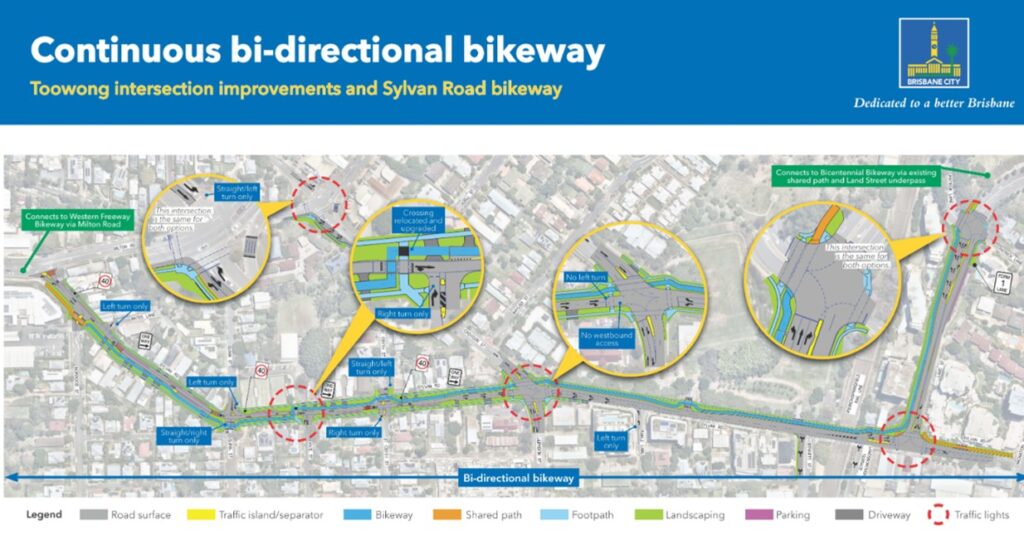
Brisbane City Council has released two sets of concept plans for the long-asked-for safe link from the Miskin Street terminus of the Centenary Cycleway at Toowong, and the Bicentennial Bikeway.

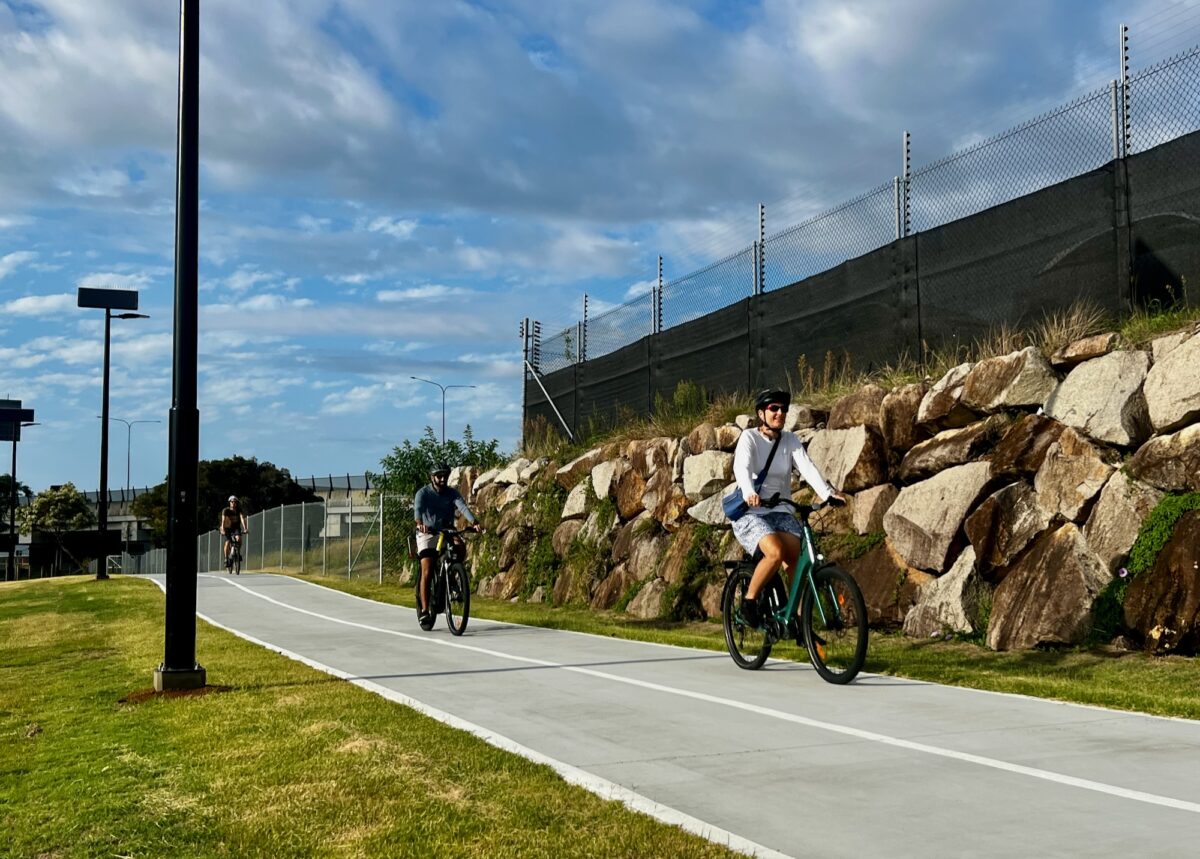
This one of the busiest bike commuting routes in Brisbane, and it runs for 1.8km along Sylvan Rd and Land Street. Bicycle Queensland and the bicycle user groups have been asking for a safe off-road route along Syvlan Rd since the Centenary Cycleway opened in 2005.

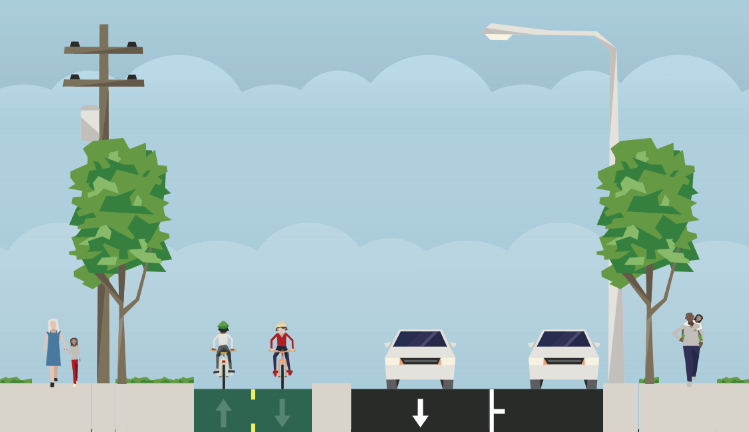
There are two concept design options for the Sylvan Road and Land Street corridor which both provide protected bikeways separated from people walking and driving. One option provides a continuous bi-directional bikeway and the other option is part uni-directional/part bi-directional bikeway.

The bi-directional version has some advantages. In that design, Sylvan Rd would be one-way only from the Milton Rd corner east-bound to Croydon Rd intersection. Even though the proposed bikeway would cross from one side of the road to the other halfway through that section, it would be crossing only one lane of traffic.

The alternate has a single lane bikeway either side of two-way traffic, in the same Milton Rd-Croydon Rd section.

One notable improvement that is shown on both proposed designs is the removal of on-street parking for the length of Sylvan Rd. This will certainly have a safety benefit for people using the bikeway.

Both designs use a bi-directional bikeway on the north side of Sylvan Rd, from the Croydon Rd corner east-bound past Wests Rugby and Toowong Memorial Park,  and continuing along Land St until it joins the underpass towards the Bicentennial Bikeway.

Brisbane City Council is inviting people to “have their say” on these proposed designs. Bicycle Queensland’s message to our bike-riding community is to make sure you weigh in with massive support for the project. This is a bikeway that we don’t want to see held back by local residents who wrongly perceive that it will create problems for them. So hit the link and let them know!

Categories
Advocacy

BQ’s Federal Budget reflections 

The Federal Government’s 2026-27 Budget has delivered a boost for active transport and e-bike safety, with new funding commitments that could shape how Australians ride and move for the next decade. 

Among the headline measures is a $500 million investment over 10 years for walking and cycling infrastructure, alongside targeted funding to improve e-bike product safety standards and import compliance. The new infrastructure funding package will provide $50 million annually to support the construction and upgrade of bikeways, shared paths and walking infrastructure around the country. While details on project allocation are yet to be released, the commitment marks one of the largest dedicated federal active transport investments in recent years.  

The funding arrives as state and local governments continue to grapple with rising demand for safer riding and walking corridors, particularly in growing urban areas where separated infrastructure remains limited. 

Bicycle Queensland CEO Dr Matthew Burke said: “We’re delighted to see our nation’s Active Transport Infrastructure Fund become a long-term commitment, as has long been the case with road and rail funding. This was a good move by the Commonwealth and will be well-received by the millions of Australians who ride bikes.” 

BQ is seeking a policy change that would build further cycling infrastructure as part of Commonwealth transport projects. When transport minister, Anthony Albanese sought to introduce a ‘positive provision’ policy that writes into Commonwealth grants that states must provide walking and cycling infrastructure as part of all urban road and rail projects. Footpaths and bikeways alongside and over the freeways would no longer be ‘gold-plating’ but become essential parts of the project. These policies are not controversial: they are widely adopted across the world; all Australia’s state governments have adopted them. 

The Budget also includes $6.6 million to strengthen Australia’s product safety and recall systems for e-bikes and related devices. BQ and other state and national bike advocacy groups have been calling on the Commonwealth to take such steps. The reforms are expected to focus on improving compliance with recognised standards, including the European EN15194 standard, which limits pedal-assist e-bikes to 250 watts of continuous power and pedal assistance up to 25km/h. 

Dr Burke said: “We believe this may involve new actions taken through the Australian Competition and Consumer Commission. This will hopefully penalise retailers who sell the most dangerous of the illegal, high-speed devices that are currently masquerading as pushbikes, and ensure they never get on our streets, paths or parks.” 

BQ is still calling on the Commonwealth to introduce compulsory declarations by e-bike importers to state that they are only bringing in product that meets EN15194. This would also help stop the illegal devices from reaching our shores. 

While the Federal Budget introduces stronger safety oversight and infrastructure funding, it stops short of offering direct purchase incentives for individuals buying e-bikes. There should be consideration for e-bikes to be included in Fringe Benefits Tax exemptions currently available for electric vehicles, as the change would help reduce congestion, emissions and transport costs. No such measure was included in this year’s Budget. 

E-bikes and e-mobility are getting people moving.

The 2026-27 Budget signals that cycling infrastructure and e-bike policy are increasingly becoming part of mainstream transport planning at a federal level. But we will wait to see how effective this seed funding can be at delivering the major infrastructure changes needed, and whether the mess of non-compliant device import and sales can be cleaned up. 

Categories
Advocacy

BQ responds to latest e-mobility recommendations

The Parliamentary Committee’s latest recommendations into Queensland’s proposed e-mobility laws still fail to properly address the core safety issues facing the state, while creating new uncertainty for riders, industry and enforcement agencies.  

This is despite 5,000 public submissions to the committee, 95% of which are telling the Government that they are wrong on licences, very low speed limits and age restrictions for safe, legal e-bikes. 

Bicycle Queensland welcomes only three of the proposed recommendations of the State Development, Infrastructure and Works Committee to amend the Transport and Other Legislation (Managing E-mobility Use and Protecting Our Communities) Amendment Bill 2026. The recommendations still avoids tackling the main issues around the sale of electric motorbikes and non-compliant devices in Queensland – despite the need to close the loopholes that allow it.  


In terms of positive outcomes, BQ supports Recommendation 2, which would allow compliant e-bikes built to previous versions of the EN15194 standard to remain legal. 

“Grandfathering earlier EN15194 compliant e-bikes is a sensible recommendation. It recognises that hundreds of thousands of safe, low-speed and low-power e-bikes are already in use across Queensland. Compliant e-bikes keep people moving and reduce congestion,” said BQ’s CEO Dr Matthew Burke. 

We do have serious concerns about several other recommendations, particularly around proposed certification and exemption frameworks. 

Recommendation 3 proposes investigating exemption pathways for devices that do not fully meet EN15194 standards, including adaptive e-trikes and mobility devices. Bicycle Queensland says the recommendation lacks detail and appears to underestimate the complexity and cost involved. 

“There has been little evidence that the committee has properly thought through how such a scheme would work in practice,” Dr Burke said. “BQ supports e-mobility access for adaptive e-trikes and mobility devices. But a new certification and exemption process may require an entirely new network for assessment, compliance logging, verification and auditing, alongside specialist training for those undertaking assessments. None of that has been costed or explained.” 

Similar concerns were raised about Recommendation 4, which proposes a statewide assurance and labelling scheme for compliant e-bikes. 

“The bike industry, retailers and riders all welcome the addition of a possible pathway to compliance for the tens of thousands of safe, legal e-bikes that do not have compliance markings (as they weren’t ever needed before). But we need clarity before any new certification system is introduced.”

“At the moment, the recommendation is vague and risks creating confusion and unnecessary red tape for compliant riders and businesses. This new system of compliance will come at great cost and needs proper planning, lest it be abused and therefore ineffective. It needs a lot of consultation with the bike industries, advocates and other stakeholders to get this right. That can’t be done this month.” 

We are particularly critical of Recommendation 5, which proposes exemption mechanisms for people unable to hold a driver licence due to disability, medical conditions or age. 

“This recommendation still links the use of safe, legal e-bikes to driver licensing. Compliant, EN-standard e-bikes are low-speed, low-power devices that already operate within strict limits.  

“Licensing requirements for compliant e-bikes should be scrapped entirely, not patched over with convoluted carve-out systems.” 

There have been minor modifications to proposed footpath and shared-path speed rules but they remain poorly drafted and disconnected from how active transport infrastructure actually works in Queensland. 

We welcome efforts to better define footpaths and separate them from shared paths, but the bill still fails to recognise multi-use trails and tourism infrastructure such as rail trails. 

“That omission creates a significant legal grey area. Queensland has invested heavily in rail trails and recreational tourism infrastructure in National Parks, yet the bill still does not clearly account for those environments. Riders and operators could be caught in a legal trap.” 

The committee’s suggestion of reduced speed limits within 10 metres of pedestrians was also described as impractical and unenforceable. 

“The recommendation simply does not reflect real-world conditions,” Dr Burke said. 

“A pedestrian could be sitting on a park bench, walking on the opposite side of a road, or using a separate footpath entirely. The proposal creates ambiguity for riders and law enforcement alike.” 

While Recommendation 8 suggests guidance for companies like public hire schemes like Neuron and Lime, the likelihood is they will all leave Queensland. The licensing requirements and age limits will remove too much of their business for them to stay viable, as they told the Committee at hearings last week. 

Recommendation 9 proposes a 12-month review of the legislation if passed. But we question whether the bill itself should proceed at all. “The missing link is comprehensive road safety education in primary and secondary schools. If Queensland is serious about improving behaviour and safety outcomes, and lowering the road toll education needs to begin long before someone gets in a car.” 

“The best use of taxpayer money would be to scrap this bill and focus directly on the key safety issues.” 

“That means targeting the importation and sale of illegal high-powered devices, cracking down on retailers doing the wrong thing, and properly funding Queensland Police to enforce the rules that already exist.” 

“The current bill largely fails to do any of that. The Committee’s LNP majority seems to have no way out of the mess they themselves created. The Labor minority report makes clear just how emphatic the community response has been by Queenslanders of all walks of life to this terrible bill,” said BQ’s CEO Dr. Matthew Burke. 

“We are amazed that the same rogue shops selling the same illegal high-speed and overpowered devices that created this whole mess, are still going to be in business and be allowed to sell the same dangerous products from 1st of July. It’s the number one thing this Committee should have done. That they’ve gone a year now and not realised it is stunning,” said BQ CEO Dr Matthew Burke. 

“How the committee continues to get this so wrong is beyond us. They heard from internationally significant bicycle safety researchers who said 10km/h will create risk to riders and to those around them on paths as they becomes so unstable, but they refused to listen.” 

“The bill remains a stinker and needs to be pulled.”   


Categories
Advocacy

Victora Park bike access confirmed 

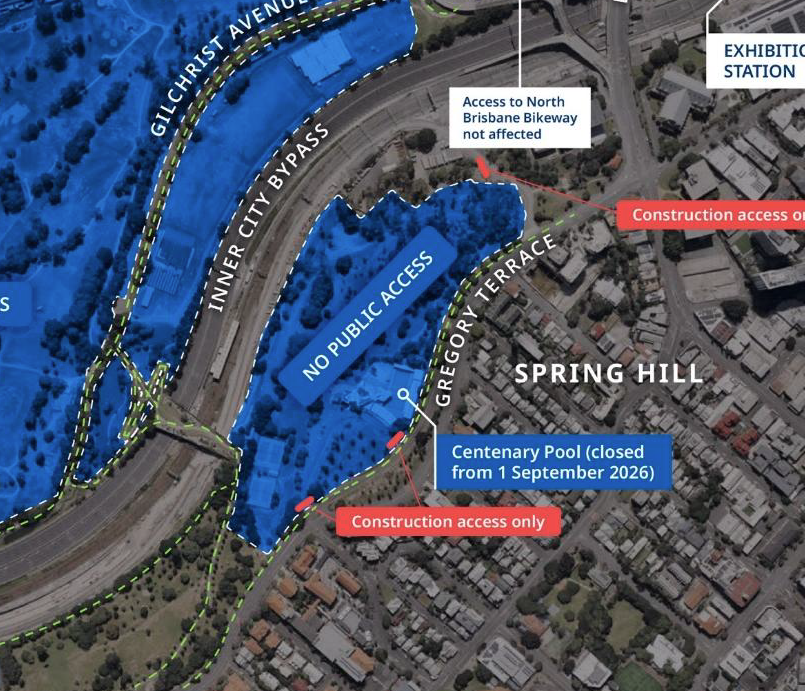
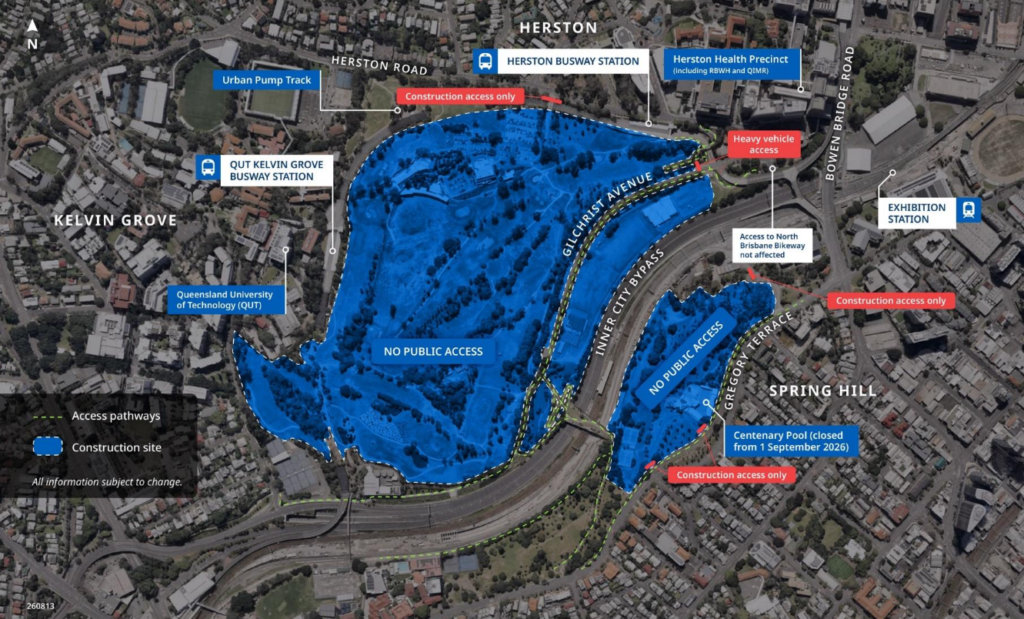
Bike riders and pedestrians will continue to have access through Victoria Park during early works for the Brisbane 2032 stadium precinct, with a temporary protected shared path set to open from June 1. 

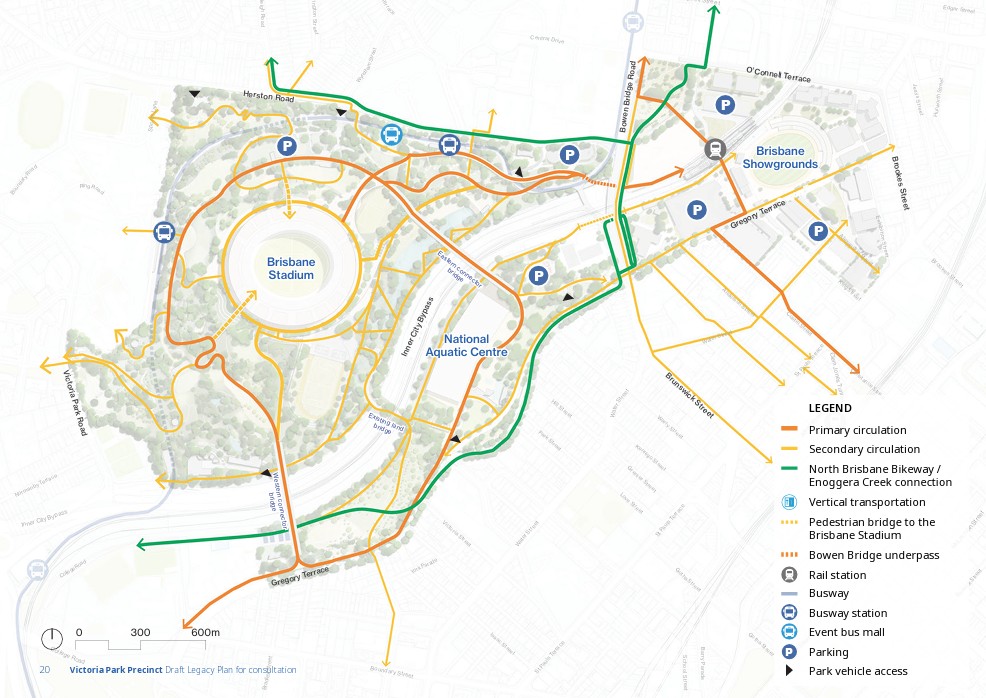
While large sections of Victoria Park public green space will progressively close as construction begins, the temporary corridor will maintain an important north-south active transport connection between the North Brisbane Bikeway and Herston. 

The temporary route will run from the end of the North Brisbane Bikeway along Gilchrist Avenue towards the land bridge at Herston, providing a wide, protected space for people walking, riding and rolling through the area.  

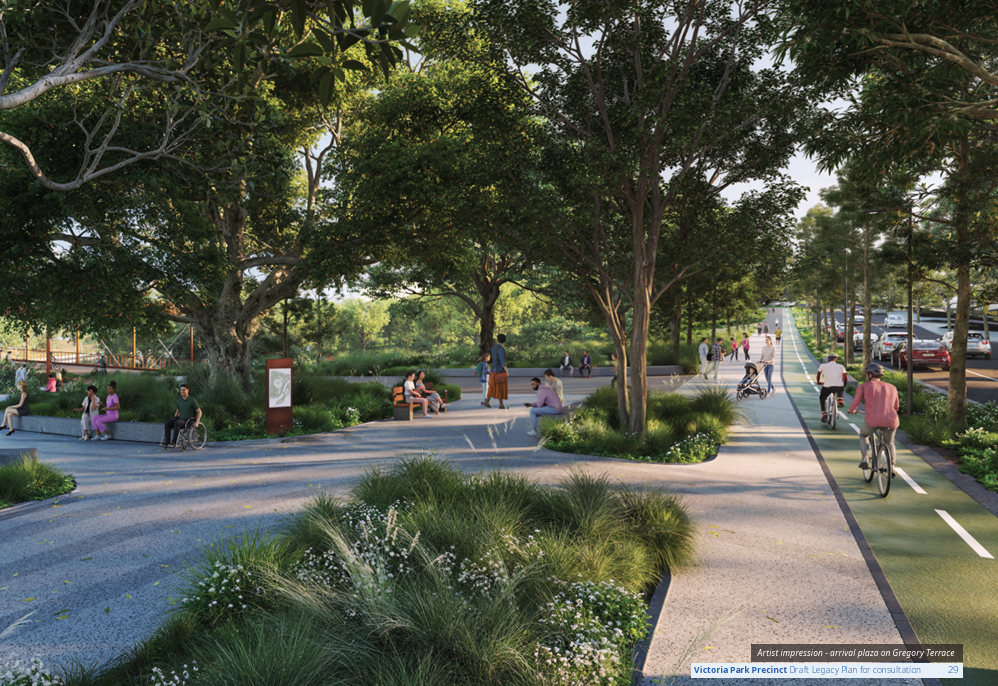
The measure is expected to remain in place while a permanent dedicated shared path is constructed, which will be part of a broader set of active transport routes as part of the infrastructure delivery. 

The connection is significant for commuters, recreational riders and local residents who regularly use Victoria Park as a safer and more direct route between the inner north, Kelvin Grove, Herston and the CBD. 

Maintaining riding and pedestrian access during major construction projects is essential, particularly as Brisbane prepares for rapid population growth and the 2032 Olympic and Paralympic Games. 

Bicycle Queensland CEO Matthew Burke said: “We know cyclists have been very worried. But we’re really grateful the project team has thought of us, planned for us, designed for us, and are now implementing a reasonable solution as early works begin. We’ll have a safe temporary route through Gilchrist Ave at first, then what should be a safe route off the North Brisbane Bikeway and around the stadium in the construction phase.” 

He said: “We should maintain pretty good access to and from the North Brisbane Bikeway right through the stadium development. It won’t be as convenient for those coming from Herston and the Enoggera Creek Bike Bridge, and cyclists will have to keep alert for construction traffic.”  

“We’ve also asked for all heavy vehicles to use protection side guards, also known as ‘skirts’, to keep pedestrians and cyclists safe, like they do in London.”   

The temporary arrangements come amid growing community concern about maintaining safe walking and cycling access during large-scale infrastructure works across Brisbane ahead of the Games. 

Victoria Park’s bikeways have become increasingly important transport corridors in recent years. They provide connections to schools, hospitals, universities and the city centre, as well as being key training and recreational bicycle routes. 

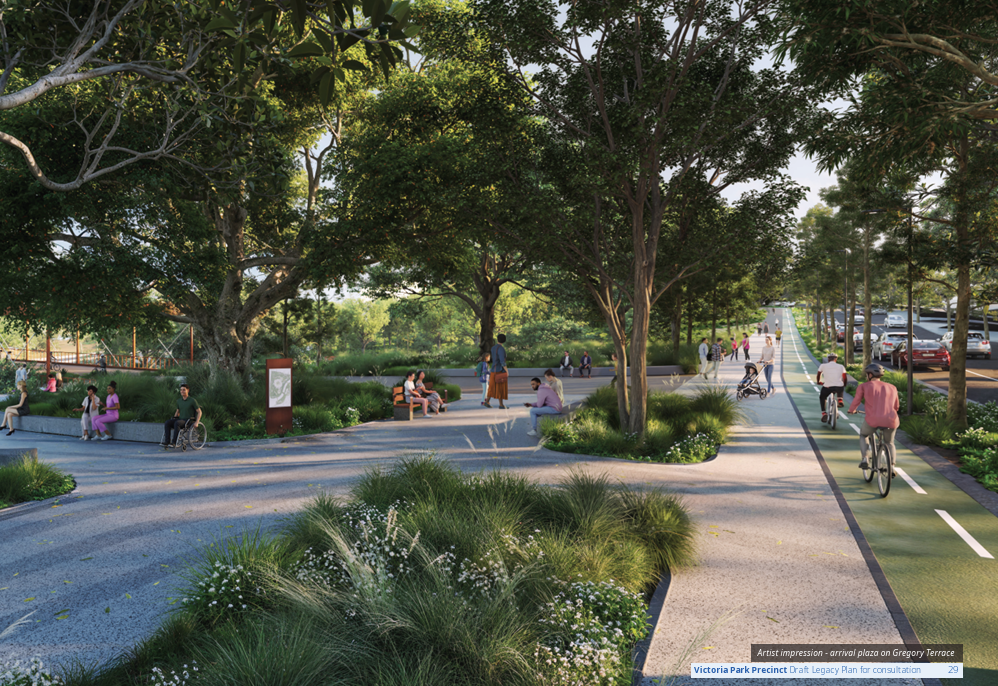
The long-term plan for the precinct is said to include expanded active transport infrastructure designed to improve connectivity across the inner north, with dedicated cycling and pedestrian facilities expected to form part of the final network. Delivering permanent, high-quality active transport infrastructure as part of the Games legacy is vitally important for Brisbane and the Games. 

Further details about construction staging and future active transport infrastructure are expected as planning for the Victoria Park stadium precinct progresses.