Bicycle Queensland have partnered with Microbility to deliver a new free, secure bike parking service at three remaining Brisbane Lions home games this home-and-away season. This is the first time valet-style bike parking will be offered to Lions fans. The trial service will showcase how free bike and scooter parking can work at Queensland stadiums in the lead up to the 2032 Brisbane Olympic and Paralympic Games.
The professionally-managed, fully-supervised Bike Park service is free to use. It will give AFL fans a safe and convenient place close to the stadium to leave their bike or scooter, and know it will be there when they return. Fans can use a simple booking and check-in process, drop their bike with staff, and have it returned after the game.
The Bike Parkmodel is used around the world. At the Paris 2024 Olympic and Paralympic Games, bike valet services operated across 75 locations in 17 cities, guarding more than 90,000 bikes and scooters and recording zero theft or damage incidents. The current World Cup has similar services running in Canadian and US cities, including a large facility in Seattle.
Where is it?
The Bike Park team will be set up next to the Woolloongabba Substation, 45 Logan Road, Woolloongabba, only one hundred metres from the stadium itself. That’s the corner of Jurgen St and Logan Road. Please follow the signs and walk your bike up the ramp on the Logan Road side of the facility.
The Bike Park opens one-hour before the game starts and will be available for the following AFL games:
Round 18, Lions vs. Essendon, Sunday 12th July 2026, open from 3.30pm
Round 20, Lions vs. Port Adelaide, Sunday 26th July 2026, open from midday
Round 22, Lions vs. Hawthorn, Friday 7th August 2026, open from 6.40pm
Round 23, Lions vs. The Suns, (date to be finalised) Saturday 15th August 2026, open from midday
“Griffith University research found only three privately-owned bikes parked round the Gabba at a sold-out AFL game in 2024, despite there being over 30,000 fans in attendance,” Bicycle Queensland CEO Matt Burke said. “Yet many of Brisbane’s best bikeways flow nearby. People don’t ride because there is nowhere safe to park and they are afraid their bike will get nicked. Our partnership with Microbility fixes that. It’s exactly the kind of practical initiative that will get more people onto bikes and reduce the State Government’s costs in providing special event buses.”
Building Toward Brisbane 2032
The Brisbane 2032 Olympic and Paralympic Games have set ambitious targets for sustainable travel – with active and public transport expected to carry the majority of spectator journeys. Early transport modelling suggested the Brisbane Games will only work if lots more people walk and cycle to the key venues. The Bike Park trial is all about changing the culture in how people get to a game, in advance of 2032. If it proves popular, the case will be made for commercial operators to continue to provide such services in future, including well beyond the Olympics.
Bicycle Queensland is looking to expand to other Queensland stadiums next year, including for NRL fans and at major concerts. The long-term goal is that similar bike parking services are embedded as a standard requirement of major event traffic management plans in Queensland, just like they are in much of Asia, Europe and North America.
Queensland’s e-mobility laws have changed significantly in 2026, with new rules covering e-bike power and speed, rider behaviour, age and licensing requirements, and stronger enforcement powers.
The latest changes take effect from 31 August 2026, introducing minimum age and driver licence requirements for people riding e-bikes and other e-mobility devices in public places.
There are exemptions for supervised young riders, people with eligible medical conditions or disabilities, and riding in designated recreational areas.
Here’s what you need to know.
What is a legal e-bike in Queensland?
To be legal to ride in public places in Queensland, an e-bike must:
Have pedals as its primary source of power
Have a motor with a maximum continuous rated power output of 250 watts
Provide motor assistance only up to 25km/h
Stop providing motor assistance once the bike reaches 25km/h
If fitted with throttle control, provide throttle-only assistance only up to 6km/h to help the rider start moving.
Meet the EN 15194 European Standard for electrically power-assisted cycles, subject to transitional arrangements for some existing e-bikes.
Importantly, a high-powered e-bike cannot be made legal simply by electronically restricting or ‘locking’ its output or maximum assisted speed.
If the motor is more powerful than the permitted 250 watts of maximum continuous rated power, it is not a legal e-bike for use on Queensland roads or public paths – even if software has been used to restrict its performance.
The Queensland Government has introduced transitional arrangements for some e-bikes. In general, e-bikes used in public spaces will ultimately need to either meet EN 15194 or be verified as meeting the standard’s core safety requirements through the Queensland Government’s E-Bike Assurance Scheme.
Owners of eligible existing e-bikes will have until 28 February 2027 to have their bike verified and appropriately labelled.
Queensland’s EPAC Assurance Scheme
The Queensland Government’s Electrically Power-Assisted Cycle (EPAC) Assurance Scheme is expected to commence on 2 November 2026. The scheme provides a pathway for eligible e-bikes to be assessed and verified as compliant with Queensland’s e-bike regulations.
Do I need to have my e-bike verified?
If your e-bike already complies with EN15194 and has the required EN15194 compliance label, you do not need to have it verified again.
The scheme is primarily intended for eligible existing e-bikes that do not have the required compliance labelling, as well as certain special-purpose e-bikes and e-trikes.
It is not a pathway to legalise illegal, high-powered e-mobility devices.
How much does verification cost?
Authorised Verifiers may charge up to $70 for a successful verification:
$0 – Initial pre-screening
$50 – Formal assessment or testing
$20 – Compliance label and recording verification details
What is the deadline?
A transition period runs until 28 February 2027 for eligible existing e-bikes. From 1 March 2027, these bikes will need the appropriate compliance label to continue being used legally.
Where can I get my e-bike verified?
The Queensland Government will publish a list of Authorised Verifiers when the scheme commences.
From 31 August 2026, the general rule is that you must be at least 16 years old and hold a valid driver licence to ride an e-bike or other e-mobility device on a road, road-related area or in a public place. The minimum licence is a Learner licence. A valid interstate or overseas driver licence can also satisfy the requirement.
However, there are some important exemptions.
Riders aged 12–15
Children aged 12 to 15 can ride an e-bike without a driver licence when supervised by a parent or caregiver. The supervising adult needs to remain close enough to easily observe and communicate with the young rider and provide immediate instructions.
Riders aged 16–17
Riders aged 16 or 17 can ride independently if they hold a valid driver licence – including a Learner licence. If they don’t have a licence, they can still ride when appropriately supervised by a parent or caregiver.
Children under 12
Children under 12 cannot ride an e-bike in ordinary public areas.
Different age and licensing rules can apply within designated recreational riding areas.
Do adults need a driver licence to ride an e-bike?
Yes.
From 31 August 2026, riders aged 16 and over must hold a valid driver licence to ride an e-bike in public, unless an exemption applies. This can be a Queensland Learner, Provisional or Open licence, or a valid equivalent interstate or overseas licence.
You do not need to register a legal e-bike.
Are there exemptions from the age and licence rules?
Yes. The Queensland Government has introduced exemptions covering three main circumstances:
Supervised riders aged 12–17
People with eligible medical conditions or disabilities
Riding on mountain bike trails, rail trails or private mountain bike parks
The exemptions apply to the age and driver licence requirements – they do not turn an otherwise illegal high-powered device into a legal e-bike.
What about rail trails and mountain bike parks?
Age and driver licence exemptions do not apply on rail trails, mountain bike trails and private off-road cycling facilities. This means riders are able to use a legal e-bike on a marked mountain biek trail, or network, rail trail or private mountain bike park without meeting the normal age or driver licence requirements.
What if I can’t hold a driver licence for medical reasons?
A medical or disability exemption is available for people aged 16 and over who cannot hold a driver licence because of a medical condition or disability but can safely operate an e-mobility device.
An eligible health practitioner can complete an E-Mobility Driver Licence Exemption form with the rider. The exemption can be issued for up to five years and can specify which type of e-mobility device the person can use. Conditions can also be applied where appropriate.
The rider keeps the completed exemption form and must be able to produce it when required, in either digital or hard copy format.A grace period applies until 30 November 2026 to give eligible riders time to obtain their exemption.
What are the speed limits?
E-bike riders must obey the bicycle road rules as well as the specific rules applying to e-bikes.
On footpaths, the maximum speed for an e-bike is 12km/h.
On shared paths, riders must obey the signed speed limit and slow to a maximum of 12km/h when passing pedestrians. You may need to ride more slowly around children, dogs, people with limited mobility or in other busy areas.
The 25km/h figure associated with an e-bike is the speed at which motor assistance must cease. It is not a universal 25km/h speed limit for bicycles.
What counts as a footpath or shared path?
Different speed requirements apply depending on whether infrastructure is legally considered a footpath, shared path, bicycle path or another type of road-related area. It may not be straightforward to determine what exactly you are on. Riders should follow signage and ride to the conditions, particularly where pedestrians are present.
Bicycle Queensland continues to encourage government and councils to ensure cycling infrastructure is clearly designated and signed so riders can readily understand which rules apply.
Can police seize an illegal e-bike?
Yes.
Queensland Police have stronger powers to deal with illegal e-mobility devices, including the power to seize, impound and potentially destroy prohibited devices. This includes high-powered devices that resemble e-bikes but do not meet Queensland’s legal e-bike requirements.
A device with a motor exceeding 250 watts maximum continuous rated power, or one that continues providing motor assistance above 25km/h, is not a legal e-bike for use on public roads and paths.
A high-powered device also does not become a legal e-bike simply because its power or speed has been restricted through software.
Can parents be fined?
Yes.
Parents and guardians can face penalties for allowing children to use illegal e-mobility devices. From 31 August, age and licensing requirements also apply, although children aged 12–17 can ride under the supervision exemption. If you’re buying an e-bike for a young rider, make sure both the bike and the rider comply with the rules.
Can you buy an e-bike if you’re under 16?
No.
From 1 July 2026, it is illegal for commercial or private sellers to sell an e-mobility device to anyone under 16. This includes e-bikes, e-scooters and other e-mobility devices.
A parent can purchase a legal e-bike that will be used by a child under the applicable supervision or recreational-area exemptions, but the e-mobility device cannot be sold directly to someone aged under 16.
What about drink riding?
Queensland’s drink-riding laws also apply to bicycles, e-bikes and personal mobility devices. Police have additional powers to conduct roadside alcohol testing of riders, with a 0.05 blood alcohol concentration limit applying.
What does this mean for riders of safe, legal e-bikes?
For most people already riding a safe, legal e-bike from a recognised bicycle brand, the fundamental definition of an e-bike should look familiar: pedal assistance, a 250W maximum continuous rated motor output and assistance that cuts out at 25km/h.
The biggest changes for riders are the new age and driver licence requirements, the new 12km/h footpath and pedestrian-passing requirements. If you already own an older e-bike and are unsure whether it meets EN 15194, keep an eye on information about the Queensland Government’s E-Bike Assurance Scheme ahead of the 28 February 2027 deadline.
And if you’re buying a new e-bike, make sure it is clearly sold as compliant with EN 15194 and legal for use on Queensland roads and paths.
By becoming a member of Bicycle Queensland, you support BQ’s advocacy for bike riders in Queensland, and have insurance cover for bike riding – full details of membership inclusions can be read here.
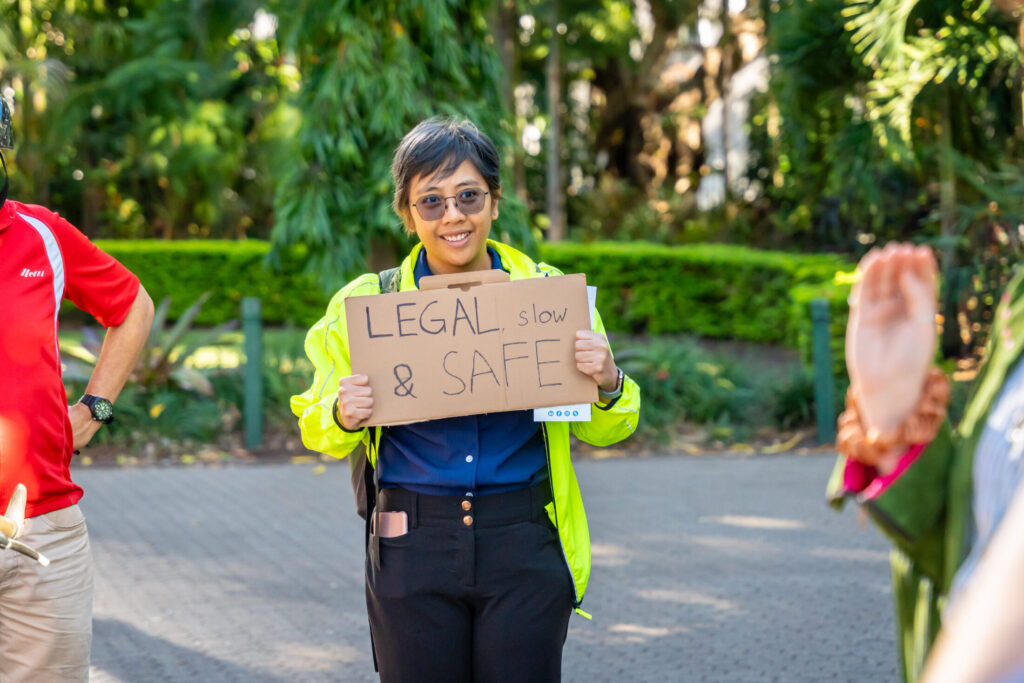
BQ’s E-bike rally at Brisbane Botanic Gardens 21-04-2026 to save safe legal e-bikes. Photo by Element Photo and Video Productions.
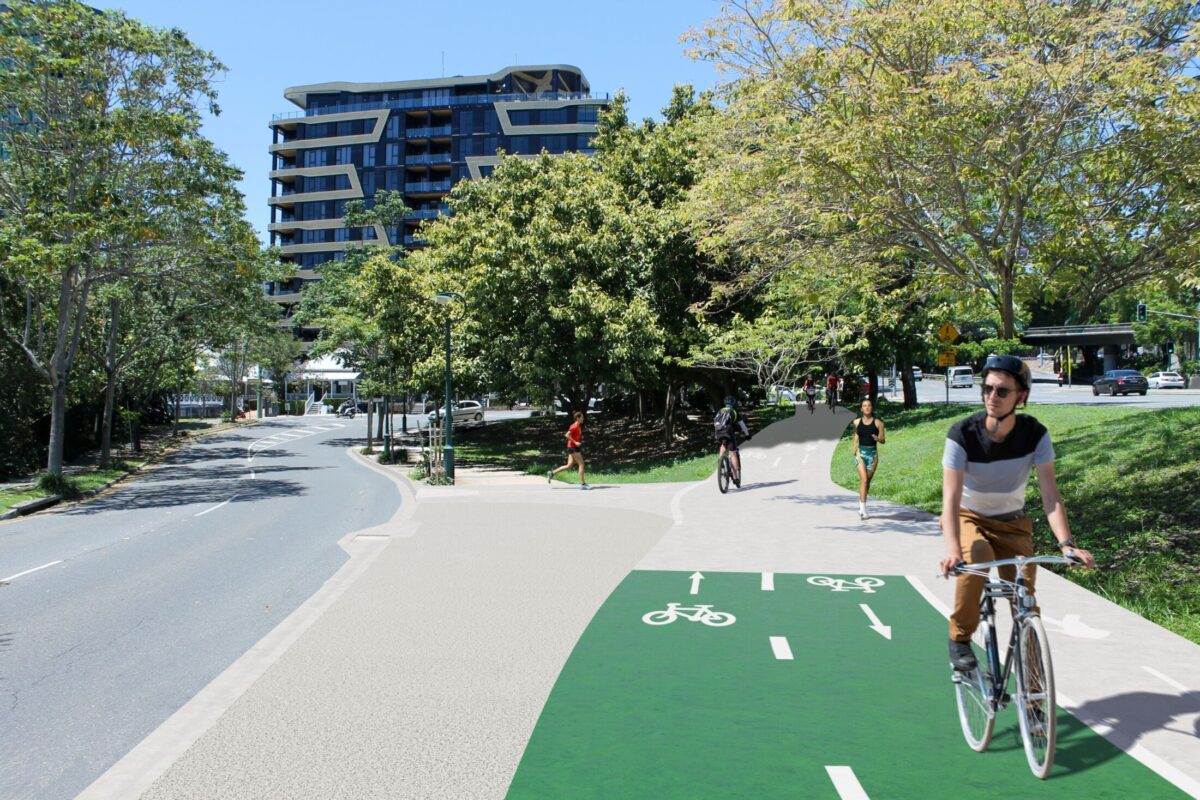
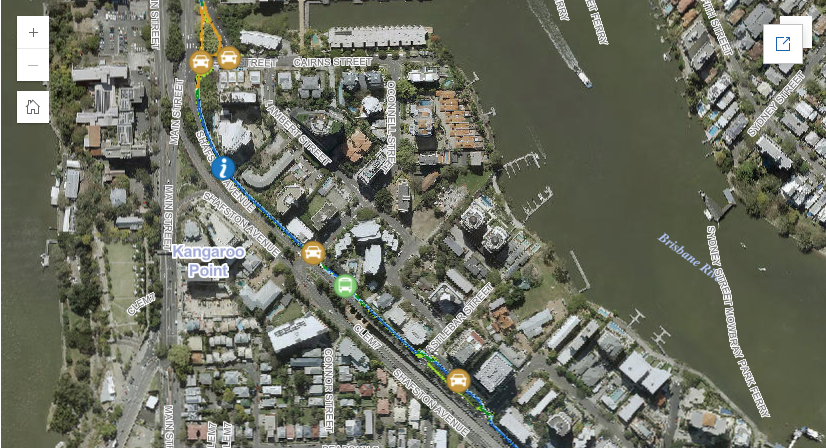
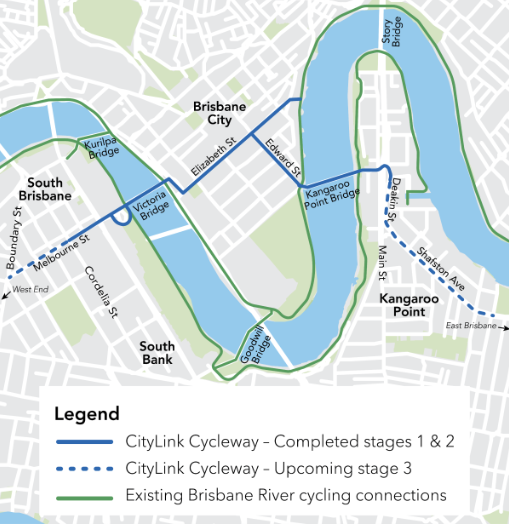
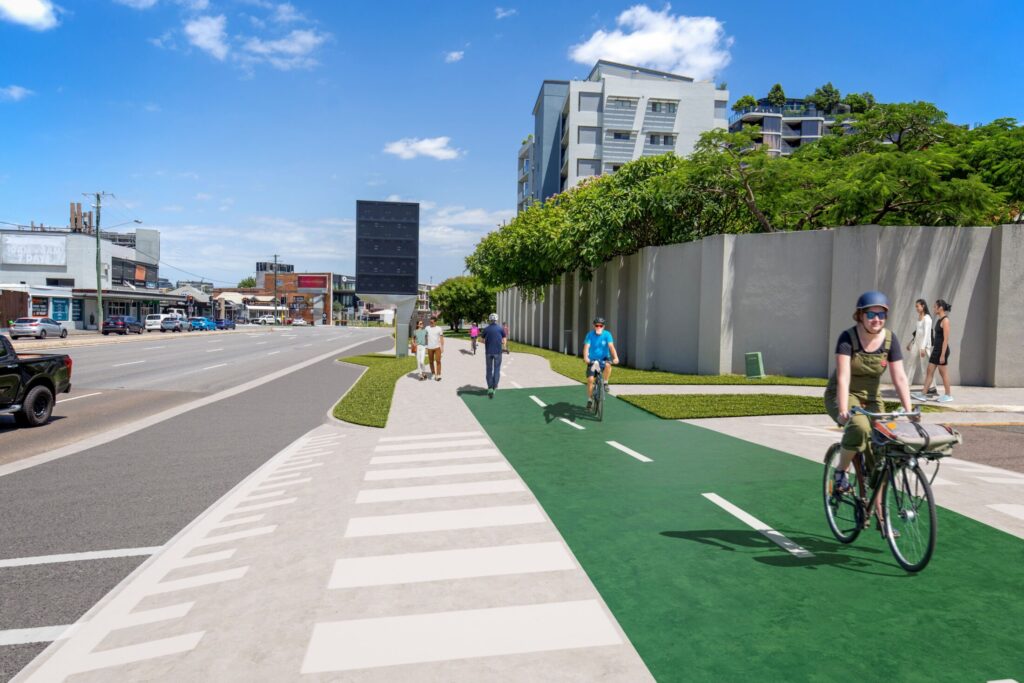
Brisbane City Council have announced they are adding a much-needed 1.2km section to Brisbane’s growing bikeway network. The new addition will run along Shafston Avenue from Kangaroo Point to East Brisbane. Importantly, the addition will connect with existing bikeways at both Deakin Street and Mowbray park, delivering not just a safer route to the city – but one that is easier to navigate for new and experienced riders alike.
Bicycle Queensland is pleased to see the addition to the network as part of the CycleLink Cycleway commitment, which will be an essential part of moving people around the city for the Brisbane 2032 Games – and every other day of the year.
‘Brisbane has some excellent cycling infrastructure, and the bones of a great network. Projects like this are what’s required to connect existing bikeways to deliver safe, connected routes,’ said BQ’s Director of Advocacy Andrew Demack.
‘This extends the safe bikeways of Elizabeth and Edward Streets in the centre of Brisbane out to the Eastern suburbs for the first time,’ said BQ’s CEO Dr Matthew Burke.
‘Council is now fixing two of the most important missing links in the bikeway network, here at Kangaroo Point, and also at Sylvan Road in the west. With these two projects alone, you’ll now be able to ride safely all the way from Sumner and Jindalee, through to Norman Park. Now the challenge will be to extend the safe, low-risk bicycle networks further east, through Morningside, Seven Hills and Camp Hill.’
Dr Burke said ‘We’re grateful for Shafston Ave, but Bicycle Queensland is not giving up on the completion of the riverside bikeway that remains half-built along the western side of Kangaroo Point. We know completing this through would be incredibly popular, fulfilling the original Council Riverwalk plan that has already benefited Brisbane so much.’
Shaftston Ave is the third phase of the CityLink Cycleway program, following on from the initial stages that include the Kangaroo Point Bridge and connections through the CBD on Edward St and Elizabeth St towards Southbank via Victoria Bridge. The CityLink Cycleway will also be extended along Melbourne Street towards the heart of West End.
Costs for the project haven’t been released, however the project will be funded in the budget via a 50-50 agreement with the state government.
In a joint national statement, Bicycle Queensland has joined a national coalition of transport and public health organisations1 providing practical measures that would help households cut fuel use and ease cost‑of‑living pressures by making it easier to walk, ride and use public transport for everyday trips.
The 26-cent a litre fuel tax cut is expected to expire on June 30th. Treasurer Jim Chalmers ruled out an immediate extension ahead of the federal budget, suggesting that the government is open to alternatives to easing the fuel crisis.
These practical actions can make a real difference to reducing fuel use and keeping Australians moving – while easing cost of living and improving public health through increased physical activity, for example.
The nine ideas are:
1. Crossings and footpaths near schools, shops and stops
2. Pop-up bike lanes on key commuter routes
3. More frequent public transport services
4. Pop-up bus-priority lanes
5. Shorter wait times at push-button crossings
6. Fuel-saving speed limits
7. $100 vouchers for bicycle repairs
8. Rapid grants for bike parking and end-of-trip upgrades
9. $500 vouchers to buy a bicycle
Bicycle Queensland CEO Dr Matthew Burke said: “The emergency fuel stockpiles released globally in conjunction with the International Energy Agency (IEA) will be exhausted by around late-July. The international fuel crisis is then likely to worsen quickly. Australia will be affected.”
“Governments can’t just tell people to drive less. We need to make walking, cycling and public transport better alternatives in rapid time.”
“Pop-up bike lanes, pop-up T2 and T3 lanes, pop-up bus lanes: these can all reduce single-occupant car travel. Reducing neighbourhood street speeds saves fuel and encourages kids to walk and ride to school.”
“We can make changes like these in weeks, not years. Most of these actions will work immediately and at very little cost. If something doesn’t work, you can switch it back just as quickly.”
Bicycle Qld is asking the State and Commonwealth Governments, and local councils across Queensland, to harness these ideas and put them to use immediately.
Dr Matthew Burke, CEO – Bicycle Queensland, m.burke@bq.org.au, 0402 346 464
National media contact for this initiative
Stephen Hodge, Director – National Advocacy, WeRide Australia, stephen@weride.org.au , 0411 149 910
Coalition members
These initiatives have been developed and are supported by the following transport and health sector organisations:
Australian Health Promotion Association
Asia-Pacific Society for Physical Activity
Better Streets
Bicycle Network
Bicycle New South Wales
Bicycle Queensland
Bike SA
Council of Academic Public Health Institutions Australasia
Pedal Power
Queensland Walks
10,000 Steps
WestCycle
WeRide Australia
About Bicycle Queensland.
BQ is the leading voice for cycling in Queensland. With over 12,000 members statewide and more than 40,000 supporters on our database, every day we’re helping Queenslanders to cycle safely.