Categories
Advocacy

BQ celebrates the Commonwealth’s reinstatement of e-bike standards 

Bicycle Queensland is celebrating a much-needed announcement from the Australian Government that they will reinstate the internationally recognised EN-15194 standard for e-bikes. The decision was confirmed on Friday November 21 in a Ministerial Communique, which confirmed that: 
… the Commonwealth will reinstate the EN-15194 standard and meet with relevant stakeholders to ensure the use of this standard is well understood and supported.” 

The reinstatement follows advocacy from national and state bicycle organisations, after the standard was removed from the import rules by the Morrison Government in 2021.  

Our colleagues, the Bicycle Industries Australia (BIA) and We Ride Australia, have welcomed the announcement, describing it as an essential move to protect consumers and restore clarity to the market. 

 BIA General Manager Peter Bourke said the decision is a sensational outcome for the Australian bicycle industry, adding that EN-15194 is the world’s leading e-bike standard and critical to addressing the influx of poor-quality and unsafe imports.” 

 We Ride Australia’s Stephen Hodge said the move will boost consumer confidence at a time when e-bikes are booming: 
The reinstatement of EN15194 means Australians will have the confidence to know the e-bikes they buy for themselves, and their children, are safe and fit for purpose.” 

A turning point after 12 months of advocacy from Bicycle Queensland 

Bicycle Queensland CEO Professor Matthew Burke said the announcement is a direct result of sustained advocacy from our organisation, the RACQ, Queensland Walks and other concerned groups. 

“This is a crucial turning point,” Prof Burke said. “For the past twelve months, Bicycle Queensland has been calling for the reinstatement of EN-15194 to help restrict the importation and sale of illegal e-motorbikes and non-compliant e-bikes. The best way to keep these dangerous vehicles off Queensland’s streets, paths and parks, is to not let them into Australia in the first place.”

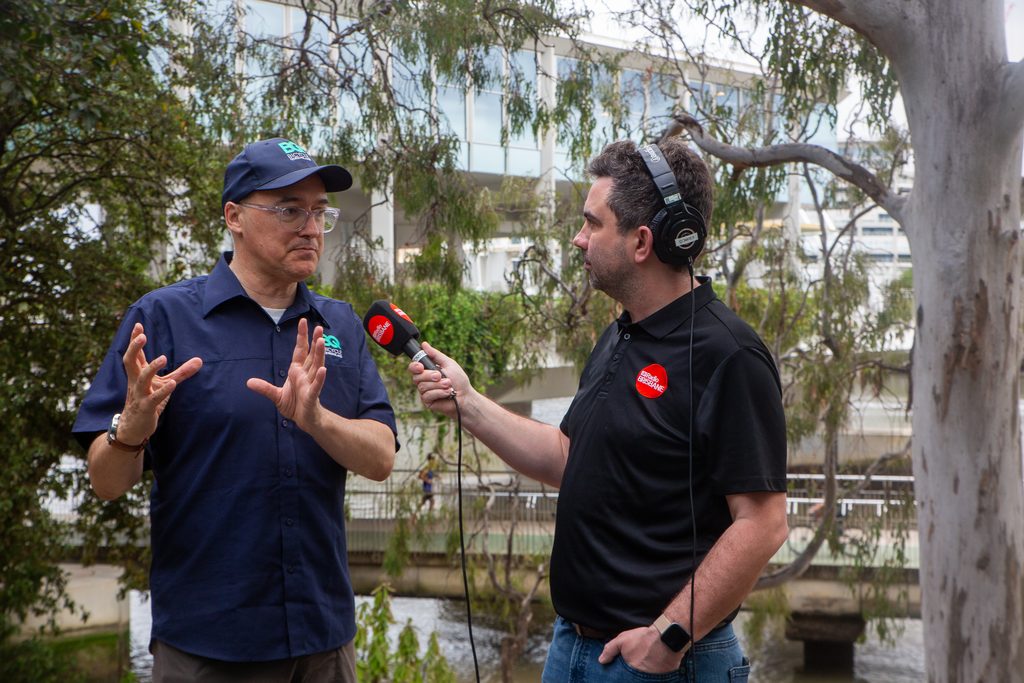
In November BQ was part of a joint press conference asking for immediate action on non-compliant e-devices.

At this point, the changes mean that importations must meet the EN-15194 standard, but it isn’t yet sure that the effective controls of the past, requiring importers declare their product is is indeed a legal e-bike, will also be brought back. Prof Burke said: 

“We want importers to have to declare their products are compliant with the safe standard. It helped previously to keep illegal vehicles out. Let’s bring it back.”  

“Buyers must still be aware of what the Australian standards are. These are listed on the BQ site and on the Queensland Government’s Street Smarts website.” 

BQ wholeheartedly supports the use of legal e-bikes that meet Australian standards. We continue to encourage parents this Christmas to make an informed decision and to avoid buying an e-motorbike that is not street-legal, can’t be insured, and that is high-risk. There are so many great road bike, mountain bike and legal e-bike options out there, no-one needs to buy an illegal vehicle.  

Stuck on choosing a bike? Visit one of our BQ Link retail partners for advice.

Categories
Advocacy

Queensland takes action on illegal e-motorbikes  

Bicycle Queensland is delighted that the Queensland Government has taken action on multiple fronts to clamp down on the illegal e-motorbikes that have proliferated on our streets, parks and footpaths. 

The Queensland Office of Fair Trading (OFT) has formally notified retailers that it will begin proactive compliance checks across the state. This is a significant development that aligns with Bicycle Queensland’s calls over the past 12 months for tougher oversight on the sale of non-compliant devices. This will hopefully reduce the number of throttle-driven e-motorbikes and conversion kits that do not meet Queensland’s e-bike regulations. This action will be of great relief to the many bike shops only selling legal e-bikes, which were not the problem.  

The QPS have also launched Operation X-ray Surety to enforce e-mobility compliance, targeting the use of non-compliant devices around Brisbane. This has included additional patrols but also safety education sessions run in schools. Earlier this week over 150 e-mobility infringement notices had been issued. The police have been visiting schools in the Logan area, to promote safety messaging around what constitutes a legal e-bike, and the types of e-motorbikes that are not legal to be used on public streets, parks or paths in Queensland. 

Further, state Transport Ministers are set to meet with the Commonwealth Government this month and changes to Australia’s import laws on e-motorbikes are firmly on the agenda. It is understood that Queensland’s Minister for Transport and Main Roads, Brent Mickelberg, has been helping lead the call for change. The Commonwealth has been slow in responding to what has been happening in our state, where three young people have lost their lives in October and November thus far. Bicycle Queensland continues to call on the Commonwealth Government to move swiftly.  

Bicycle Queensland CEO Professor Matt Burke referred specifically to the announcement from the Office of Fair Trading saying:  

“This is a good step towards protecting riders and parents from unknowingly buying unsafe products. A whole industry had emerged of retailers whose main business model seemed to be selling illegal e-motorbikes to parents and kids. Using Fair Trading powers to clamp down on this was a key suggestion in Bicycle Queensland’s submission to the current Parliamentary Inquiry into E-Mobility Safety and Use. We are pleased that the Government has moved on this. But further action may well be needed to stop retailers selling illegal e-motorbikes ‘for use on private property only’ with a nod and a wink, knowing full-well customers are buying them for use on-road and in public spaces.” 

Bicycle Queensland wishes to thank our partners who’ve worked on this advocacy campaign, including Queensland Walks, the RACQ, The Motor Traders Association of Qld, and the Royal Australasian College of Surgeons.  

Prof Burke said, “There is still much to do. We now look to the Commonwealth Government to re-introduce appropriate import restrictions and ensure illegal e-motorbikes can’t so easily enter Australia. This will help cut the problem off at the source and stop the deaths we’re seeing in Queensland spreading interstate.” 

Prof Burke said, “Thankfully there are so many awesome bikes and legal e-bikes to choose from no-one ever needs to buy an illegal motorbike. Just looking at some of the mountain bikes that are for sale today in reputable bike shops, there are fantastic options.” 

What the OFT Will Do 

In a letter sent to importers, wholesalers, and retailers this week, the OFT warns that: 

  • Many devices are being marketed and sold as legal e-bikes when they are not legal for use on roads and paths. 
  • Using these high-powered devices in public spaces has already resulted in serious injuries and fatalities. 
  • Businesses may face penalties of up to $50 million for corporations and $2.5 million for individuals under the Australian Consumer Law if they misrepresent illegal devices as compliant. 

The OFT have said that they will visit Queensland suppliers to clarify the law and will follow up with a targeted compliance program examining whether retailers are misleading customers about the legality of their products. 

What counts as a legal E-Bike in Queensland 

To be considered legal for use on public roads and paths in Queensland, a device must meet all of the following criteria: 

  • It is predominantly pedal-powered. 
  • The motor only provides assistance while the rider is pedalling. 
  • Throttle control is permitted only up to 6km/h – also known as walk-mode 
  • The motor has a maximum continuous power rating of 250 watts. 
  • The motor cuts out at 25km/h, and the bike can be pedalled at higher speeds 
  • High-powered motors are never legal, even if software-limited to appear compliant. 

Any device that exceeds these limits is classified as a motorcycle and must meet TMR vehicle registration requirements.  

Many retailers continue to sell high-powered throttle-driven electric motorbikes without making this clear to customers – a practice BQ has strongly campaigned against. 

Protecting riders, parents, and communities 

BQ firmly believes that compliant e-bikes are safe, sustainable transport options helping commuters and boosting recreational cycling and cycling tourism. The problem lies with high-powered, throttle-controlled illegal motorbikes that are being passed off as bicycles and sold to riders, including children, with tragic consequences. 

BQ encourages consumers to look for devices certified to EN15194 (the European Standard for power-assisted bicycles) and to seek advice from reputable retailers. Further details are available via our E-bike rules page

BQ will continue advocating for stronger national import rules, better enforcement, and clearer public education, ensuring Queenslanders can enjoy the benefits of legal e-bikes whilst maintaining road safety.  

Categories
Advocacy

Has your school applied for the School Transport Infrastructure Program? 

Bicycle Queensland (BQ) is encouraging schools across the state to apply for the School Transport Infrastructure Program (STIP) before nominations close on November 17. 

The Crisafulli Government has committed $4 million this financial year to the program, which funds projects that improve safety and accessibility around schools. Eligible projects include upgrades to drop-off and pick-up facilities, bikeways and shared paths, bus zones, pedestrian refuges and crossings.  

The program aims to make it easier and safer for children to walk, ride or take public transport to school, rather than relying on car travel. 

Over the next four years, the program will receive $27.5 million, with $4 million allocated to new projects this financial year. 

While the new funding is welcome, with nearly 1800 schools across Queensland, the current pool will average out to a little over $13,500 per school for the entire program – highlighting the need for a broader commitment to long-term investment, and to invest in behavioural change. 

BQ CEO Professor Matthew Burke said the funding represents an opportunity for schools to put forward practical, community-led safety improvements, but it should also be a starting point for deeper reform. 

“We’re encouraging every school to apply – this is money that can make a real difference for children’s safety and independence,” Professor Burke said. 

“But improving safety around schools won’t be possible via infrastructure with this level of investment. We need changes to regulations to support programs that work overseas, including lower speed limits near schools and utilising trained school crossing supervisors to make temporary street closures, creating safe ‘School Streets’ zones like those in Europe, Korea and the UK.” 

Bicycle Queensland continues to advocate for safer school environments that encourage more active travel. As highlighted in BQ’s recent article on changing school drop-off habits, reducing car dependence for school trips could help ease congestion, improve air quality, and boost children’s health and wellbeing. 

“Every parent knows how chaotic the school gate can be,” Professor Burke said. “But if we shift the focus from car drop-offs to safe, independent journeys on foot, by bike or on a scooter, we can make our communities calmer, healthier and safer.” 

Schools can get more details from the Department of Transport and Main Roads website

Categories
Advocacy

Kurilpa Precinct Plan Needs to Produce Bike-Friendly Development 

Brisbane City Council recently announced plans for thousands of new high-rise apartments in South Brisbane’s Kurilpa precinct, as part of Lord Mayor Adrian Schrinner’s anti-sprawl strategy. 

Under the Kurilpa Sustainable Growth Precinct Plan, developers will be able to build taller, more sustainable buildings that exceed current height limits. Council says new buildings exceeding existing height limits must demonstrate design excellence, incorporating subtropical design principles. It is said they must also deliver new green spaces and pedestrian plazas, and contribute to public art and creative lighting. 

Bicycle Queensland wants Council’s Plan to ensure bike-friendly development.  

Proposals have been lodged for 5,279 new dwellings across 12 projects, including apartments, student accommodation and hotel rooms. Plans include: 

  • Three 50-storey towers on Nott Street 
  • Three towers ranging from 24 to 50 storeys on Melbourne Street 
  • Six towers between 12 and 30 storeys on Donkin Street 
  • A 19-storey student accommodation project on Tribune Street with 525 rooms and a rooftop space 

The area has very strong public transport links and a developing active transport network that will be strengthened with the completion of the Grey St bikeway and streetscape project. Justifiably, the Kurilpa precinct is being designed as a neighbourhood where owning a car is optional, with CBD-style maximum mandatory car parking limits and easy walking access to shops, cafes, essential services and public transport. 

Bicycle Queensland welcomes the precinct’s focus on sustainable, connected living and it represents a significant step forward for the city. However, BQ’s CEO Prof. Matthew Burke is adamant that there needs be clear encouragement for active transport, including bike riding. 
 
“We have to get premium resident and visitor bike parking into these new tall apartment developments. If these precincts are going to be “car-optional” as the Lord Mayor suggests, the developers have to provide safer bike storage options than are found in most Brisbane apartment buildings, where thefts are an ongoing concern.” 

BQ’s Director of Advocacy, Andrew Demack, admired the plan’s promotion of urban density and the benefits that may create. 

“Sustainable, connected living, which gives people the convenient, safe choice to walk, ride or take frequent public transport, is what makes great cities great. Brisbane can do this while also recognising that in a subtropical city, shade and shelter are vitally important.” 

“In these parts of the city, the best way to go out for dinner will be to walk to the dining precinct. The best way to visit the shops will be on your e-cargo bike. And the best way to get to work might be via frequent bus or train services.” 

To that end, Prof. Burke insisted that speed limits also be addressed. 

“We also need to reduce the posted street speeds in these small, crowded streets down to 30km/h. The Kurilpa precinct will be crammed with pedestrians, shops, cafes and activity, and you can’t have high speed traffic in such places. We can’t build like the densest Asian cities and not bring our street speeds down to their level.”

Categories
Advocacy

Joint press conference calls for immediate action on illegal e-motorbikes

At a joint press conference in Brisbane today, RACQ, Bicycle Queensland, Queensland Walks, and the Motor Trades Association of Queensland urged state and federal governments to act swiftly to protect Queenslanders and restore confidence in safe, legal e-mobility. 

RACQ’s Dr Michael Kane said existing laws already give authorities the power to impound and remove illegal e-motorbikes, but enforcement has been inconsistent across the state. 

“We have a crisis on our footpaths and roads,” Dr Kane said. “E-bikes and e-mobility are a great asset to the community – our problem is illegal motorbikes.” 

“These are unregistered, unsafe, and can be impounded today by police or transport officers. We need to see a genuine crackdown. The message to parents is simple: do not buy your child an illegal e-motorbike.” 

Compliant e-bikes versus e-motorbikes or non-compliant e-bikes can be identified via their output, speed assistance limits and other criteria. The Street Smarts website has information to assist. 

Bicycle Queensland’s CEO Professor Matt Burke said the problem stems from federal import rules that were relaxed in 2021, allowing illegal e-motorbikes to enter the country under the guise of e-bikes. 

“If I can speak directly to Ministers Catherine King and Tony Burke – in 2021 the Morrison Government changed the rules on imports and allowed these illegal motorbikes to come in,” Professor Burke said. 

“It’s within your power as the Federal Government to change this and stop the importation of these vehicles. If we don’t act soon, the problems we’re seeing with deaths of children in Queensland will be replicated around Australia.” 

Professor Burke stressed that legal pedal-assist e-bikes remain an important and safe part of Queensland’s transport network. 

“We’ve had legal e-bikes on our streets, in parks and on footpaths for more than 15 years without major problems,” he said. “The issue is the unregulated importation and retailing of high-powered electric motorbikes.” 


Brad Flanagan, General Manager for Industry Skills at the Motor Trades Association of Queensland, said illegal electric motorbikes have no place on Queensland’s roads or paths. 

“There are unregulated, illegal motorbikes in our parks and on our footpaths. They’re a danger to the community. People are being hurt, and people are being killed,” Mr Flanagan said. 

“If you want a motorbike or e-mobility device, go to a reputable, licensed dealer. You’ll get proper advice, a legal product, and clear guidance on whether it needs to be registered or licensed.” 

Mr Flanagan said some retailers were deliberately misleading consumers. 

“We know there are unscrupulous dealers giving instructions on how to modify legal products into illegal ones. They need to be dealt with. This is about getting unsafe, unlicensed vehicles out of our parks, off our footpaths, and off our roads.” 

In the meantime, BQ CEO Prof. Matt Burke took aim at retailers selling e-motorbikes. 

“Retailers have to take some responsibility here. The business model of some shops seems to be primarily selling illegal e-motorbikes to parents and kids. It’s not an industry we’re supportive of.” 

The growth of active transport will reduce congestion and improve the health of Queensland’s cities and towns. And riding e-scooters or bikes pales in uptake compared to walking – yet the rise of non-compliant e-motorbikes and e-scooters is putting walking at risk on shared paths. 

Anna Campbell, Executive Officer of Queensland Walks, said pedestrians across the state are increasingly fearful of using shared paths. 

“Queenslanders are telling us they’re nervous about stepping out on their footpaths and shared paths because of illegal devices moving too fast,” Ms Campbell said. 

“We support e-mobility as an important part of transport equity, but we need safer paths, better enforcement, and separated infrastructure so that pedestrians, riders and rollers can all use our public spaces safely.” 

It is clear that a coordinated state and federal intervention is required, targeting illegal importers and retailers, strengthening enforcement, and ensuring safe transport and recreation for all Queenslanders and ideally, all Australians.  

Bicycle Queensland’s full submission to the Queensland Government’s Parliamentary Inquiry into E-mobility can be read online

Categories
Advocacy

Riders roll in to Ride2Work Day at Queen’s Wharf 

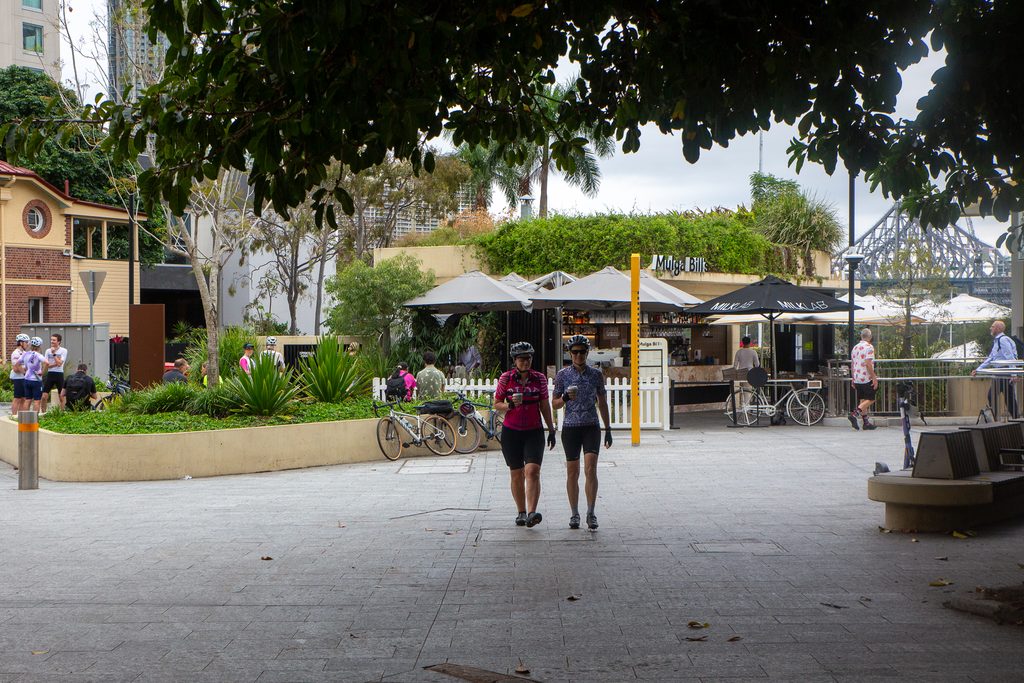
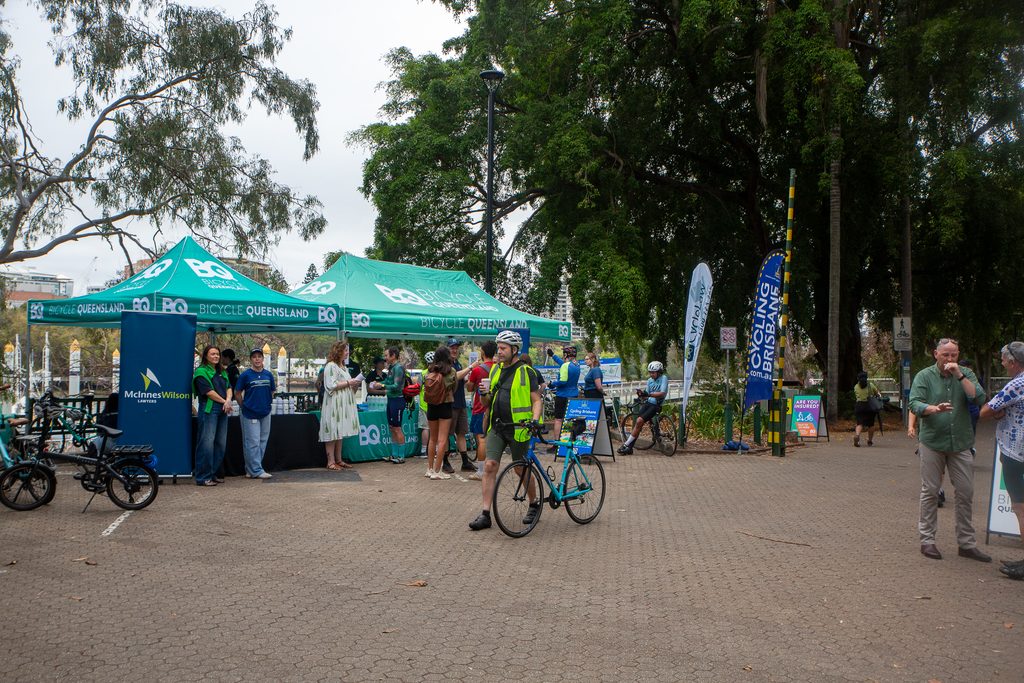
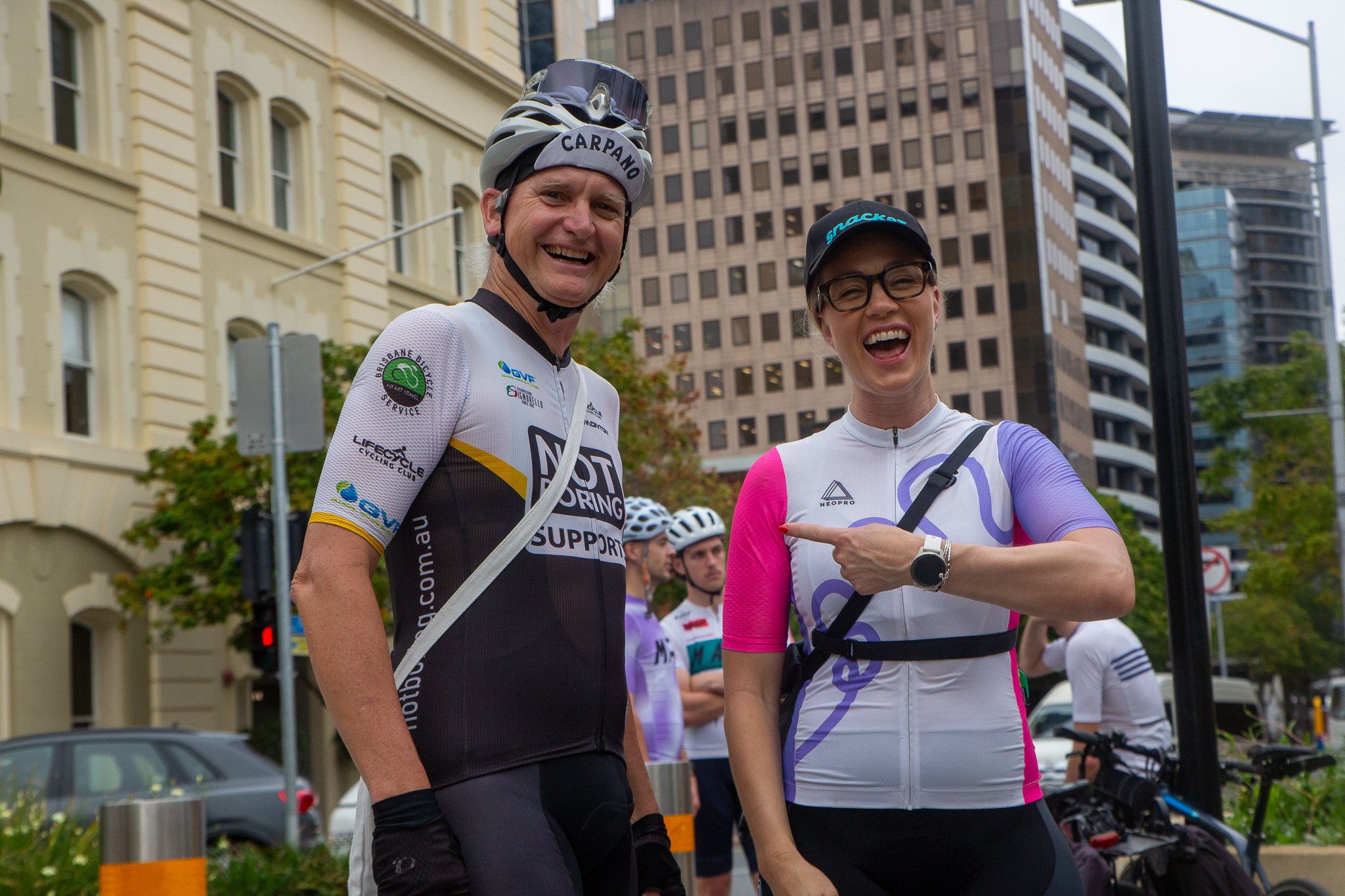
More than 150 riders joined Bicycle Queensland (BQ) and The Star this morning (October 15) for a special Ride2Work Day coffee catch-up at the Velo Café, right beside the Bicentennial Bikeway at Queen’s Wharf Brisbane. 

The event brought together regular commuters, BQ Members, occasional riders, and cycling advocates for a morning of conversation, caffeine and connection. It was a chance to celebrate the benefits of riding to work, but also celebrate riding bikes. It was also an opportunity for some guests to discuss ways to make cycling safer and more accessible across Queensland. 

BQ CEO Professor Matt Burke spoke about the importance of creating a city that supports active transport. 

“We need more bikeways and more street trees to make Brisbane a liveable, healthy city,” Professor Burke said. “Queensland already has some excellent cycling infrastructure, but it’s often disconnected. We want to see 60 kilometres of new bikeways delivered in the lead-up to Brisbane 2032 – just as Paris did to transform how people move around their city.” 

The Star’s Chief Operating Officer Kelvin Dodt also addressed the crowd, highlighting Queen’s Wharf Brisbane’s support for community initiatives and active transport to their precinct. 

“We believe this is a fantastic space. We are very much committed to making sure that the precinct is very community friendly and we work and collaborate consistently with different groups, including Bicycle Queensland, to make sure that everyone enjoys what we have to offer here in the precinct.” 

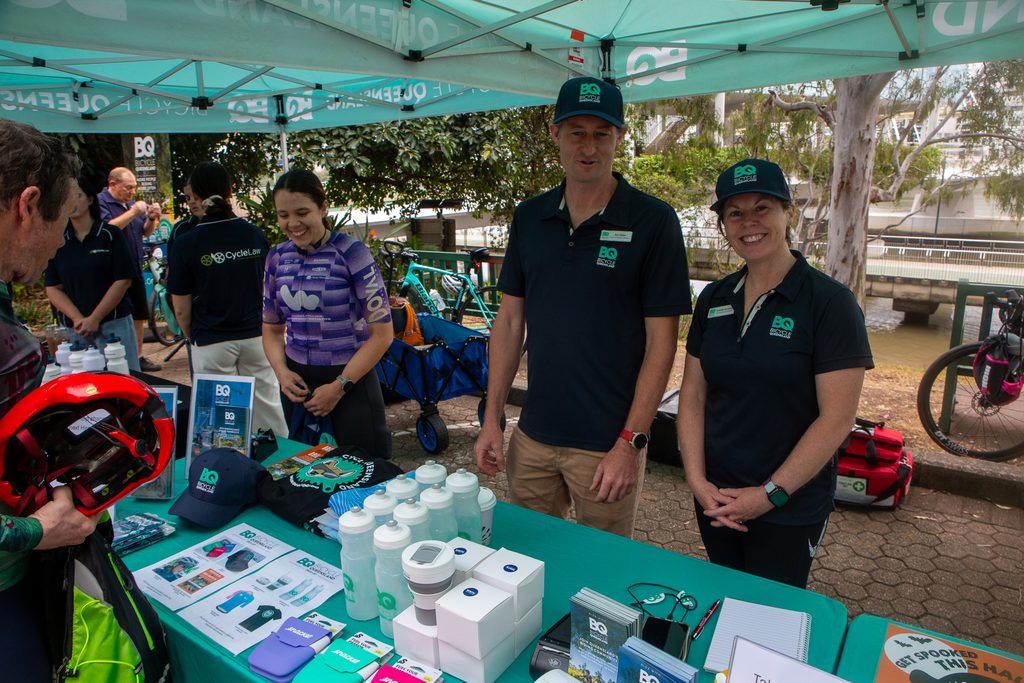
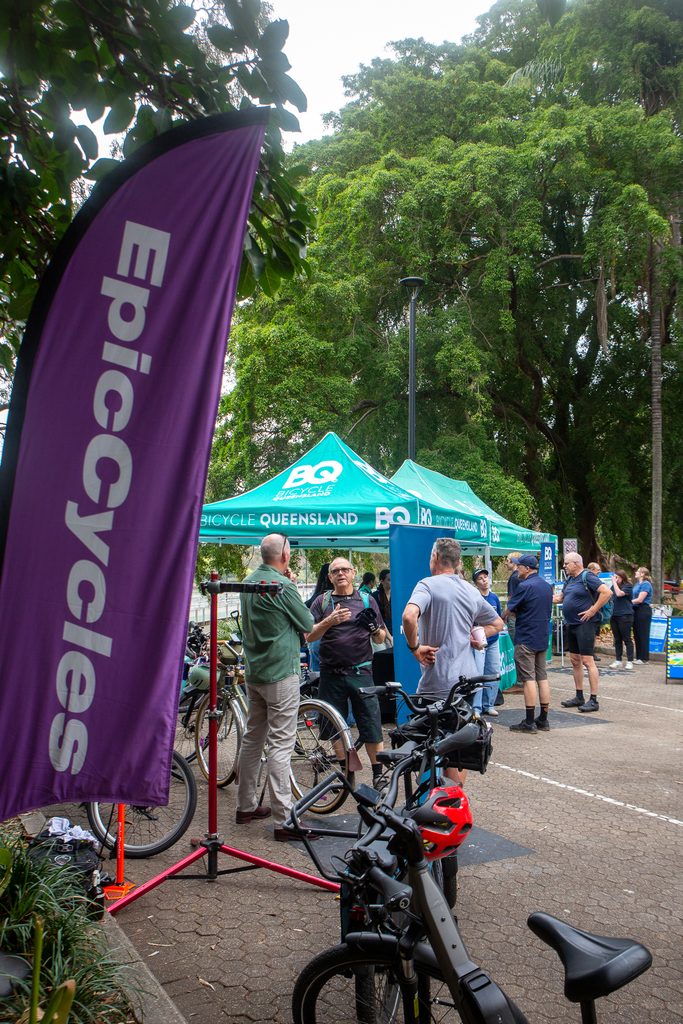
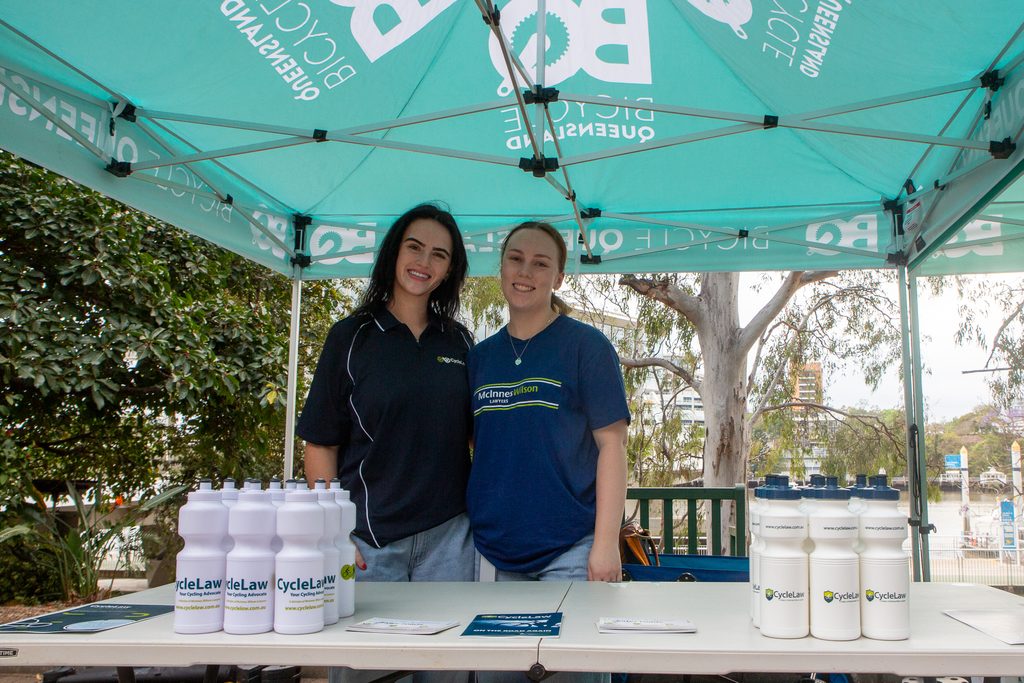
Thank you to The Star for letting us use their event space this morning, and for providing the coffees for riders! BQ was also joined by Epic Cycles, one of our BQ Link partners and a long time supporter, on hand to help give some attention to the squeaky wheels that were riding to work. CycleLaw, BQ’s legal partner, were also on hand to answer questions that BQ Members or others riding to work may have had.

Ride2Work Day is Australia’s largest celebration of day-to-day riding, encouraging more people to try cycling as a convenient, affordable and healthy way to get to work. Events like this one can help people step out their door and onto a bike for their journey, but of course to do that we need to feel safe. Bicycle Queensland will continue to advocate to make Queensland a safer and more connected place to ride a bike. 

Be a local advocate

See.Sense have also partnered with BQ for a Ride2Work promotion running for 4 weeks! Just by downloading their app, registering and making a report, you will be in with a chance to win 1 of 4 See.Sense ICON 3 rear lights! Full details are listed here.

The reports made will help build a dashboard that highlights any problem areas on popular bike routes – be it maintenance issues or user behaviour. Every bike rider can be involved in the reporting – so download the app and take part.

Categories
Advocacy

Brisbane’s Story Bridge opens for active transport users

The shared use paths on Brisbane’s Story Bridge have been closed since ex-tropical cyclone Alfred, in March 2025. Post storm inspection showed the concrete pathways were dangerously thin, alongside other issues with the structure. Since then, active transport users in Brisbane have missed this vital link across the Brisbane River, with the detoured route not suiting many users. One side of the bridge’s shared paths are now set to open on Friday October 3.

In the meantime, volunteers have organised a Bike Bus across the Story Bridge, but this did not account for walkers, runners or e-scooter riders. The replacement decking fitted by Brisbane City Council allows all active transport users access again – and is part of the council’s long-term plan to restore the Story Bridge.

‘I saw the new decking as I rode past just this morning, and it looked great,’ said Professor Matt Burke, Bicycle Queensland’s newly appointed CEO. ‘This is a win for everyone who bikes, walks, runs or scoots in the inner-city. We are really happy the Story Bridge is open to cyclists and pedestrians again. Its loss was a major problem these last months. Congratulations to the Mayor and those at Council who got the decking fixed much earlier than predicted.”

‘The Story Bridge is emblematic of something much bigger though. There are a lot more roads, bridges and cycling facilities not being maintained at good standard, right across Australia. Local governments find it increasingly difficult to maintain their existing transport infrastructure, let alone build more. They own most of the roads, cycling and foot paths; they own the responsibility to fix them. But councils receive only a tiny percentage of our total tax revenues. They are becoming chronically underfunded, especially in the regions.’

Categories
Advocacy

Can you manage a Week Without Driving? 

How long could you get by without using a car? A day? A week? For many Queenslanders, driving feels like the only option – but what happens when we look beyond the steering wheel?

The Week Without Driving is a global initiative that shines a light on what it’s like to live without access to a private vehicle. It began in the US with disability rights advocates, and has since spread internationally. In 2025, the Week Without Driving runs from September 29 to October 5th. Bicycle Queensland and Queensland Walks are proud to support the campaign here in Queensland along with disability and sustainable transport groups worldwide.

Taking part means choosing to make all your everyday trips by bike, on foot, on public transport, or by sharing rides. It’s not just a personal challenge but an invitation to see our communities through a new lens. What’s easy? What’s difficult? And where could we make changes to ensure everyone, whether they can drive or not, has safe and affordable ways to get around?

The Week Without Driving is a chance to:

  • Experience the barriers faced by people who can’t or don’t drive.
  • Discover the health and wellbeing benefits of walking, cycling, and catching public transport.
  • Share your insights with decision makers, helping create communities that are more connected, inclusive, and sustainable.

“The Week Without Driving campaign reminds us that everyone needs safe and connected streets especially for people who walk, ride, or roll,” said Anna Campbell, Executive Officer at Queensland Walks.

“This initiative is about awareness and action,” said BQ’s CEO Matt Burke. “When more of us experience life without a car, even briefly, we see how vital good walking and cycling infrastructure is for our neighbourhoods. We learn about the paths, the cycling routes and public transport options that already exist, and how to use them in future. We empathise more with those who have no choice but to do all their trips car-free.”

Whether you commit to a single day, or take on the full week, you’ll be helping spark important conversations about transport, access, and equity in Queensland. Of course, it is ok to drive – but use it as a chance to reflect on the difficulties for those who aren’t in a position to opt for private motorised transport.

More details are available on the Week Without Driving website: https://weekwithoutdriving.org/