Categories
Advice Advocacy

Queensland’s New E-Mobility Laws Explained 

Queensland’s e-mobility laws have changed significantly in 2026, with new rules covering e-bike power and speed, rider behaviour, age and licensing requirements, and stronger enforcement powers. 

The latest changes take effect from 31 August 2026, introducing minimum age and driver licence requirements for people riding e-bikes and other e-mobility devices in public places. 


There are exemptions for supervised young riders, people with eligible medical conditions or disabilities, and riding in designated recreational areas. 

Here’s what you need to know. 

What is a legal e-bike in Queensland? 

To be legal to ride in public places in Queensland, an e-bike must: 

  • Have pedals as its primary source of power 
  • Have a motor with a maximum continuous rated power output of 250 watts 
  • Provide motor assistance only up to 25km/h 
  • Stop providing motor assistance once the bike reaches 25km/h 
  • If fitted with throttle control, provide throttle-only assistance only up to 6km/h to help the rider start moving. 
  • Meet the EN 15194 European Standard for electrically power-assisted cycles, subject to transitional arrangements for some existing e-bikes. 

Importantly, a high-powered e-bike cannot be made legal simply by electronically restricting or ‘locking’ its output or maximum assisted speed. 

If the motor is more powerful than the permitted 250 watts of maximum continuous rated power, it is not a legal e-bike for use on Queensland roads or public paths – even if software has been used to restrict its performance. 

What about existing e-bikes? 

The Queensland Government has introduced transitional arrangements for some e-bikes. In general, e-bikes used in public spaces will ultimately need to either meet EN 15194 or be verified as meeting the standard’s core safety requirements through the Queensland Government’s E-Bike Assurance Scheme. 

Owners of eligible existing e-bikes will have until 28 February 2027 to have their bike verified and appropriately labelled. 

The Assurance Scheme is being developed for e-bikes manufactured before 1 July 2026 that meet the core safety features of EN 15194 but were not certified to the standard. It will also provide a pathway for some non-standard or adaptive e-bikes and e-trikes used by people with a disability or medical condition. 

High-powered or high-speed devices that exceed Queensland’s legal e-bike limits are not covered by this transition. 

How old do you need to be to ride an e-bike? 

From 31 August 2026, the general rule is that you must be at least 16 years old and hold a valid driver licence to ride an e-bike or other e-mobility device on a road, road-related area or in a public place. The minimum licence is a Learner licence. A valid interstate or overseas driver licence can also satisfy the requirement. 

However, there are some important exemptions. 

Riders aged 12–15 

Children aged 12 to 15 can ride an e-bike without a driver licence when supervised by a parent or caregiver. The supervising adult needs to remain close enough to easily observe and communicate with the young rider and provide immediate instructions. 

Riders aged 16–17 

Riders aged 16 or 17 can ride independently if they hold a valid driver licence – including a Learner licence. If they don’t have a licence, they can still ride when appropriately supervised by a parent or caregiver. 

Children under 12 

Children under 12 cannot ride an e-bike in ordinary public areas. 

Different age and licensing rules can apply within designated recreational riding areas. 

Do adults need a driver licence to ride an e-bike? 

Yes. 

From 31 August 2026, riders aged 16 and over must hold a valid driver licence to ride an e-bike in public, unless an exemption applies. This can be a Queensland Learner, Provisional or Open licence, or a valid equivalent interstate or overseas licence. 

You do not need to register a legal e-bike. 

Are there exemptions from the age and licence rules? 

Yes. The Queensland Government has introduced exemptions covering three main circumstances: 

  • Supervised riders aged 12–17 
  • People with eligible medical conditions or disabilities 
  • Riding on mountain bike trails, rail trails or private mountain bike parks

The exemptions apply to the age and driver licence requirements – they do not turn an otherwise illegal high-powered device into a legal e-bike. 
What about rail trails and mountain bike parks? 

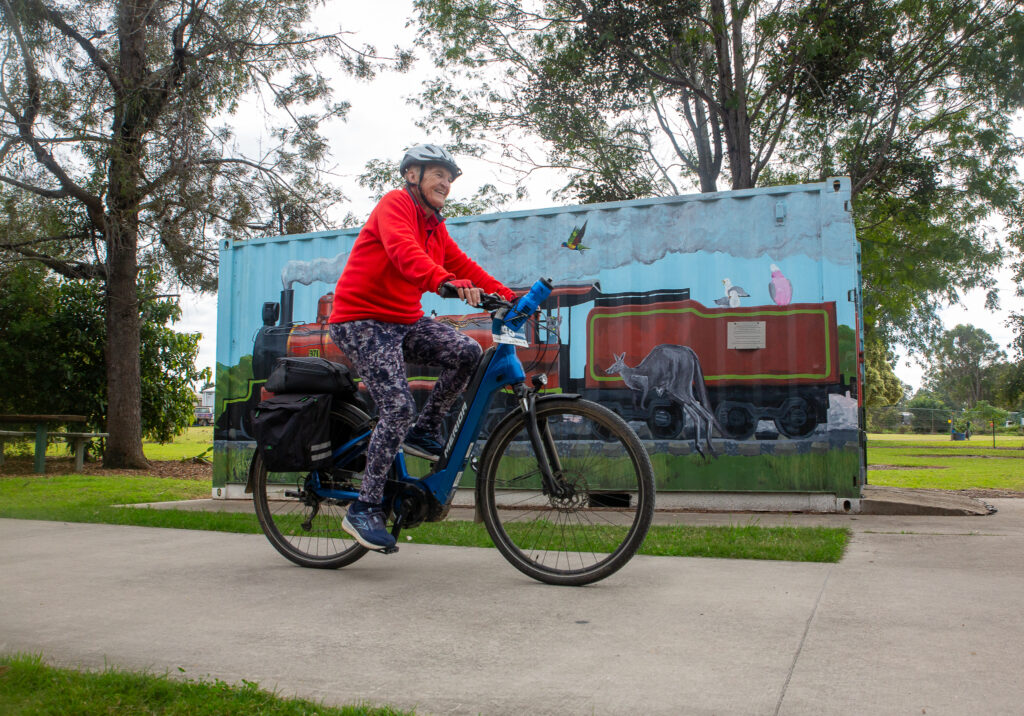
Age and driver licence exemptions do not apply on rail trails, mountain bike trails and private off-road cycling facilities. This means riders are able to use a legal e-bike on a marked mountain biek trail, or network, rail trail or private mountain bike park without meeting the normal age or driver licence requirements. 

What if I can’t hold a driver licence for medical reasons? 

A medical or disability exemption is available for people aged 16 and over who cannot hold a driver licence because of a medical condition or disability but can safely operate an e-mobility device. 

An eligible health practitioner can complete an E-Mobility Driver Licence Exemption form with the rider. The exemption can be issued for up to five years and can specify which type of e-mobility device the person can use. Conditions can also be applied where appropriate. 

The rider keeps the completed exemption form and must be able to produce it when required, in either digital or hard copy format.A grace period applies until 30 November 2026 to give eligible riders time to obtain their exemption. 

What are the speed limits? 

E-bike riders must obey the bicycle road rules as well as the specific rules applying to e-bikes. 

On footpaths, the maximum speed for an e-bike is 12km/h. 

On shared paths, riders must obey the signed speed limit and slow to a maximum of 12km/h when passing pedestrians. You may need to ride more slowly around children, dogs, people with limited mobility or in other busy areas. 

The 25km/h figure associated with an e-bike is the speed at which motor assistance must cease. It is not a universal 25km/h speed limit for bicycles. 
What counts as a footpath or shared path? 

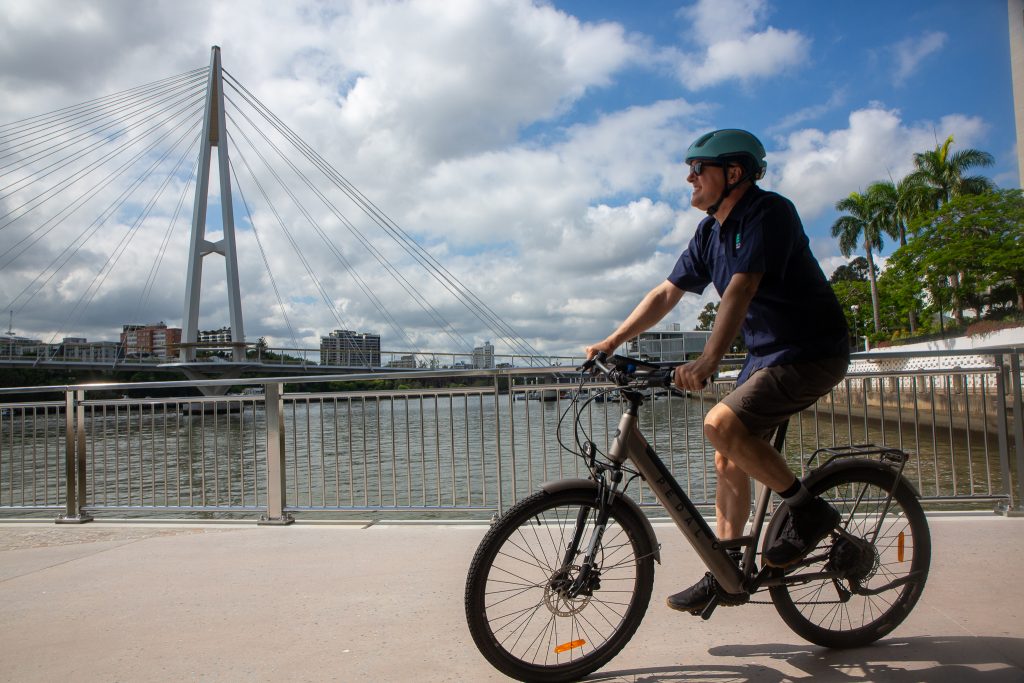
Different speed requirements apply depending on whether infrastructure is legally considered a footpath, shared path, bicycle path or another type of road-related area. It may not be straightforward to determine what exactly you are on. Riders should follow signage and ride to the conditions, particularly where pedestrians are present. 

Bicycle Queensland continues to encourage government and councils to ensure cycling infrastructure is clearly designated and signed so riders can readily understand which rules apply. 

Can police seize an illegal e-bike? 

Yes. 

Queensland Police have stronger powers to deal with illegal e-mobility devices, including the power to seize, impound and potentially destroy prohibited devices. This includes high-powered devices that resemble e-bikes but do not meet Queensland’s legal e-bike requirements. 

A device with a motor exceeding 250 watts maximum continuous rated power, or one that continues providing motor assistance above 25km/h, is not a legal e-bike for use on public roads and paths. 

A high-powered device also does not become a legal e-bike simply because its power or speed has been restricted through software. 

Can parents be fined? 

Yes. 

Parents and guardians can face penalties for allowing children to use illegal e-mobility devices. From 31 August, age and licensing requirements also apply, although children aged 12–17 can ride under the supervision exemption. If you’re buying an e-bike for a young rider, make sure both the bike and the rider comply with the rules. 

Can you buy an e-bike if you’re under 16? 

No. 

From 1 July 2026, it is illegal for commercial or private sellers to sell an e-mobility device to anyone under 16. This includes e-bikes, e-scooters and other e-mobility devices. 

A parent can purchase a legal e-bike that will be used by a child under the applicable supervision or recreational-area exemptions, but the e-mobility device cannot be sold directly to someone aged under 16. 

What about drink riding? 

Queensland’s drink-riding laws also apply to bicycles, e-bikes and personal mobility devices. Police have additional powers to conduct roadside alcohol testing of riders, with a 0.05 blood alcohol concentration limit applying. 

What does this mean for riders of safe, legal e-bikes? 

For most people already riding a safe, legal e-bike from a recognised bicycle brand, the fundamental definition of an e-bike should look familiar: pedal assistance, a 250W maximum continuous rated motor output and assistance that cuts out at 25km/h. 

The biggest changes for riders are the new age and driver licence requirements, the new 12km/h footpath and pedestrian-passing requirements. If you already own an older e-bike and are unsure whether it meets EN 15194, keep an eye on information about the Queensland Government’s E-Bike Assurance Scheme ahead of the 28 February 2027 deadline. 

And if you’re buying a new e-bike, make sure it is clearly sold as compliant with EN 15194 and legal for use on Queensland roads and paths. 

By becoming a member of Bicycle Queensland, you support BQ’s advocacy for bike riders in Queensland, and have insurance cover for bike riding – full details of membership inclusions can be read here.
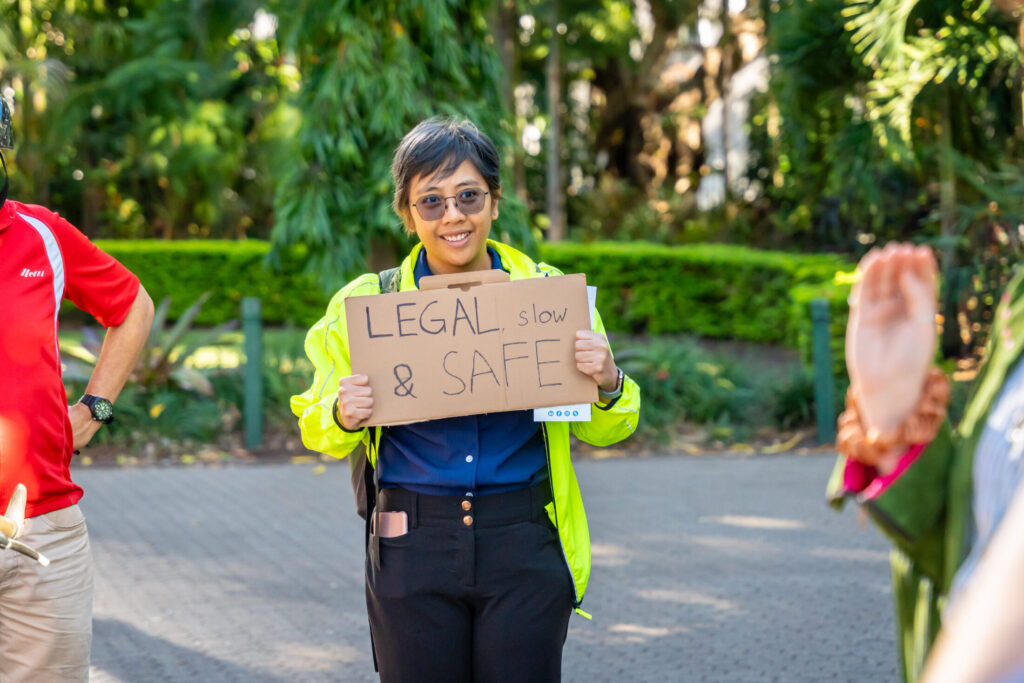
BQ’s E-bike rally at Brisbane Botanic Gardens 21-04-2026 to save safe legal e-bikes. Photo by Element Photo and Video Productions.
Categories
Advice Education

Extra insurance for e-scooter riders! 

We have some great news for e-scooter riders! 

As the leading provider of e-scooter insurance in Australia, Bicycle Queensland is proud to be piloting a new, increased insurance offering, providing you with more peace of mind each time you ride your scooter. 

Our e-scooter membership and e-scooter add-on will now cover you for personal accident insurance. Not only will you have peace of mind if you happen to cause an accident and injure someone or damage their property, but you will also be covered if you sustain injuries while riding your scooter. 

More information about the insurance can be found on our website, and information on e-scooter rules and regulations can be found here

E-scooter insurance is available as a standalone membership, without bike riding insurance, or it can be purchased as an add-on to our Individual or Concession bike riding memberships. 

We have you covered no matter where you live! You don’t need to live in Queensland to purchase our memberships; they’re available Australia-wide! 

From 1 September 2023, all existing members who have e-scooter insurance will be covered for personal accident insurance in addition to public liability insurance. As with our bike riding personal accident insurance, you can claim the out-of-pocket expenses after claiming through your private health insurance, and you also have access to income protection. 

To reflect these inclusions, the following price changes will be applied from 1 September 2023: 

  • E-scooter membership – $113 annual / $10.99 monthly
  • E-scooter add-on (annual) – $62 
  • E-scooter add-on (monthly) – $6.50 

We are very excited to offer this increased protection! If you have any questions, please check our website, FAQs or email membership@bq.org.au

Categories
Advice Advocacy

Local Government Association of Queensland

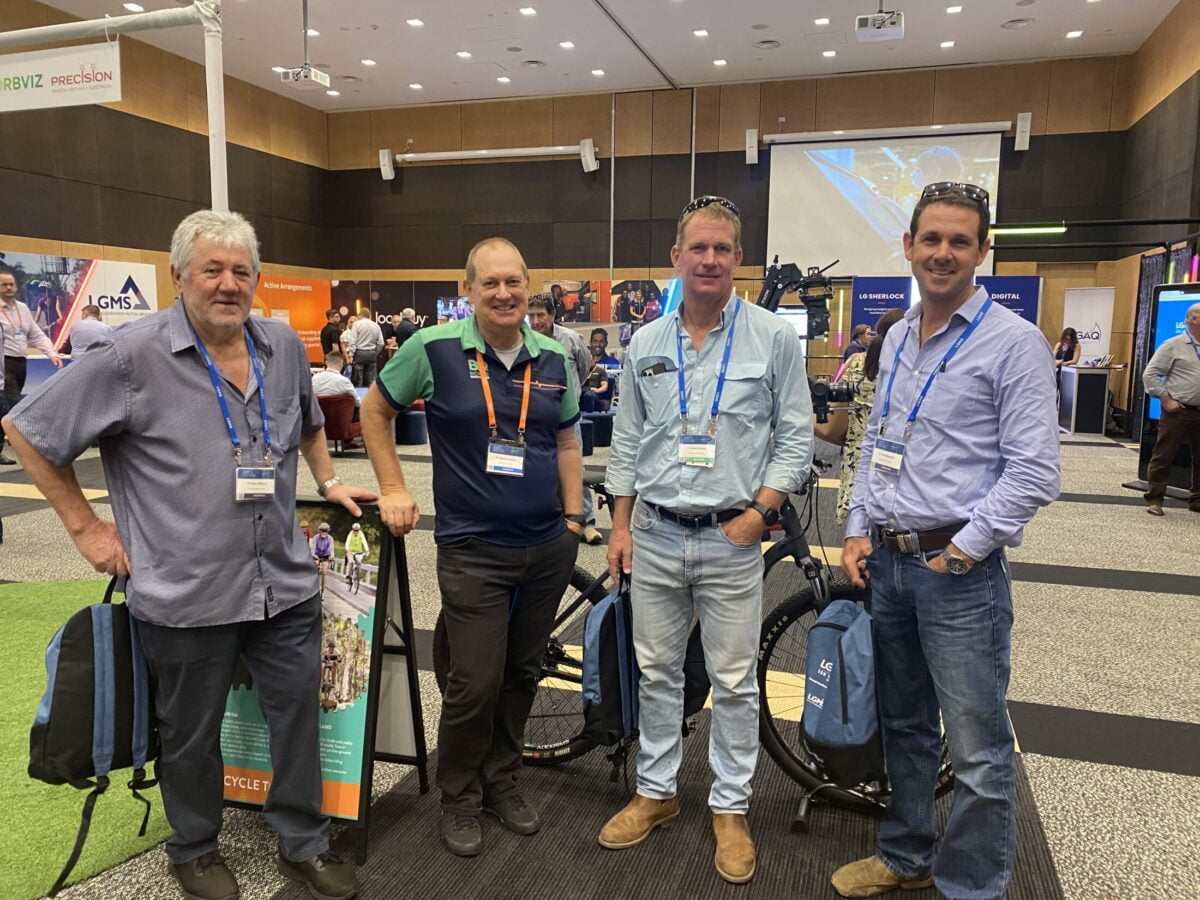
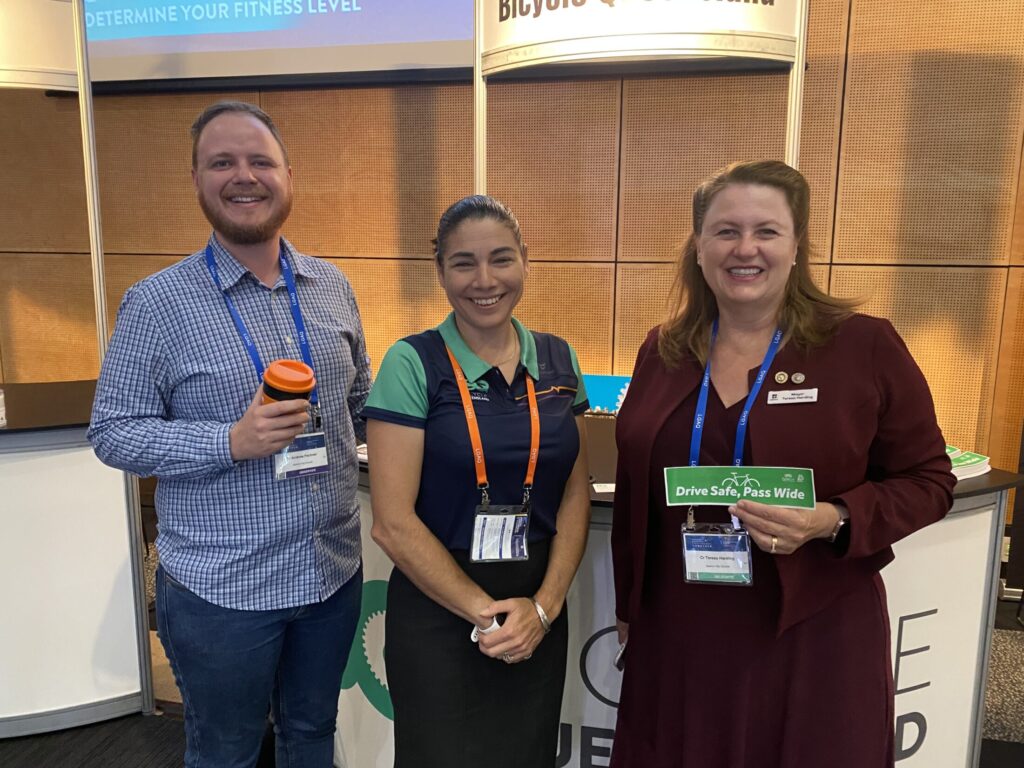
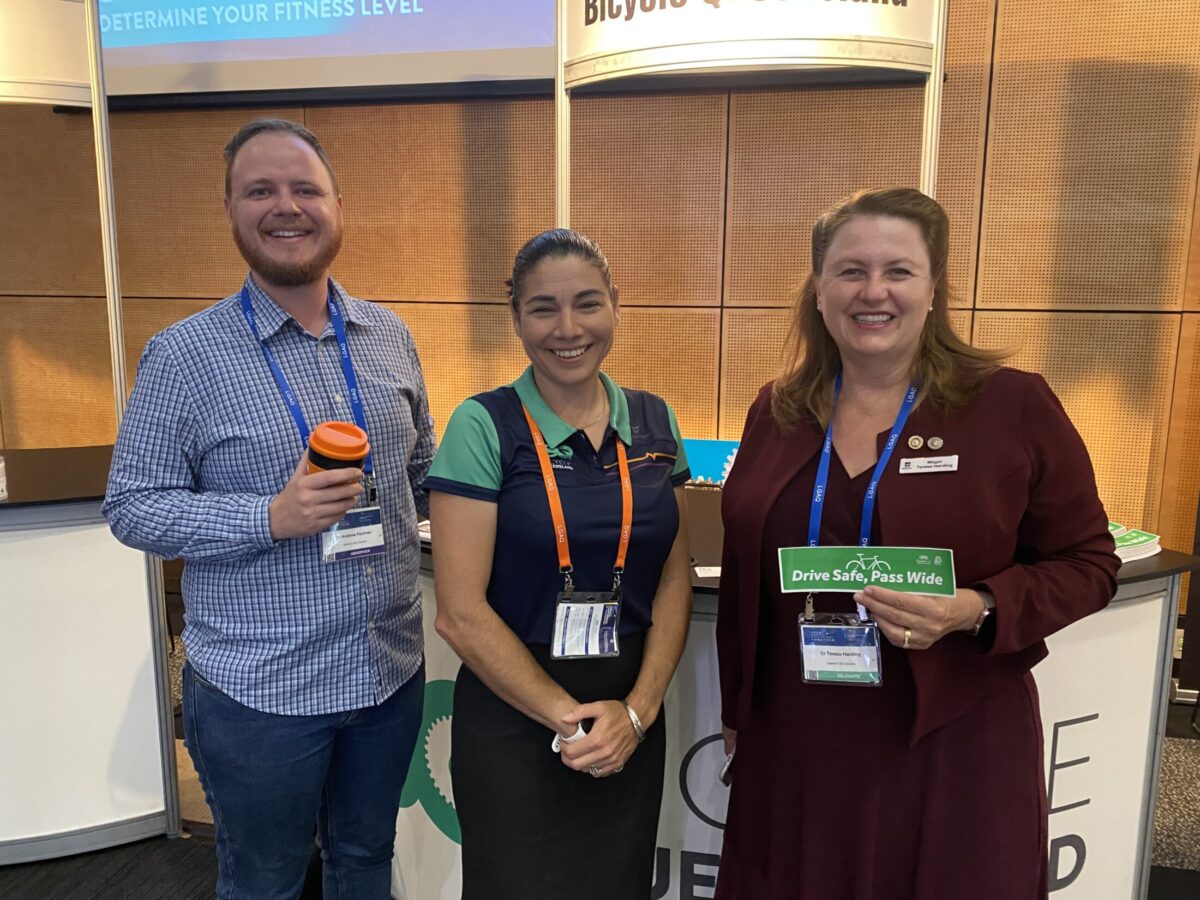
For the first time, Bicycle Queensland’s advocacy team (Rebecca Randazzo and Andrew Demack) attended the annual Local Government Association of Queensland conference held in Mackay.

We had a prime location between the rugby league and AFL booths on the way to the refreshments area! As a result, just about every Council in Queensland stopped for a conversation. We had prepared three posters with our main talking points: cycle tourism, education and schools, and building the cycle network.

Cycle Tourism

Cycle tourism was clearly the top priority for councils. Many councils are already working on attracting mountain bike riders, following the example of the Wangetti Trail, now under construction from Palm Cove to Port Douglas in FNQ. Mackay Council is also building a trail of similar epic quality, from Eungella to Finch Hatton — that will be amazing.

We are working through our follow-up contacts with councils including Mareeba, Mackay, North Burnett, South Burnett, Scenic Rim, Cassowary Coast, Livingstone and Ipswich. Most of these are interested in either developing rail trails and other cycle tourism opportunities, but also getting the best value for money in cycle infrastructure.

Local Counterparts

On the way to Mackay, BQ’s Director of Advocacy Andrew Demack arranged meetings in Maryborough, Bundaberg and Rockhampton, meeting up with bicycle user group representatives and Councils. In Maryborough, we were delighted to see and experience the remarkable progress being made by Fraser Coast BUG on the Mary to the Bay rail trail. In Bundaberg, we met with Council staff to encourage progress on the Bundaberg to Gin Gin Rail Trail. In Rockhampton, we met with the local cycling group to discuss our collaborative response to the Council’s just-released Walking and Cycling Strategy.


Proudly supported by the Queensland Government

Categories
Advice Advocacy Press releases

SEND A LETTER TO YOUR LOCAL COUNCILLOR

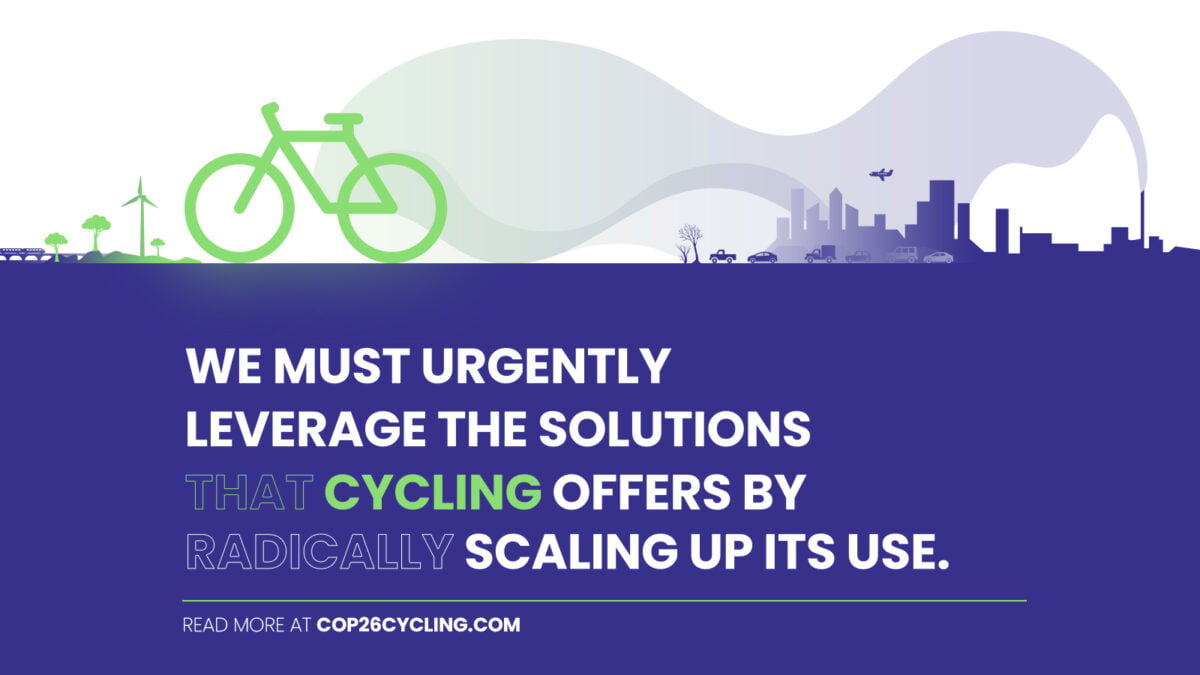
On the back of the COP26 conference in Glasgow, cycling organisations around the world have joined together and rallied for cycling to be a part of the Glasgow Declaration on Accelerating the Transition to 100% Zero Emission Cars and Vans.

Now it’s time to ask the question locally, what are your councillors doing to combat carbon emissions from transport?

If you would like to ask your local councillor what they are doing to combat carbon emissions from transport and emphasis the important role bike riding can play, follow the instructions below.

  • Download the draft letter here
  • Find your local councillor here
  • If you are unsure of your council area, click here 
  • Fill in the details on the draft letter
  • Send to your local councillor

Let’s make bike riding a priority transport method to combat carbon emissions.

Send a letter to your councillor
Categories
Advice Advocacy

Bicycle Queensland State Budget Submission

Bicycle Queensland has recently submitted our recommendations for the 2022-2023 State budget. The focus area of our submission is to promote more people riding more often. The recommendations focus on investment in infrastructure, cycle tourism and getting more women and kids riding.

Read the full submission below.

Categories
Advice Advocacy Uncategorised

COP26 CYCLING LETTER

COP26: More than 250 civil society organisations sign open letter calling on governments to boost global cycling levels to reach climate goals quickly and effectively

An open letter by the European Cyclists’ Federation (ECF) and a global coalition of pro-cycling organisations urging governments to cut transport emissions by investing in cycling has seen a surge in support from all over the world.

Since it was published on 2 November, over 190 civil society organisations have added their signature to the letter, which now counts more than 250 signatories from all over the world, including ECF, Greenpeace and Union Cycliste Internationale (UCI). The letter calls on governments at COP26 to commit to significantly increasing the number of people who cycle in their countries in order to reach climate goals quickly and effectively. 

As the global pro-cycling movement continues to grow ahead of COP26 Transport Day (10 November), which is set to focus almost exclusively on the electrification of road vehicles, governments and transport ministers will be under pressure to take cycling into account when negotiating climate commitments related to the transport sector.

Today, transportation is responsible for 24% of direct CO₂ emissions from fuel combustion, with the vast majority coming from cars, and these numbers are not decreasing. With global temperaturs rising fast, humanity cannot afford to wait decades for fossil-fuel cars to be fully phased out and replaced by electric vehicles. To quickly cut transport emissions on a massive scale and keep 1.5°C alive, governments need to invest in much more cycling now.

Combat climate change

ECF and its allies believe cycling represents one of humanity’s greatest hopes for a shift towards a zero-carbon future. Cycling produces zero emissions, delivers far-reaching positive societal impacts and relies on technology that is already widely available today.

The more than 250 signatories to the open letter call on governments and transport ministers attending COP26 to declare commitments to significantly boost cycling levels at home and collectively commit to achieving a global target of higher cycling levels. The letter was sent to governments ahead of COP26.

Bicycle Queensland is in full support of this movement. More people cycling more often is our goal and a global movement to get more people on bikes is incredibly important.

Jill Warren, CEO of the European Cyclists’ Federation: “The dramatic growth of this global civil society movement in only a few days sends a forceful message to governments at COP26 about the importance of active mobility. There is no conceivable way to reduce CO₂ emissions quickly enough to avoid the worst of the climate crisis without significantly more cycling.” 

Henk Swarttouw, President of the European Cyclists’ Federation: “More people riding bicycles will reduce our transport emissions and help save our planet. It will also stimulate our green economic recovery after COVID-19 and relieve our overburdened public health systems. Investing in cycling is a low-cost, low-tech no-brainer. It is what any sensible political leader should be doing right now.”

Read the open letter to governments at COP26: www.cop26cycling.com

This article was created by the European Cyclist Federation.

Categories
Advice Education Events Press releases

CEO Update

Dear members

As we move through the spring weather, I wanted to update you all on the work we have been doing to shape our riding agenda and the next phase of our work.

As Queensland’s point of connection for the future of riding, we have been working hard to reach out into regional areas, ensuring all riders, irrespective of where they live, have access to our member benefits and are represented in our advocacy voice. Since my last update, we have welcomed over 300 new members and congratulate Rob van Manen on his appointment as President. Rachel Nolan to Vice president, and Peter Thompson to Secretary at the recent Annual General Meeting. As we come out of a difficult two-year period, I wish to thank members for their ongoing support to Bicycle Queensland (BQ).

BQ continues to flex our advocacy muscle and now represent members on over 20 panels and steering groups across the state. BQ has been recently appointed a member of the Brisbane Valley Rail Trail Steering Committee. The first meeting was held in Esk and outlined the forward plan of capital works from TMR and the four Councils which the trail runs through; Ipswich, Somerset, Toowoomba and South Burnett. The Steering Committee will give guidance and feedback as the authorities implement the BVRT Strategic Plan. Our top priority in physical terms for the BVRT is a program of tree planting in the exposed sections between Esk and Moore. The trail becomes an unpleasantly hot place to be in summer, and we want to promote its use all year round!

In addition, BQ has a seat at the table at the Sunshine Coast Active Travel Advisory Committee, with the first meeting held in Caloundra. We support the ATAC model, which has been beneficial in Brisbane, with strong support from key political decision-makers, including the Transport and Main Roads Minister, Mark Bailey. Minister Bailey was present at this initial meeting of the Sunshine Coast committee, which was very helpful.

A stern test of the committee’s mettle will be discussions on a proposed Caloundra Transport Corridor Upgrade. BQ members at Caloundra have asked for our help in opposing this project in its current form, which puts a four-lane road through a green zone. We will report back on how this goes, but BQ, Qld Walks, and the local active transport advocates from Caloundra have requested an on-site meeting to see if there are alternatives to removing mature shade trees for this project.

Sunday, 17th October saw the community take to the streets for our 16th Brisbane to Gold Coast Cycle Challenge. A big thank you to Downer group, our principal partner, who, without their support, the day would not be possible. We welcomed over 4,300 riders across a new course with 40km, 60km and 100km challenges offered. It was wonderful to connect with members, volunteers, and partners on what was a beautiful day to ride your bike. I’m proud to announce that our riders have raised over $100,000 for our event charity partner, Stronger For Longer.

Our education services continue to gain momentum and importantly sow the seeds for our ten-year strategy. These services have included the creation of content for new and experienced riders via blog posts, video series and online learning modules. Our impact in schools is growing with curriculum-aligned programs being delivered in pre-schools and primary schools across southeast Queensland. I am excited to announce the work we are undertaking with CARRS-Q to develop an Audio Visual (AV) curriculum which, when completed, provides a connection to secondary schools and workplaces.

I’m very proud of the work we have progressed in the Women’s advocacy space and the considerations we are taking to understand how we can support more women to ride for their health and wellbeing. Our HerRIDE campaigns are proving very popular and encourage members to save the date on 27th November for our HERride MTB day at Gap creek.

Until next time, happy and safe riding.

Rebecca Randazzo

Categories
Advice Advocacy Press releases

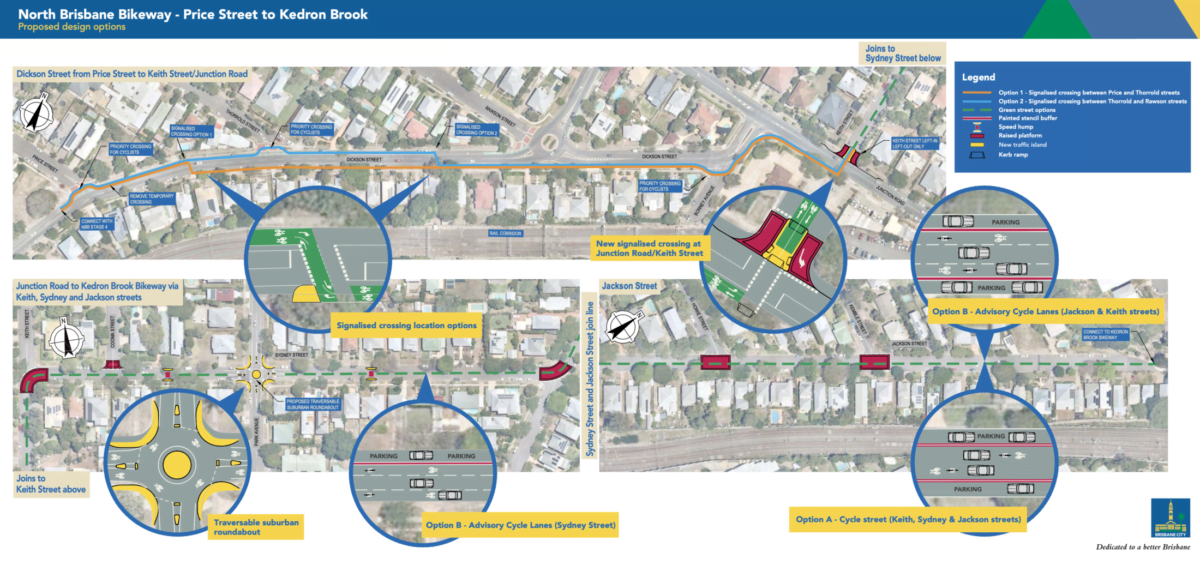
Project Introduction – North Brisbane Bikeway

Brisbane City Council has released concept designs for the next stage of the North Brisbane Bikeway. This is an excellent step forward, making a safe, convenient and direct connection all the way to Eagle Junction and beyond.

The below announcement from Brisbane City Council:

Brisbane City Council is pleased to release the proposed concept design for the North Brisbane Bikeway: Price Street to Kedron Brook project between Dickson Street, Wooloowin and Jackson Street, Clayfield.

Attached is a copy of the project newsletter with information about the project, along with an invitation to have your say on proposed design options within the project alignment to finalise the connection between Price Street and the Kedron Brook Bikeway.

You can have your say via an online survey, which can be accessed from the North Brisbane Bikeway: Price Street to Kedron Brook project page on our website. The online survey closes on 19 November 2021.

Alternatively, you can speak with the project team at two community information sessions:

  • Thursday 4 November 2021, 5pm – 7pm at Eagle Junction Train Station
  • Saturday 6 November 2021, 9am – 11am at Kalinga Park (near Jackson Street)

All feedback received from the community will be considered by Council and used to inform the final design for the project.

If you agree with the need for this bikeway, please have your say as part of the public consultations.

Find all the information about the project HERE